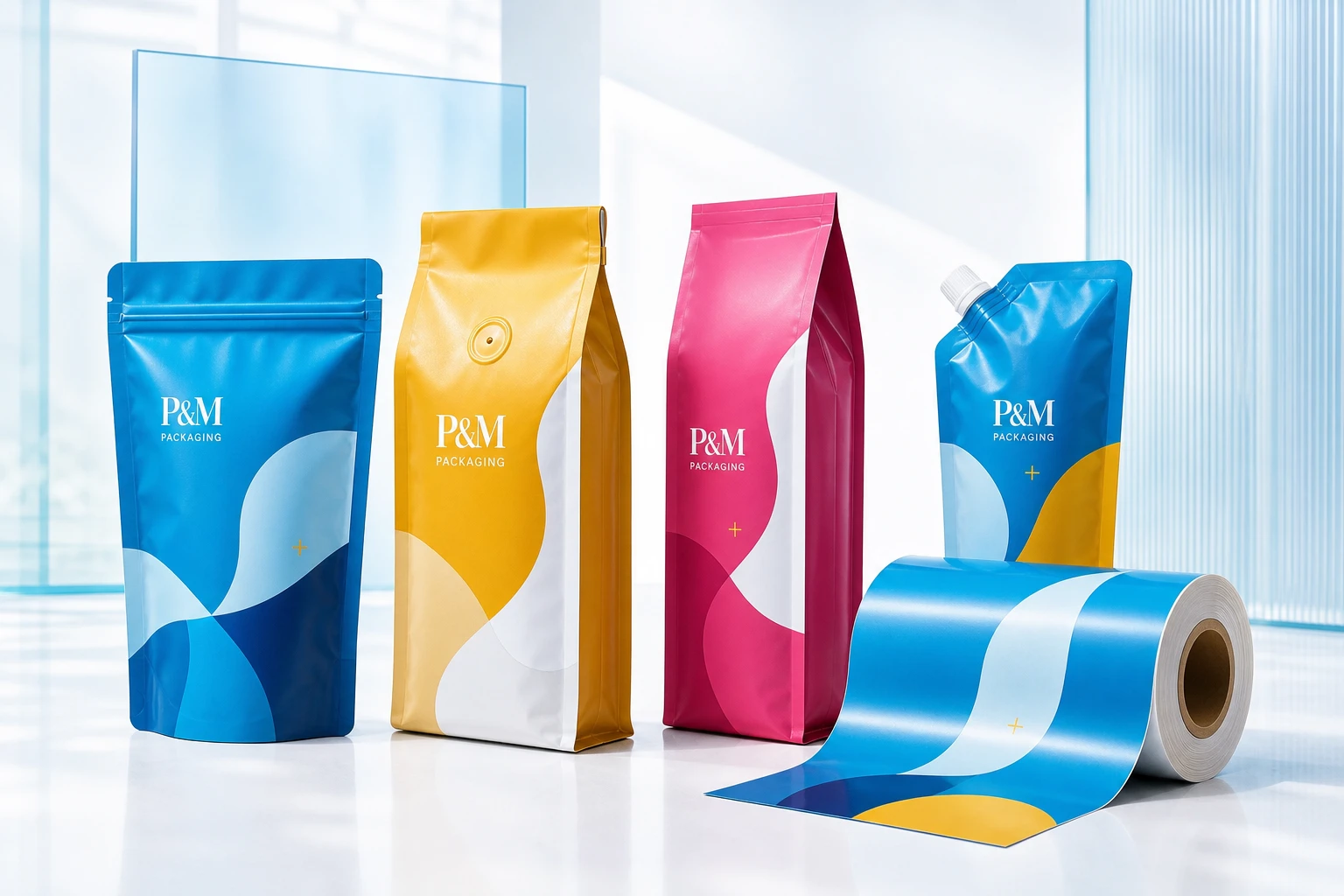
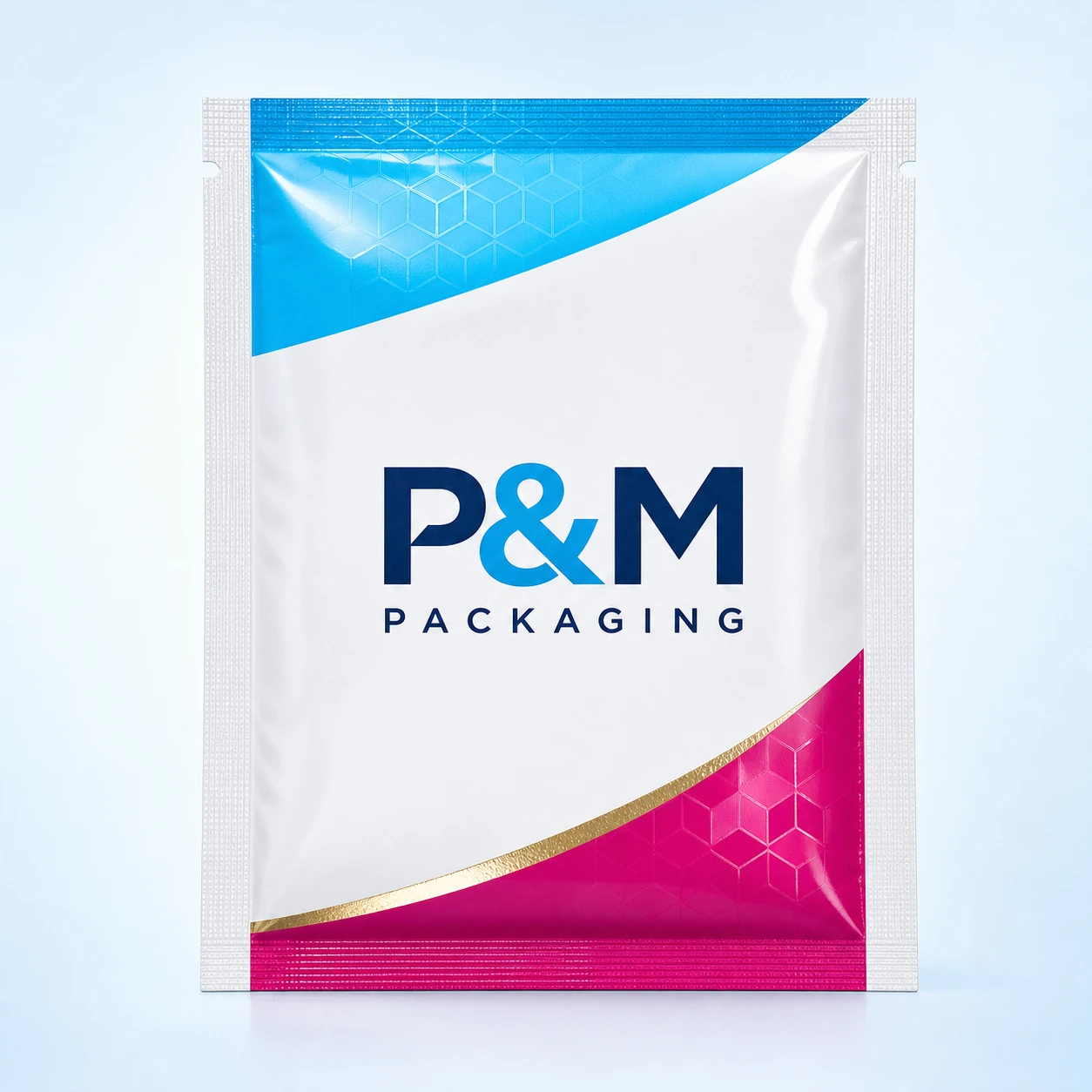
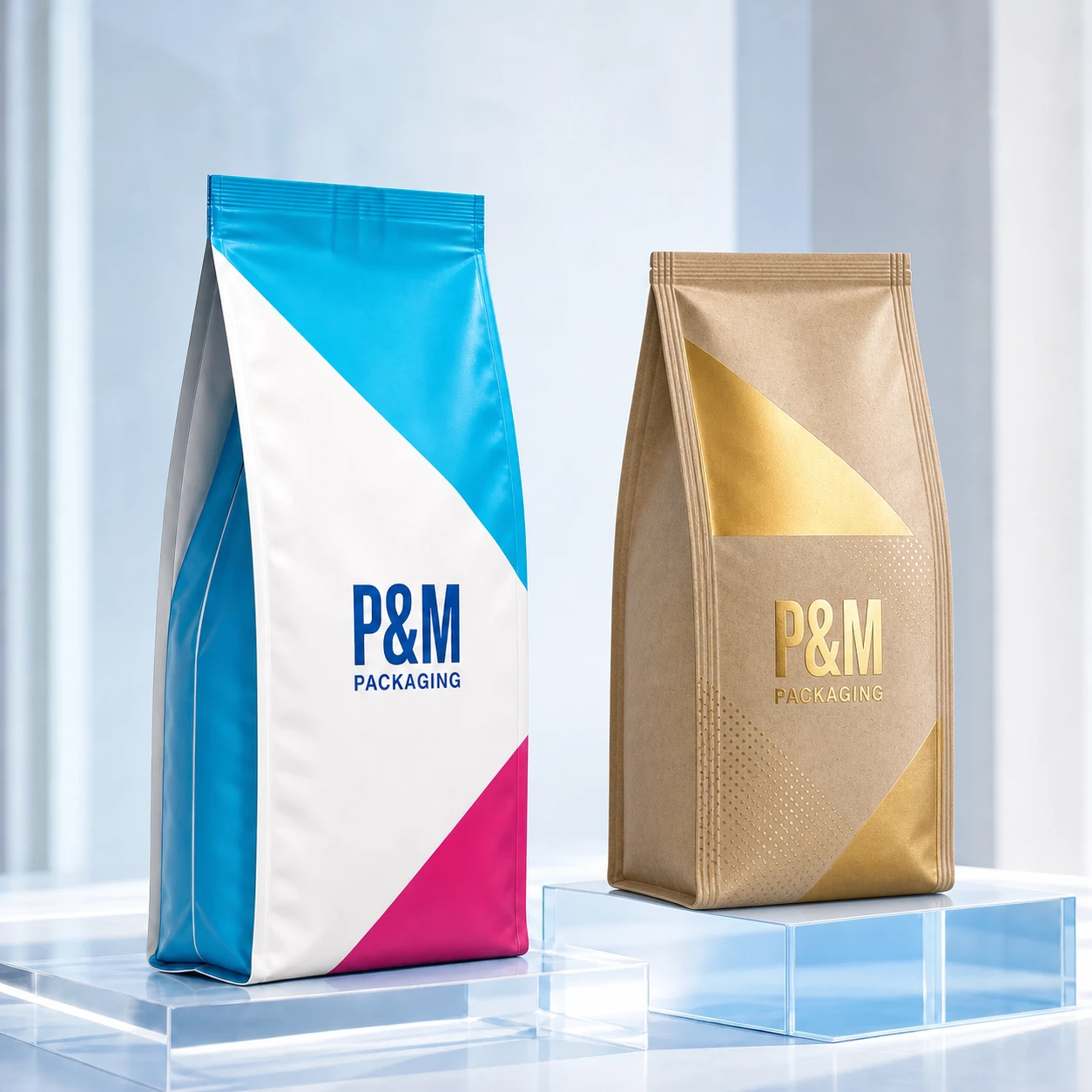
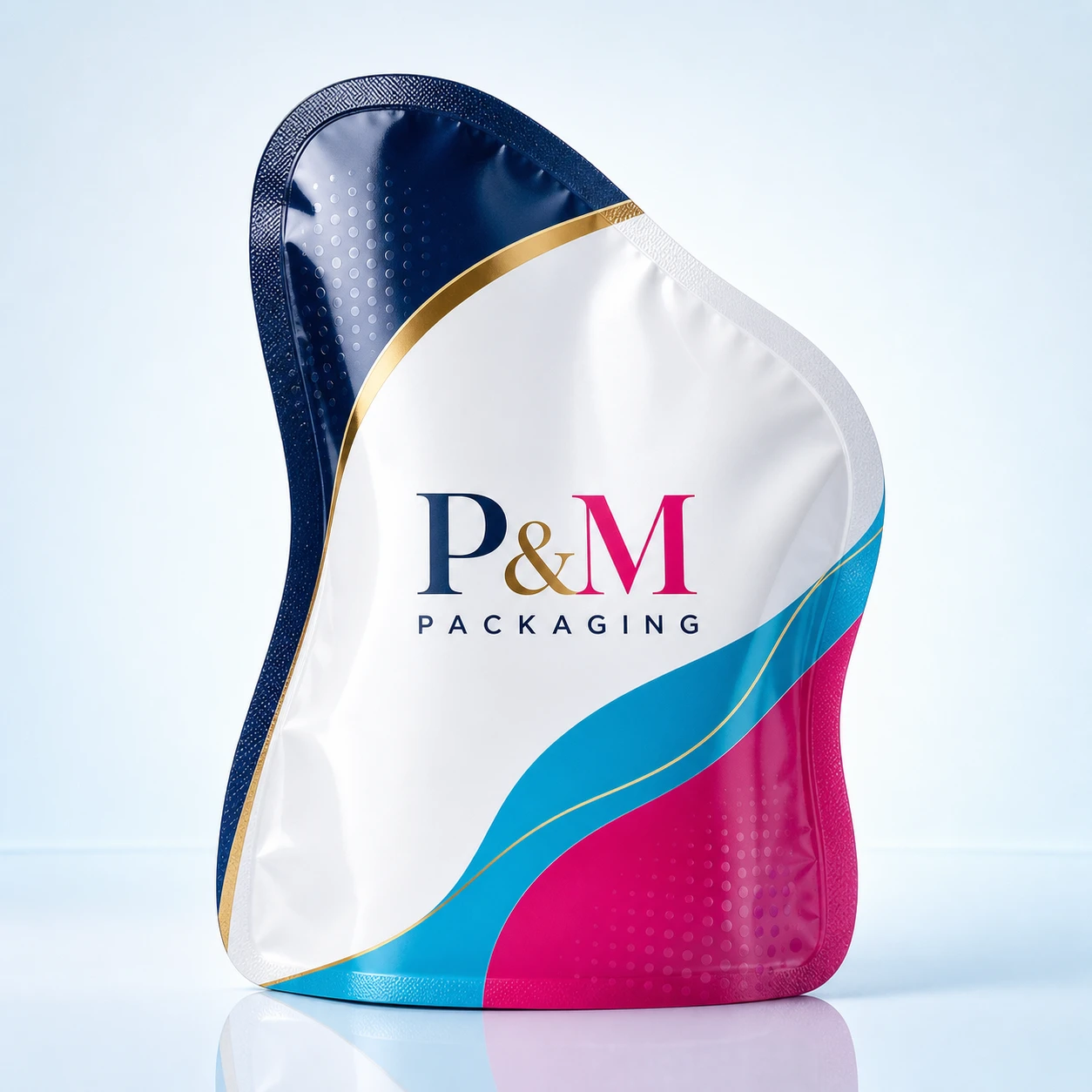
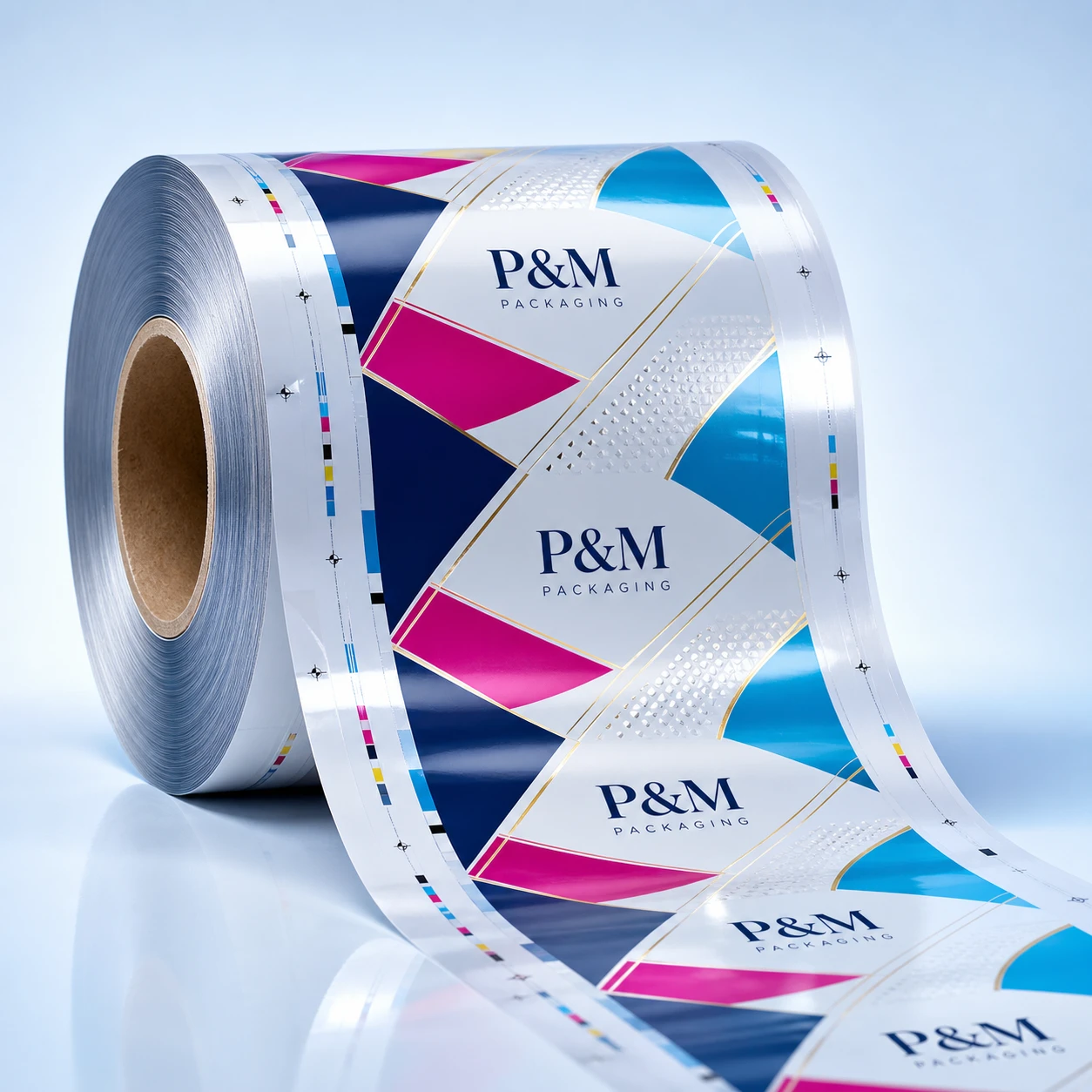
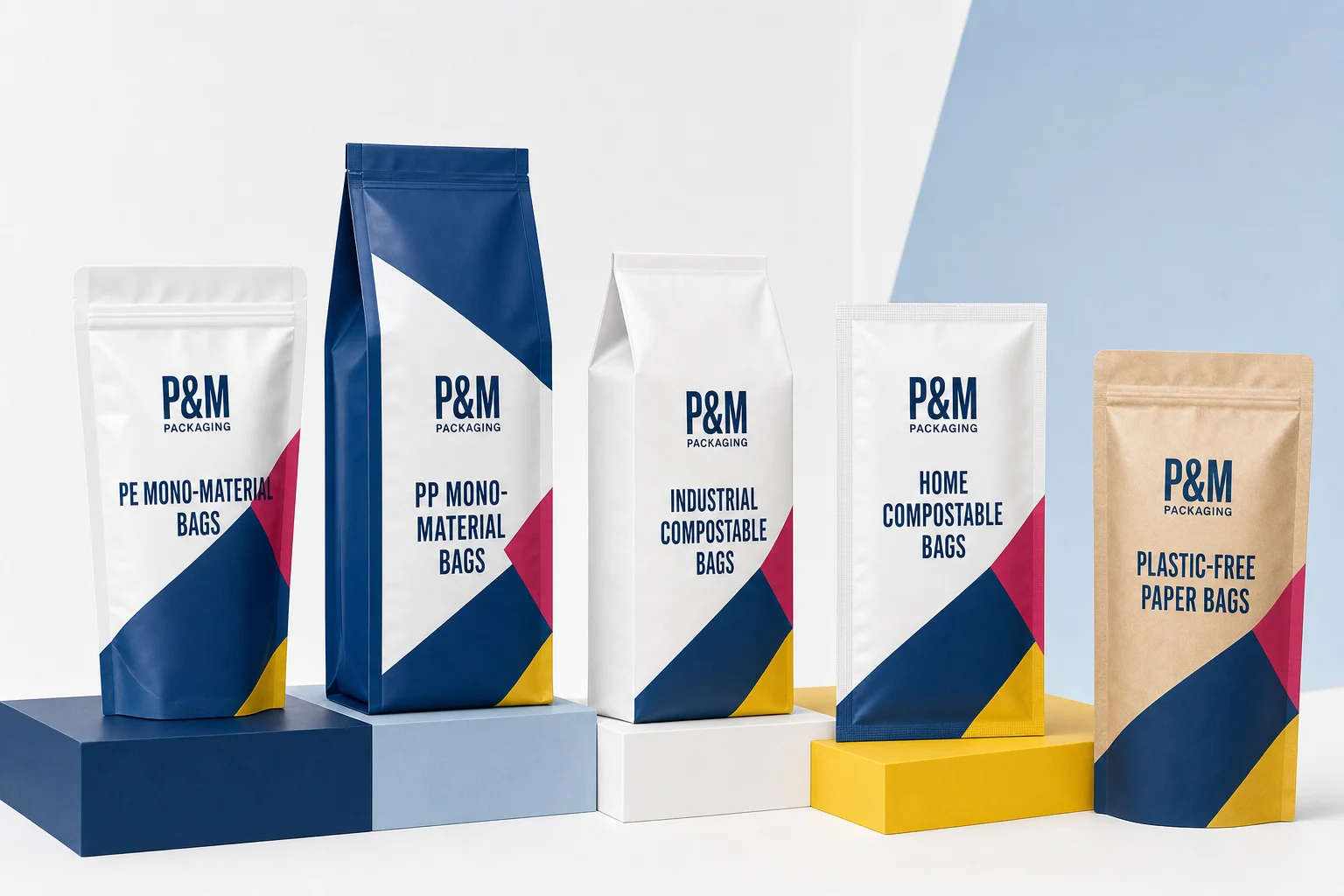
Custom Flexible Packaging for Pouches, Bags & Roll Stock
Source custom printed pouches, premade bags, sachets, and equipment-ready rollstock through P&M's owned Guangdong factory and U.S.-based project team. Each program is developed around the product, filling method, barrier, shelf presentation, SKU plan, and delivery requirement.
P&M is a custom flexible packaging supplier for brand owners, product teams, procurement teams, and co-packers. P&M owns its production factory in Guangdong, China and supports U.S. customers through U.S.-based service personnel and a self-operated Los Angeles warehouse. Paid custom samples can start from 1 piece, and the general production baseline starts from 100 pieces per SKU. Digital, offset, and rotogravure printing are matched to the approved package, artwork count, quantity, finish, and repeat-order plan.
Verified service baselines
Flexible packaging sourcing facts buyers can verify
These are current general service baselines. The quotation confirms the exact format, dimensions, material structure, print route, features, quantity per SKU, testing, production schedule, and delivery plan.
Reviewed by P&M Packaging Product Review
General production baseline
100+ / SKUFormal production generally starts from 100 pieces per SKU; process-specific minimums remain specification dependent.
Paid custom sampling
From 1 pieceUse a paid sample to review dimensions, material direction, print appearance, finish, fit, or production readiness.
Supported print routes
3 routesDigital, offset, and rotogravure printing are evaluated by package, substrate, quantity per artwork, color, finish, and reorder plan.
Production and U.S. support
China + U.S.Owned-factory production in Guangdong, China with U.S.-based service personnel and a self-operated Los Angeles warehouse.
Response targets
12 h / 24 hTarget reply within 12 hours and quotation within 24 hours once the project is sufficiently defined.
Fast project review
Get pricing, MOQ, and the right pouch route.
Share the project essentials. The U.S. team targets a reply within 12 hours and a quotation within 24 hours once the project is sufficiently defined.
General production baseline from 100 pieces per SKU
Paid custom sampling from 1 piece
No finished specification required
Buyer comparison
Choose the flexible packaging supply route
Start with the filling process and the job the package must perform. The route determines what arrives at the packing site and which dimensions, seals, equipment, and validation steps matter most.
Format
Best fit
What arrives
Critical checks
Premade pouches and bags
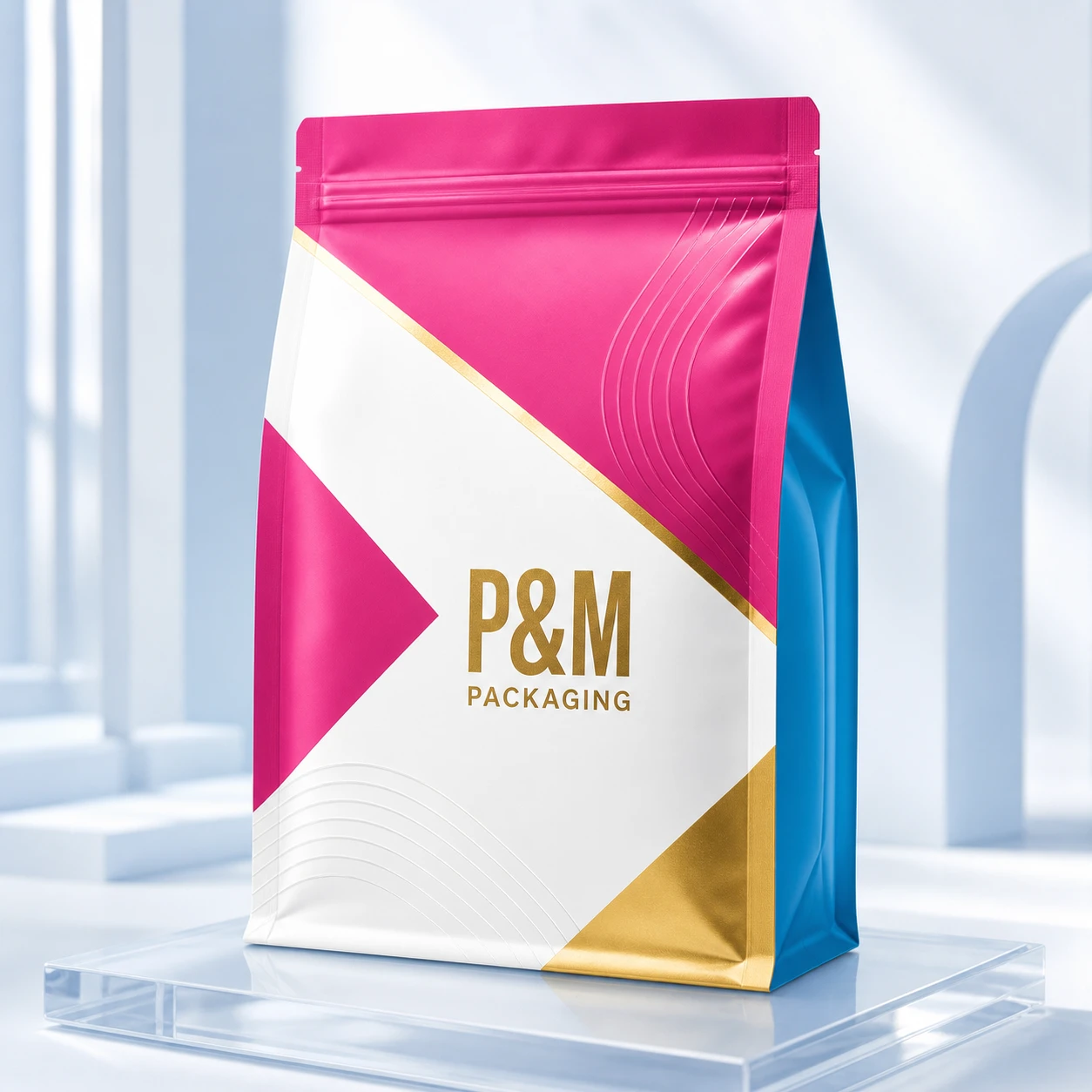
Brands or co-packers filling stand-up, flat-bottom, side-gusset, quad-seal, or three-side-seal formats
Converted bags ready for the compatible filling and final-sealing process
Usable opening, fill level, top seal, zipper or valve, bag stance, barrier, and case pack
Printed rollstock
VFFS, HFFS, sachet, stick-pack, flow-wrap, or other equipment-formed packages
Printed film rolls specified for the packing machine
Web width, repeat, unwind, registration mark, core, roll diameter, COF, seal window, and line trial
Spouted pouches
Qualified liquid, refill, puree, sauce, and dispensing applications
Premade pouch with a reviewed spout, cap, and weld interface
Product chemistry, viscosity, fill temperature, spout bore, torque, seals, leaks, drops, and consumer use
Sachets and stick packs
Samples, portions, supplements, powders, liquids, and single-use formats
Premade sachets where suitable or printed rollstock for compatible form-fill-seal equipment
Dose, product flow, seal contamination, tear behavior, coding, roll specification, and line validation
The package name is only a starting point. Final suitability depends on the complete product, structure, filling, sealing, storage, distribution, evidence, and approval plan.
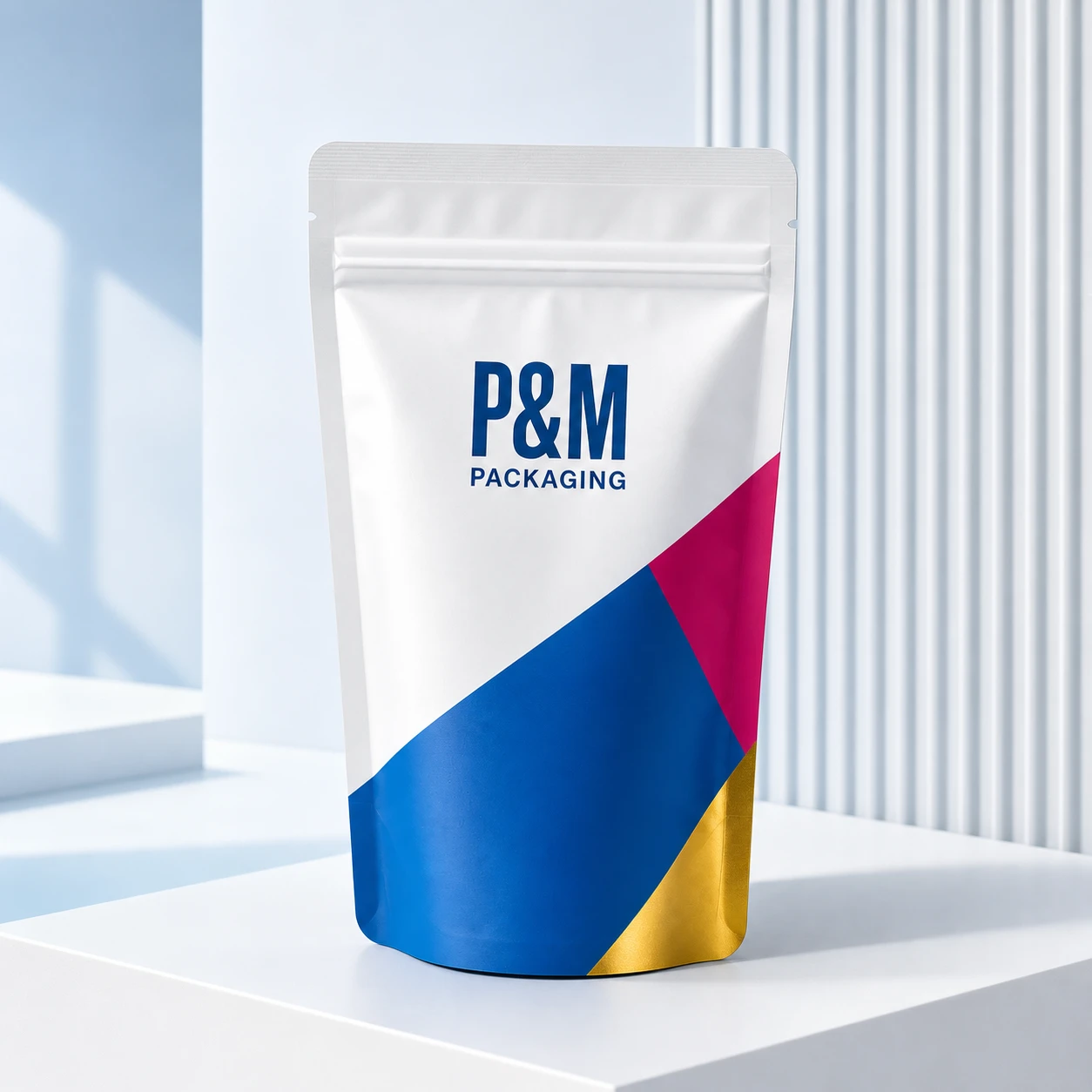
Stand-up pouch packaging is one option within a broader flexible packaging specification. Bag shape, closure, valve, spout, tear, hang, window, seals, barrier, and filling conditions must work together.
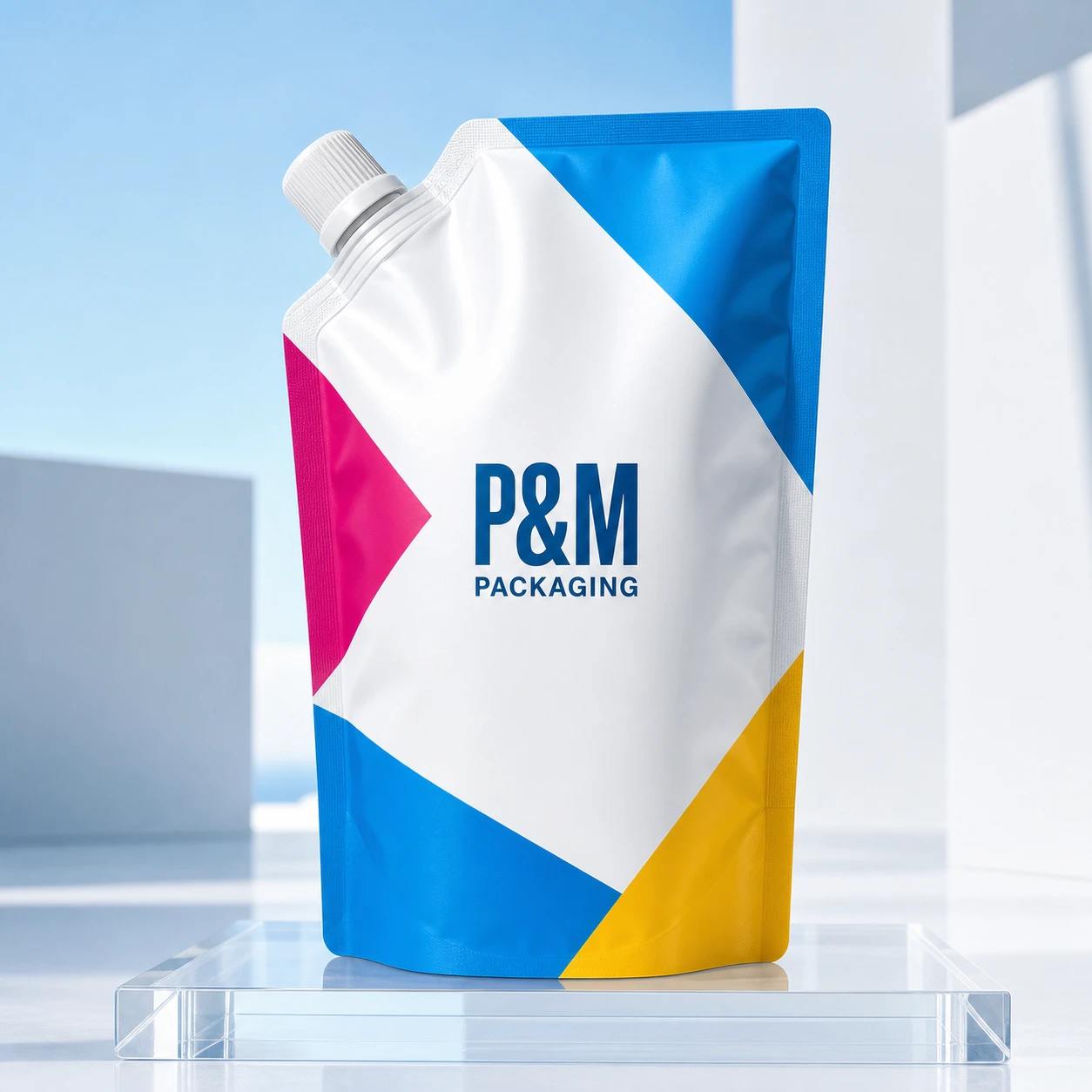
A spouted bag is a complete dispensing system: bag geometry, film structure, spout and cap, filling method, seals, transport, and consumer use must work together. Final suitability depends on the product and process.
Corner or top spout position
Spout diameter and flow
Cap and tamper-evident options
Premade-bag filling requirements
Product viscosity and fill temperature
Leak, drop, weld, and compatibility testing
Retort Pouches / Bags
Retort pouches or bags are hermetically sealed flexible packages developed to withstand a validated thermal process after filling. The product, laminate, sealant, inks, adhesives, fitments, bag geometry, filling conditions, retort cycle, pressure, and cooling process must work as one validated system. A retort-capable material alone does not approve the finished package or process.
Thermal Process Fit
Review the food or product, fill, retort method, scheduled process, pressure, heating conditions, and cooling conditions together.
Barrier Structure
Oxygen, moisture, light, aroma, grease, product chemistry, flex-crack, and shelf-life targets guide the complete laminate.
Seal Integrity
Sealant, seal width, contamination control, headspace, residual air, filling, and bag handling affect hermetic performance.
Testing & Compliance
Food-contact documentation, process-authority requirements, thermal trials, seal evaluation, leak or burst testing, distribution testing, and shelf-life work are assessed as applicable.
Shelf-stable meals, soups, and sauces
Beans, grains, meat, or seafood products
Retort pet food
Institutional and emergency foods
Product formulation and fill weight
Retort equipment and scheduled process
Mono-Material Bags
Mono-material bags are designed predominantly around one compatible polymer family, commonly PE or PP. Inks, coatings, adhesives, zippers, valves, spouts, and barrier components still matter. Mono-material does not automatically mean recyclable in every market.
Representative material pathways and bag formats; final structures and environmental claims require project-specific evidence.
PE-family bag structures
PP-family bag structures
Barrier and shelf-life targets
Seal and filling-line performance
Closure and fitment compatibility
Market-specific recycling evidence
Eco-Friendly Bags
Industrial compostable bags, home compostable bags, and plastic-free paper bags are different material pathways, not interchangeable claims. The exact bag, components, certification or test scope, disposal conditions, intended market, and claim wording must be confirmed.
Industrial compostable bags
Home compostable bags
Plastic-free paper bags
Coatings, inks, adhesives, and sealants
Certification and test scope
Clear disposal instructions
Closures, valves and pouch accessories
Accessories change how a flexible package opens, recloses, dispenses, vents, hangs, carries, and runs on filling equipment. Availability, material compatibility, placement, tooling, regulatory status, and performance are confirmed for the exact pouch or bag specification.
Standard Press-to-Close Zippers
A familiar reclosable zipper for suitable stand-up, flat-bottom, and related pouch or bag formats.
Child-Resistant Zippers
Special closures designed to restrict access by young children. The complete package and intended claim require applicable testing and documentation.
Hook-and-Loop Closures
A tactile reclosure option, sometimes called a hook-to-hook closure, considered for larger openings, powders, and repeated use.
Easy-Open Zippers
Zipper constructions and opening designs reviewed to reduce opening effort while maintaining the required seal and reclosure performance.
Slider Zippers
A track-and-slider closure that can improve opening and reclosing convenience on compatible bag formats.
Particle-Resistant Zippers
Anti-clogging closure concepts for powders, granules, pet products, and other contents that may interfere with ordinary zipper tracks.
One-Way Degassing Valves
Valve options for coffee and other gas-releasing products, reviewed around product behavior, barrier structure, valve position, and shelf-life target.
Tin Ties
A fold-over reclosure strip commonly considered for coffee and bakery-style bags where the material structure and application support it.
Spouts, Caps & Fitments
Corner or top fitments, caps, flip tops, tamper-evident features, and flow-control options reviewed around viscosity, filling, seal integrity, and use.
Carry Handles
Die-cut or applied handle concepts for larger and heavier flexible packages, subject to load, reinforcement, transport, and drop testing.
Tear Notches & Laser Scoring
Easy-opening features positioned around the seal, zipper, film structure, opening direction, and production tolerances.
Hang Holes & Euro Slots
Round holes, sombrero holes, or Euro-slot display features planned around package weight, seal area, and retail fixtures.
Clear Windows
Transparent product-view areas coordinated with white ink, barrier needs, artwork, light exposure, and the final film structure.
Microperforation & Venting
Controlled venting or perforation patterns considered only where the product respiration, moisture, pressure, or processing need supports them.
Tamper-Evident Features
Seals, tear-away elements, bands, or closure designs that help indicate first opening; the correct solution depends on the package and market requirements.
Print and surface finish
Use print and finish to create hierarchy, tactility, and shelf differentiation while protecting production consistency.
Matte and gloss
Soft-touch effects
Spot effects and selective white ink
Metallic and foil-oriented finishes
Clear windows and product visibility
Material and performance questions
The right structure depends on oxygen and moisture exposure, oil or aroma, puncture, sealing, storage temperature, shelf-life targets, and end-of-life claims. Specifications and claims are confirmed per project.
Packaging Knowledge Center
Professional guides for this application
Use these practical articles to prepare specifications, identify project risks, and ask better questions before sampling or production.
Is P&M a flexible packaging manufacturer or a broker?
P&M owns its flexible packaging production factory in Guangdong, China. U.S. customers are supported by U.S.-based service personnel and a self-operated Los Angeles warehouse. The applicable factory equipment, print route, materials, converting steps, quality checks, freight scope, and certifications or reports are confirmed for each project.
What are P&M's sample and production minimums for flexible packaging?
A paid custom sample can start from 1 piece. P&M's general production baseline starts from 100 pieces per SKU. The exact minimum depends on the package format, dimensions, material structure, printing route, artwork count, closure or fitment, finish, and converting setup.
How does P&M choose digital, offset, or rotogravure printing?
The print route is compared per SKU using the approved package area, material, colors, finish, quantity, artwork count, setup, and repeat plan. For the same exact bag specification and artwork, P&M generally assesses the digital-to-offset crossover within 2,500–5,000 pieces per SKU and the offset-to-rotogravure crossover within 20,000–50,000 pieces per SKU. These are project-comparison bands, not equipment limits or universal price guarantees.
View 6 more questions
Can P&M help if we do not know the film structure?
Yes. Start with the product, packaging format, filling process, shelf-life goal, storage conditions, and expected quantity. Structure recommendations require project review.
Do you offer custom finishes and windows?
Finish and window options can be reviewed with the pouch format, print method, material structure, and production quantity.
Are recyclable or compostable structures available?
Material pathways may be reviewed, but suitability and any environmental claim depend on the exact structure, certification or test evidence, product application, and local collection or treatment conditions.
What temperature can a retort pouch withstand?
There is no single universal temperature or time for every retort pouch. The complete package must be selected and validated against the product, retort equipment, pressure, heating and cooling conditions, and the scheduled process established for the application.
Can retort bags include a spout, zipper, or other fitment?
Potentially, but every component and its bag interface must be designed for the thermal process, product, filling method, seal integrity, handling, and regulatory requirements. Ordinary accessories should not be assumed to be retort compatible.
Does a retort-grade film make the finished package FDA compliant?
No. Food-contact suitability, the complete laminate and components, the finished container, manufacturing controls, and the food processor's scheduled process and regulatory obligations must be assessed for the exact application.
Start with the product and project stage.
Share the format, expected quantity, and what the package needs to do. We’ll organize the next decisions.
 WhatsApp