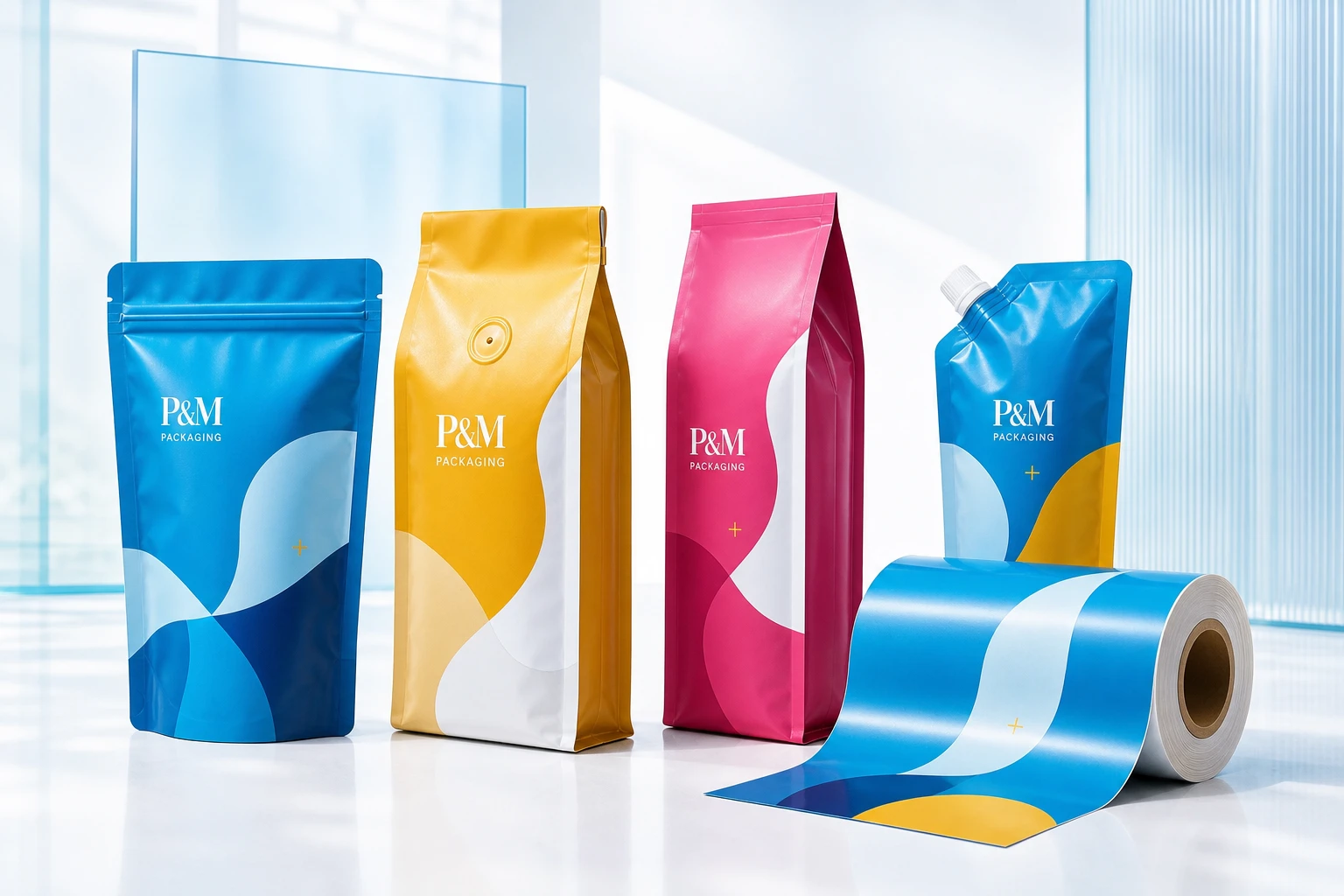
Coffee & tea packaging
Coffee and tea applications may require aroma protection, oxygen and moisture barrier, one-way degassing features, dependable reclosure, and a finish that supports brand positioning.
- Whole bean and ground coffee bags
- Sample and trial sizes
- Paper boxes and subscription packaging
- Ready-to-drink container requests routed separately
Pet food & treat packaging
Package weight, sharp product edges, oils, repeated opening, storage, and transport can place different demands on structure and seals.
- Treat pouches
- Dry pet food bags
- Supplement and powder packaging
- Paper boxes and molded components
Powder packaging
Powders require product-specific review of flow and dusting behavior, bulk density, moisture and oxygen sensitivity, serving method, filling equipment, seal contamination, reclosure, and distribution.
- Resealable powder pouches
- Single-serve sachets and rollstock
- Food and nutrition powders
- Retail cartons and variety packs
- Corrugated shipping cases
More application-specific packaging
Beverages, beauty products, household products, and supplements each require a different balance of format, compatibility, required information space, dispensing, protection, and production planning. Use the dedicated industry pages to begin with the product rather than a generic package.
 WhatsApp