 WhatsApp
Application scenario · Not a customer case study
Beverage spouted pouches
Beverage Spouted-Pouch Packaging for Brands & Co-Packers
Plan a custom empty beverage spouted-pouch project around the product, viscosity, fill volume, filling method, dispensing goal, storage, distribution, quantity per SKU, and target timing.
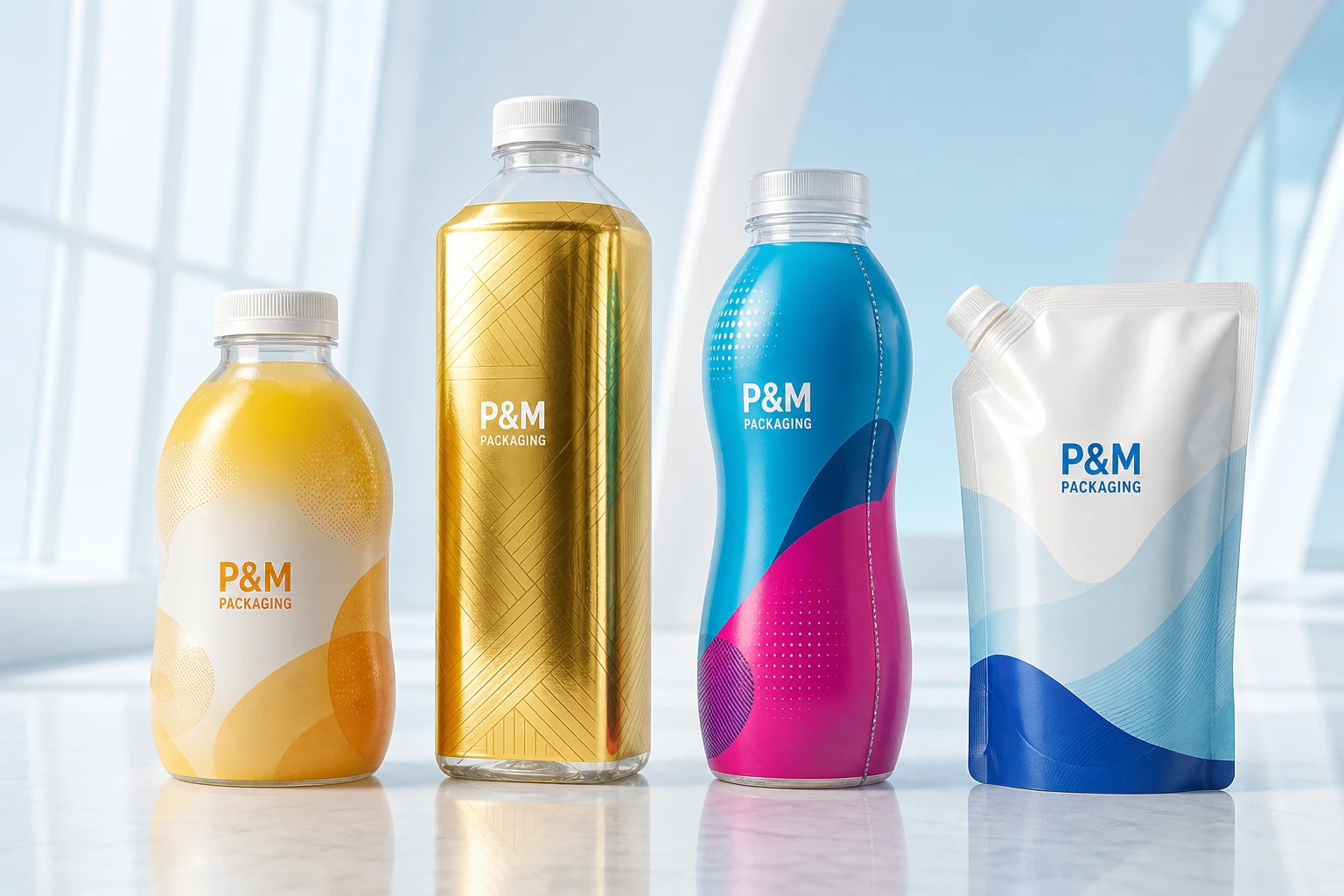
AI-generated representative concept—not a customer case or approved production sample. Final format, film, fitment, artwork, filling compatibility, and performance require project-specific review.
Direct answer
P&M reviews custom printed empty beverage spouted-pouch projects for U.S. brands, procurement teams, and co-packers. This page covers empty packaging components, not beverage formulation, filled products, co-packing, or filling machinery. Film, pouch size, spout, cap, filling conditions, storage, distribution, target shelf life, and the approval plan must be defined for the exact project. Production is through our owned factory in Guangdong, China, with U.S.-based project support.
Start with your need
What needs to happen next?
No finished specification required. Send a product or reference photo on WhatsApp.
Beverage Spouted-Pouch Projects
Review the beverage, viscosity, particles, fill volume, pouch geometry, dispensing goal, filling route, storage, distribution, and quantity per SKU before recommending a project path.
Review the project scope →Generic Spouted-Pouch Formats
Use the flexible-packaging owner when the task is to compare a spouted-pouch format across industries rather than plan a beverage application.
Explore spouted-pouch formats →Shrink Sleeve Labels
Use the dedicated owner for a bottle or rigid-container decoration project based on the final container, coverage, artwork, application, and use requirements.
Explore shrink sleeve labels →Sauce Pouch Packaging
Sauces, purees, and condiments use their own industry owner so product inputs, formats, and inquiry routing remain separate from beverages.
Explore sauce packaging →View 2 more options
Cleaning-Product Spout Pouches
Household and cleaning liquids use their own industry owner for product information, filling, dispensing, storage, distribution, and approval inputs.
Explore cleaning-product packaging →Cosmetic Spout Pouches
Skincare, hair-care, body-care, and beauty refill projects use their own industry owner for formula and packaging review.
Explore cosmetic spout pouches →Beverage spouted-pouch project path
Connect the beverage, fitment, filling route, and approval plan.
P&M reviews custom empty beverage spouted-pouch projects around the exact product, viscosity, fill volume, filling process, dispensing goal, storage, distribution, and quantity per SKU. Adjacent formats retain separate owners and approval paths.
Discuss this applicationSend the product, format, quantity, and current challenge.
View the complete packaging system and approval inputs
Beverage application
Custom empty beverage spouted pouch
Product characteristics, viscosity, fill volume, pouch geometry, dispensing, filling, storage, distribution, and approval criteria guide the exact project.
Explore format Generic product routeSpouted-pouch format owner
Use the flexible-packaging owner when the buyer is comparing a generic spouted-pouch format across industries rather than planning a beverage application.
Explore format Container-decoration routeShrink sleeve labels
A bottle or rigid-container decoration project is specified separately using the final container, coverage, artwork, application, and use requirements.
Explore format Different product routeSauce pouches
Sauces, purees, and condiments use their own application owner and project inputs.
Explore format Different product routeCleaning-product spout pouches
Household and cleaning liquids use their own application owner and approval path.
Explore format Different product routeCosmetic spout pouches
Skincare, hair-care, body-care, and beauty refill projects use their own application owner and formula review.
Explore formatWhat to bring
Inputs for the first packaging review
- Beverage type and relevant product characteristics
- Viscosity, particles, fill volume, and temperature
- Pouch dimensions or reference, spout, and cap needs
- Filling and capping method or equipment interface
- Storage, distribution, and target shelf life
- Quantity per SKU, artwork, destination, and timing
What to confirm
Verification before production
- Agreed product/package compatibility responsibility
- Required seal, leakage, dispensing, and handling checks
- Filling and capping review requirements
- Storage and distribution checks as applicable
- Approved specification, artwork, acceptance criteria, and release record
What this beverage spouted-pouch page covers
This page covers custom empty spouted pouches supplied to beverage brands, procurement teams, and co-packers. P&M does not formulate beverages, supply filled products, provide co-packing or filling machinery, or claim that one structure is suitable for every beverage or process.
- Beverage and relevant product characteristics
- Viscosity, particles, fill volume, and dispensing goal
- Pouch dimensions or reference, spout, and cap needs
- Filling and capping method or equipment interface
- Storage, distribution, target shelf life, and use conditions
Build the RFQ around the beverage and filling route
A useful review starts with the product and relevant characteristics, viscosity or particles, fill volume, filling temperature and method, equipment interface, desired dispensing behavior, storage, distribution, target shelf life, quantities by SKU, artwork status, delivery destination, and target date.
Product and use
Identify the beverage type, relevant product characteristics, viscosity, particles, fill volume, dispensing goal, storage orientation, and consumer use.
Pouch and filling interface
Provide the desired size or reference pack, spout and cap needs, filling and capping method, temperature, equipment interface, and available line information.
Commercial scope
List quantity per size and artwork, expected repeat demand, sample needs, destination, target timing, and the responsible approvers.
Define samples, checks, and approval responsibilities
The responsible parties should define the specification, sample route, product/package compatibility responsibility, filling review, seal and leakage checks, dispensing checks, storage or distribution checks, methods, sample plan, acceptance criteria, artwork approval, and production release record. Available project checks can include leakage and drop or load checks when their exact scope and criteria are agreed.
- General production baseline starts at 100 units per SKU
- One-piece paid sampling is separate from the production MOQ
- Digital, offset, or rotogravure route is confirmed for the project
- Samples do not by themselves prove filling compatibility, shelf life, or finished-package approval
- Target response within 12 hours and quote within 24 hours once the project is sufficiently defined
Packaging Knowledge Center
Professional guides for this application
Use these practical articles to prepare specifications, identify project risks, and ask better questions before sampling or production.
View 5 more related guides
Beverage Project GuideWhat Inputs Shape a Beverage Spouted-Pouch Project?→Specification GuideWhat Information Is Needed to Specify a Spouted Pouch?→Problem-Solving GuideHow to Investigate a Spouted-Pouch Leak→RFQ ChecklistPrepare a Custom Packaging RFQ→Separate Decoration RouteHow to Specify Custom Shrink Sleeve Labels→
Frequently asked questions
What does this beverage spouted-pouch service include?
It covers review and supply of custom empty beverage spouted pouches. It does not include beverage formulation, filled products, co-packing, or filling machinery. The exact project scope, responsibilities, specification, checks, and approvals are confirmed in writing.
What should a beverage brand send for a packaging review?
Provide the beverage and relevant product characteristics, viscosity or particles, fill volume, filling method and temperature, equipment interface, desired dispensing behavior, storage and distribution conditions, target shelf life, quantity per SKU, artwork status, destination, and target date.
What is the MOQ for custom beverage spouted pouches?
The general production baseline starts at 100 units per SKU. The exact minimum depends on the approved size, structure, fitment, artwork, print route, material availability, and converting setup. One-piece paid sampling is separate from the production MOQ and does not by itself approve filling compatibility, shelf life, or finished-package performance.
View 3 more questions
How are project checks and approvals defined?
The responsible parties should agree the specification, compatibility responsibility, filling review, required seal and leakage checks, dispensing checks, storage or distribution checks, methods, sample plan, acceptance criteria, artwork approval, and production release record for the exact project.
Where should a generic spouted-pouch inquiry go?
Use the flexible-packaging spouted-pouch owner when the buyer is comparing the package format across industries. Use this page when the buyer is planning a beverage-specific application.
Where should a beverage bottle decoration inquiry go?
Use the dedicated shrink sleeve labels page for a bottle or rigid-container decoration project. The final container, coverage, artwork, application, and use requirements must be provided for that separate review.