 WhatsApp
Application scenario · Not a customer case study
Coffee packaging
Coffee Packaging Solutions for Roasters & Brands
Custom coffee packaging for roasters and coffee brands launching, scaling, extending a product line, or replacing a supplier—planned around the coffee, shelf life, valve, filling, bag format, SKU count, print route, and distribution.
Direct answer
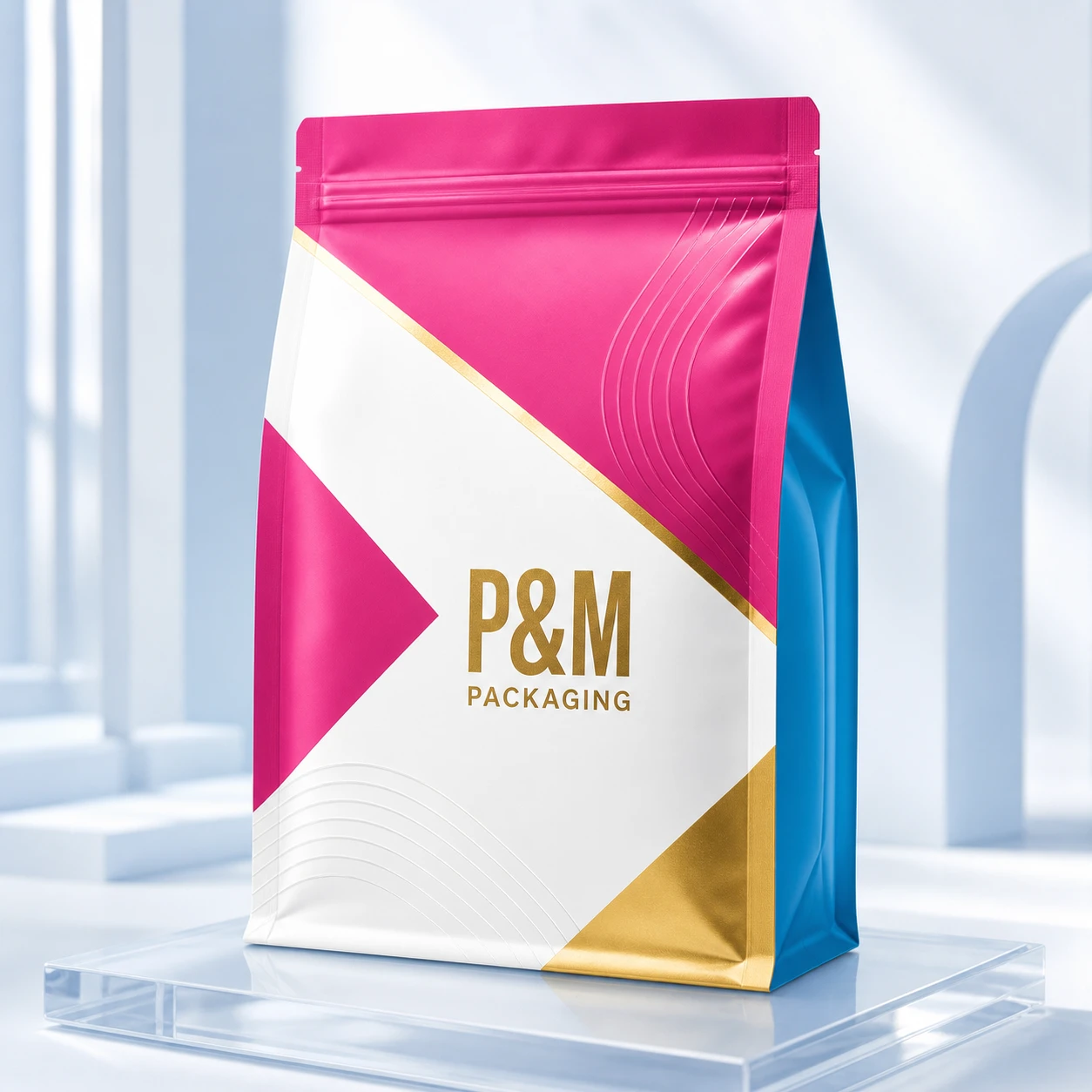
P&M develops custom valve coffee bags and related packaging for coffee roasters, brand owners, product teams, procurement teams, and co-packers. A recommendation starts with whole-bean or ground coffee, roast-to-pack timing, fill weight, target shelf life, valve and zipper, bag format, SKU count, quantity, sales channel, and delivery plan. The general production baseline starts at 100 units per SKU, subject to the confirmed format and production route.
Start with your need
What needs to happen next?
No finished specification required. Send a product or reference photo on WhatsApp.
For Coffee Brands & Roasters
A project path for a first retail launch, multiple roasts or origins, subscription programs, line extensions, volume scale-up, and supplier-change projects.
Review a coffee bag project →Custom Kraft Coffee Bags
Flat-bottom, stand-up, quad-seal, side-gusset, and three-side-seal bags developed around coffee, fill weight, shelf life, valve, zipper, structure, and print.
Explore custom coffee bags →Direct-to-Kraft Printing
Print CMYK, opaque white, foil, screen-printed UV, raised effects, or matte varnish directly on the selected paper face.
See the print difference →Production Baseline from 100 / SKU
Use the general baseline as a starting point, then confirm the exact minimum, setup, and print route for every coffee size and artwork.
Compare order pathways →View 3 more options
Sustainable Material Pathways
Compare reduced-plastic kraft, industrially compostable, home-compostable, and plastic-free paper options with project-specific evidence.
Compare materials →Dedicated Tea Packaging
Loose-leaf tea pouches, sachets, cartons, and gift formats have a dedicated application page.
Explore tea packaging →Coffee Packaging Recommendation
Share coffee format, pack size, target shelf life, filling method, destination market, sustainability goal, and SKU count.
Start a coffee packaging brief →Coffee packaging, organized around the product
Connect freshness, sustainable materials, bag format, print, and order scale.
A coffee program can combine flat-bottom, stand-up, quad-seal, side-gusset, or drip-coffee bags with valves, zippers, cartons, and shipping cases. P&M organizes the system around the coffee, target shelf life, filling, barrier, market, brand finish, SKU count, and order stage.
Discuss this applicationSend the product, format, quantity, and current challenge.
View the complete packaging system and approval inputs
Whole bean & ground
Flat-bottom, stand-up, quad-seal or side-gusset bags
Format, fill weight, headspace, OTR and WVTR targets, valve, zipper, shelf life, and shelf presentation are reviewed together.
Explore format Drip coffeeThree-side-seal outer sachets
Barrier, residual oxygen, nitrogen flushing, tear opening, seal reliability, and series artwork guide the individual pack.
Explore format Brand and informationDirect-to-kraft printing and SKU artwork planning
Paper face, CMYK and white ink, foil or tactile finishes, variable SKU information, and order quantity determine the print path.
Explore format Subscription and giftCartons and shipping boxes
Product count, protective fit, unboxing sequence, inserts, shipping exposure, and fulfillment guide the paper structure.
Explore formatWhat to bring
Inputs for the first packaging review
- Whole bean, ground coffee, drip coffee, or related product
- Roast timing, packing method, and degassing behavior
- Fill weight, bulk density, bag format, and dimensions
- Target shelf life, OTR, WVTR, valve, and zipper
- Destination market and sustainability goal
- SKU quantities, forecast, artwork, and finish
What to confirm
Verification before production
- Material reports and claim scope
- Valve, zipper, and barrier structure suitability
- Filled-bag size, headspace, seals, and reclosure
- Direct-to-kraft color and finish approval
- Filling, shelf-life, and distribution checks
View more technical specifications 10 sections
Match the printing route to launch stage and SKU risk
P&M supports digital, offset, and rotogravure printing. Digital and offset routes have no plate fee. The correct route depends on the approved bag, material, total quantity, quantity per artwork, finish, color expectations, launch date, and repeat forecast.
New Brand or Multi-SKU Launch
Digital printing can reduce versioned inventory exposure. The general production baseline starts at 100 units per SKU, with the exact minimum and setup confirmed for the selected coffee bag.
Validated Volume Program
Offset or rotogravure may be compared when the construction, graphics, order volume, repeats, timing, and total commercial model support them.
Fast Production Planning
Digital and offset production is typically 7–10 days for total quantities up to 50,000; rotogravure production is typically 10–15 days. Materials, approvals, specialty processes, and larger quantities can change timing.
Sample Before Release
One-piece paid sampling is available. Use the actual coffee, valve, zipper, top-seal area, and intended filling method to review physical fit and use.
Is P&M a fit for your coffee brand?
This service is designed for companies developing or purchasing custom packaging for their own coffee products. It can support a new branded launch, a multi-SKU roast or origin range, subscription and ecommerce packs, retail expansion, a planned increase in volume, or a supplier change caused by valve, freshness, seal, color, inventory, or delivery problems.
- Independent and multi-location coffee roasters
- Emerging and established retail coffee brands
- Product and procurement teams managing multiple SKUs
- Co-packers and private-label programs with defined filling requirements
- Projects needing samples, DDP delivery, or Los Angeles warehousing support
Match coffee packaging bags to the product
Share the coffee format, roast condition, fill weight, bulk density, filling method, preferred bag, valve or closure, storage, expected shelf life, quantity, SKU count, and sales channel.
- Whole-bean and ground coffee packaging
- Three-side-seal drip coffee outer sachets
- Flat-bottom, stand-up, quad-seal, and side-gusset coffee bags
- Sample, retail, subscription, and foodservice sizes
- Retail cartons, gift boxes, and ecommerce shippers
Aroma, oxygen, moisture, and degassing
Coffee and tea quality can be affected by oxygen, moisture, aroma loss, light, storage, and repeated opening. Freshly roasted coffee may also require a suitable one-way degassing valve and enough headspace for the product and process.
Size, closure, and filling control
Nominal bag dimensions do not confirm product fit. Bulk density, fill weight, headspace, valve position, zipper or tin tie, top seal, gusset deployment, and filling equipment should be checked with the intended product.
One brand system across retail and subscription
Printed bags, cartons, inserts, and shipping boxes can share approved colors and hierarchy while keeping separate dielines, material standards, coding areas, quantities, and production methods.
Choose the coffee bag around channel and order stage
A sample pouch, 8 oz or 12 oz retail bag, foodservice pack, wholesale program, and subscription shipment create different quantity, print, variable-information, valve, reclosure, case-pack, and fulfillment needs. The production path should support the current launch without hiding future SKU and volume requirements.
Control valve, print, and artwork versions
Record the valve type and position, zipper or tin tie, top seal, fill line, roast or variable information, lot or date coding, color standard, finish, and artwork revision by SKU. Confirm the dieline and physical fit before final graphics approval.
Factory evidence for coffee-brand procurement
P&M owns the Guangdong factory used for production and supports U.S. customers through U.S.-based personnel and a self-operated Los Angeles warehouse. The factory includes three HP Indigo digital presses, including an HP Indigo 200K, plus offset and rotogravure printing routes, dry lamination, rewinding inspection, and bag-making equipment. Equipment presence does not establish suitability for a specific coffee project; the approved specification, sample, and production controls govern.
Solve the coffee problem before choosing the bag
Coffee packaging problems usually appear as aroma loss, oxidation, package swelling, an unstable shelf shape, a zipper or valve blocked by product, weak seals, or excess packaging inventory across many SKUs. The solution starts with roast-to-pack timing, whole-bean or ground product, target shelf life, fill volume, equipment, consumer use, and sales channel—not with a finish sample alone.
Coffee loses aroma too early
Review oxygen and moisture exposure, headspace, roast and packing timing, valve behavior, seals, reclosure, storage, and the opened-use period.
Diagnose freshness loss →The bag swells or the valve performs poorly
Confirm gas release, valve opening behavior and location, fill line, headspace, seal interface, packing timing, and finished-package trials.
Review coffee valve selection →The same net weight does not fit
Whole beans, ground coffee, roast level, settling, headspace, zipper, valve, gusset geometry, and filling method can change usable capacity.
Compare coffee bag sizes →Too many SKUs create inventory risk
Use a shared bag platform, controlled variable information, and a staged print route where the approved format and commercial plan support it.
Plan coffee MOQ and SKUs →Packaging Knowledge Center
Professional guides for this application
Use these practical articles to prepare specifications, identify project risks, and ask better questions before sampling or production.
View 11 more related guides
Freshness Problem-SolvingWhy Coffee Loses Aroma Before It Should→Coffee Packaging GuideHow to Choose Coffee Packaging Bags→Coffee Valve GuideCoffee Bags with One-Way Degassing Valves→Coffee Bag Sizing GuideSelect an 8 oz, 12 oz, 16 oz or 1 lb Coffee Bag→MOQ & SKU PlanningCoffee Bag MOQ, Multi-SKU Planning and Plate Fees→Pouch Accessories GuideCoffee Bag Valves, Tin Ties and Add-On Features→Flexible Packaging GuideHow to Choose a Custom Pouch Format→Packaging SourcingCustom Packaging RFQ Checklist→Artwork ToolPackaging Artwork Preflight Checklist→Factory EvidenceSee P&M's Coffee-Bag Production Equipment→Supplier QualificationQualify P&M for a Coffee Packaging Program→
Frequently asked questions
What type of bag is used for whole-bean coffee?
Flat-bottom bags are currently the most requested format for many specialty coffee projects. Stand-up, quad-seal, and side-gusset bags remain useful alternatives; the right choice depends on fill weight, bulk density, valve, reclosure, shelf presentation, filling, barrier, quantity, and brand goals.
Does every coffee bag need a degassing valve?
No. The need depends on the product, roast and packing timing, gas release, package size, distribution, shelf-life target, and process. Valve selection and position should be reviewed for the exact coffee and bag.
Should coffee use a flat-bottom bag or a stand-up pouch?
Flat-bottom bags provide a structured base and broad front, back, and side panels; stand-up pouches offer an efficient bottom-gusset format across many retail and sample sizes. Fill weight, bean or ground-coffee density, valve, zipper, filling, case pack, shelf presentation, quantity, and budget determine the better route.
View 5 more questions
Do whole-bean and ground coffee use the same bag size?
Not automatically. Whole beans and ground coffee differ in bulk density, settling, dust, gas release, headspace, filling, and usable volume. Confirm the actual coffee in the intended format with the zipper, valve, material, top-seal area, and physical fill test.
Can P&M coordinate coffee bags, sample packs, and subscription boxes?
Yes. The formats can be managed as one packaging program while each item keeps its own size, structure, artwork, filling, testing, production, and delivery requirements.
Can a coffee brand order 500 to 5,000 valve bags across several SKUs?
Potentially. P&M's general production baseline starts at 100 units per SKU, and digital printing has no plate fee. The exact minimum, setup, bag dimensions, structure, valve, finish, total quantity, quantity per artwork, and timing are confirmed for each project.
Is P&M a U.S. coffee bag manufacturer?
P&M is a U.S.-facing packaging company with U.S.-based service, a self-operated Los Angeles warehouse, and production through its owned Guangdong, China factory. P&M should not be described as a Made-in-USA coffee bag manufacturer.
What should a coffee brand send for a packaging recommendation?
Send whole-bean or ground coffee, roast-to-pack timing, fill weight, bulk density if known, current or desired bag dimensions, valve and zipper needs, shelf-life target, filling method, quantity per SKU, annual forecast, artwork status, delivery destination, launch date, and any current-package problem.