Direct answer
Choose coffee packaging bags by matching roast and packing timing, whole-bean or ground product, fill weight and bulk density, oxygen and moisture barrier, degassing behavior, bag format, valve and reclosure, filling method, shelf presentation, and distribution. A valve bag is not automatically correct for every coffee or process.
Define the coffee and packing conditions
Whole-bean and ground coffee differ in bulk density, surface area, aroma exposure, filling behavior, and consumer use. Share roast timing, packing timing, fill weight, desired shelf life, storage, channel, and whether the product will be packed manually or on equipment.
Freshly roasted coffee can release gas after packing. The amount and timing depend on the coffee and process, so headspace, seal timing, and any degassing valve should be reviewed for the intended product rather than copied from another bag.
- Whole bean or ground coffee
- Roast and packing timing
- Fill weight and bulk density
- Storage and shelf-life target
- Retail, wholesale, subscription, or foodservice channel
Which coffee bag format and closure fits your product?
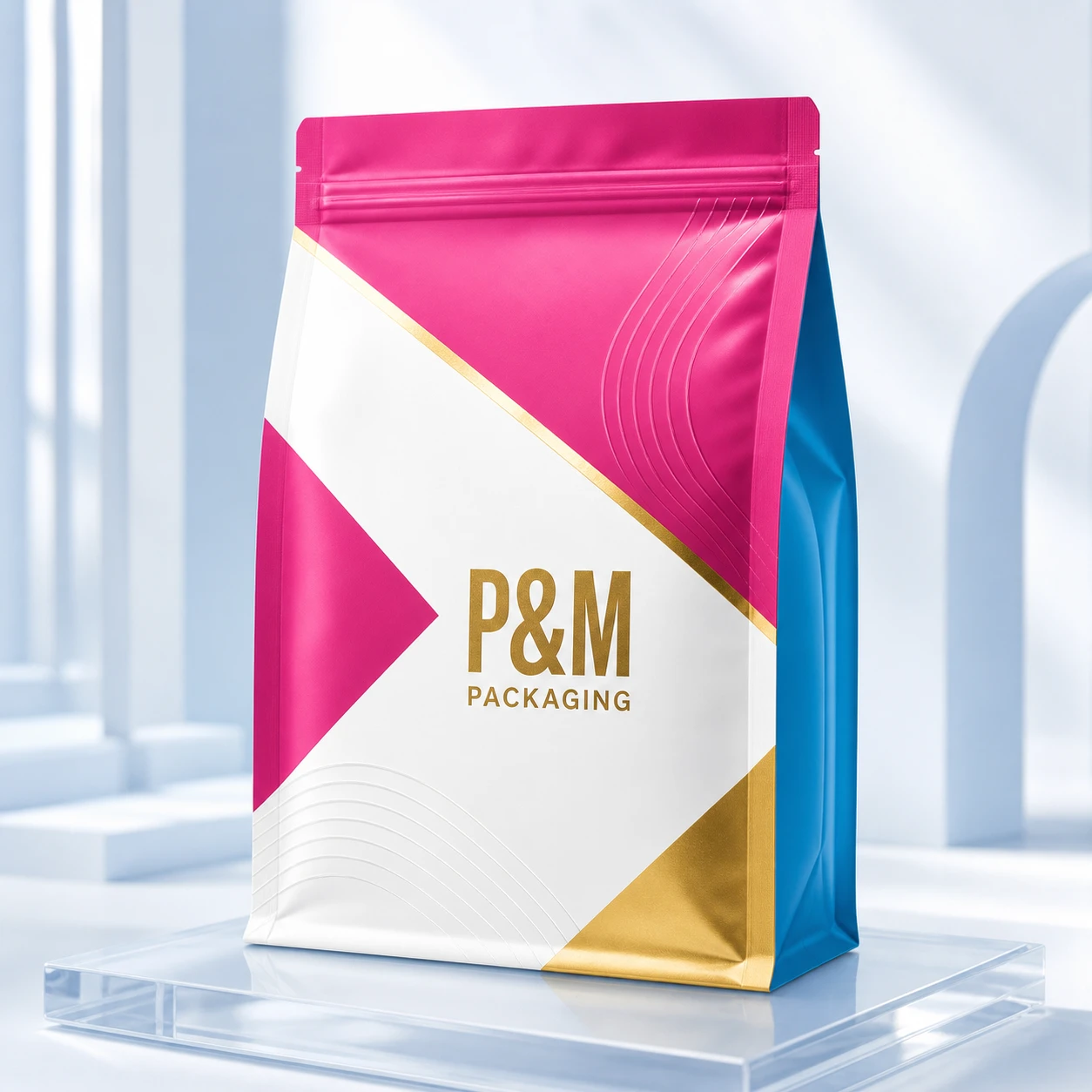
Flat-bottom coffee bags provide a defined shelf shape and multiple print panels. Stand-up pouches offer broad size and feature flexibility. Side-gusset bags provide a familiar coffee format for selected filling and display needs. Product fit should be tested because nominal dimensions do not establish usable volume.
A zipper, tin tie, tear feature, or other closure changes the opening, top-seal space, filling access, repeated use, and artwork area. Valve position must avoid the zipper, seals, critical artwork, and expected fill level.
Review barrier, valve, print, and production together
Coffee packaging commonly requires attention to oxygen, moisture, aroma, light, seal integrity, pinholes, flexing, and repeated opening. The complete structure, seams, valve application, zipper, filling, and storage determine actual package performance.
Custom coffee packaging also involves print method, color control, matte or gloss finish, abrasion, coding space, artwork versions, and order quantity. Samples should answer defined questions such as product fit, valve placement, opening, shelf stance, print appearance, or line compatibility.
Build retail, sample, and subscription formats as one system
A coffee program may combine full-size printed bags, sample pouches, variable labels, gift cartons, subscription mailers, and shipping cases. Coordinate color hierarchy and launch timing while keeping a separate approved specification for every component.
General educational information only. Materials, performance, compliance, claims, quantities, and timing require confirmation for the exact packaging project.