 WhatsApp
Application scenario · Not a customer case study
Cleaning product spout pouches
Custom Spout Pouches for Cleaning Products
Source custom spout pouches for cleaning products, laundry detergent refills, and other qualified household liquids around the exact formula, fill process, fitment, storage, distribution, and quantity per SKU.
Direct answer
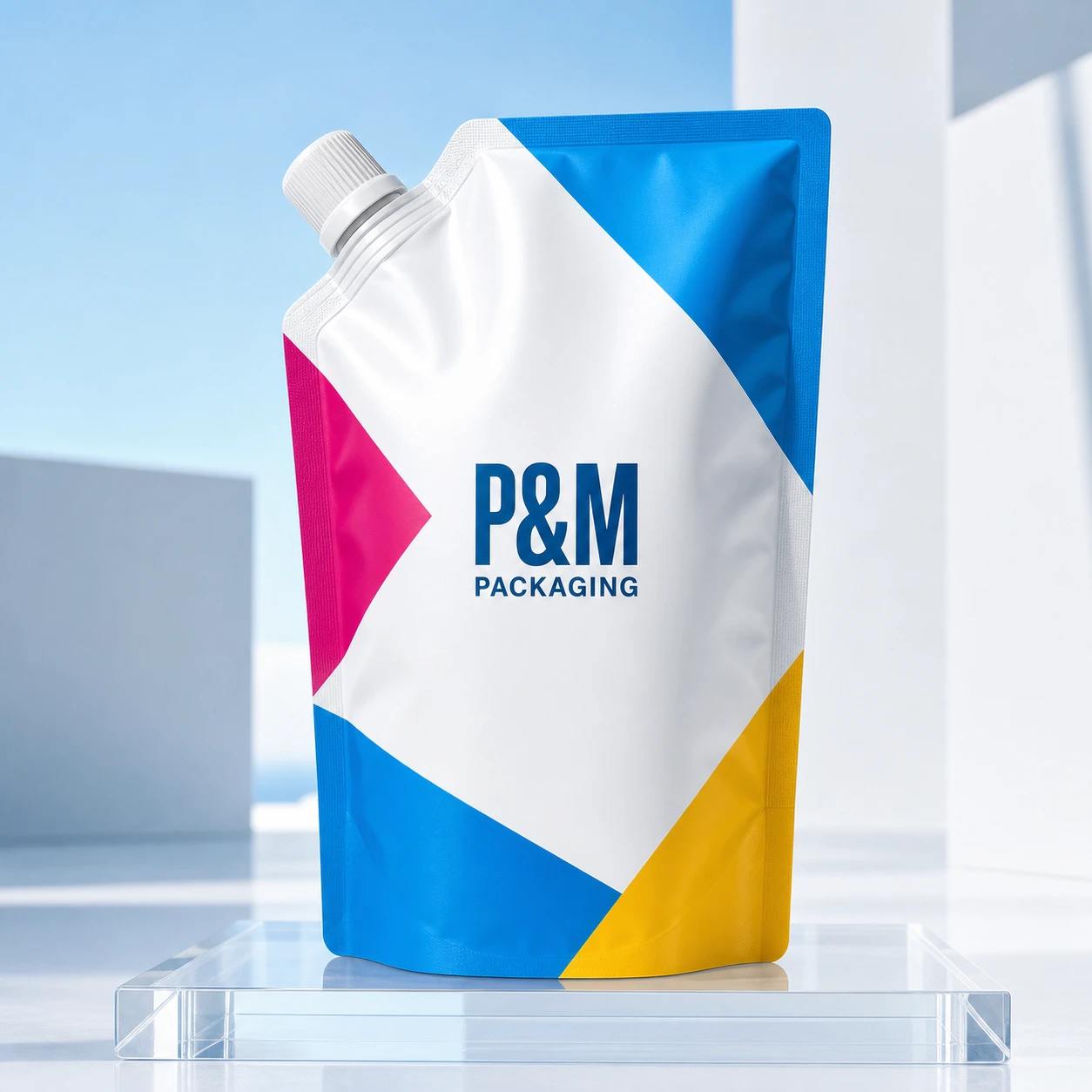
P&M develops custom cleaning chemical spout pouches for U.S. brand owners, product teams, procurement teams, and co-packers. This page covers empty custom packaging components, not filled detergents, chemical formulation, filling machinery, or consumer cleaning products. Start with the exact product, pH or range, viscosity and particles, fill volume and temperature, filling method, spout and cap, storage, distribution, quantity per SKU, and target shelf life. Material names are starting points only: the complete film, adhesive, fitment, seal, and filled package must be validated for the formula and use conditions.
Start with your need
What needs to happen next?
No finished specification required. Send a product or reference photo on WhatsApp.
Cleaning Chemical Spout Pouches
Corner or top-spout concepts reviewed around formula contact, viscosity, filling, fitment welding, cap, dispensing, storage orientation, and leak criteria.
Review a spout-pouch project →Compatibility Before Production
Validate the complete film, adhesive, ink, spout, weld, cap, seals, storage, and distribution conditions with the intended product before approval.
Review refill-pouch requirements →Fitments & Filling
Match spout position and bore, flange, cap and torque, filling route, headspace, flow, consumer dispensing, and the co-packer's equipment.
Review spout and fitment inputs →Cleaning Bottle Sleeve-Label Review
A buyer request for bottle decoration is routed to the shrink sleeve owner. Cleaning-industry context does not confirm availability; the responsible supplier must respond in writing.
Review shrink sleeve label inputs →Cleaning-product spout-pouch project path
Connect the formula, fitment, filling process, and filled-package approval.
P&M develops custom spout pouches around the exact cleaning product, filling and capping process, dispensing, storage, distribution, and quantity per SKU. Any separate bottle-decoration request requires written supplier confirmation before it is treated as available.
Discuss this applicationSend the product, format, quantity, and current challenge.
View the complete packaging system and approval inputs
Primary refill
Custom cleaning chemical spout pouch
Product chemistry, pH range, viscosity, particles, fill volume, film, fitment, cap, seals, filling, dispensing, and leak criteria guide the complete package.
Explore format Fitment systemSpout, flange, weld, and cap
Spout position and bore, flange geometry, weld, cap and torque, filling interface, flow, reclosure, and consumer use require project-specific review.
Explore format Separate buyer requestShrink sleeve label review
Send the final container, product-exposure context, desired coverage, artwork, application method, quantity, and timing to the governed owner for written supplier confirmation.
Explore format DistributionCase pack and shipping conditions
Storage orientation, case count, containment, temperature, flexing, drops, vibration, compression, and pallet pattern inform representative filled-package checks.
Explore formatWhat to bring
Inputs for the first packaging review
- Exact product and pH or pH range
- Fill volume or weight, viscosity, and particles
- Fill temperature, method, and post-fill process
- Pouch format, dimensions, spout, cap, and dispensing
- Storage orientation, shelf-life target, and distribution
- Quantity per SKU, artwork, destination, and timing
What to confirm
Verification before production
- Film, adhesive, inner-layer, and fitment compatibility
- Fitment weld, cap, seal, and leak performance
- Filled-package storage and dispensing checks
- Drop, flex, temperature, and distribution checks as applicable
- Approved artwork, coding, warnings, and acceptance criteria
Start the material review with the formula and route to market
For ordinary cleaning liquids, PET/PE can be an initial development path. For ecommerce or larger liquid packs, PET/PA/PE may be reviewed where added toughness is relevant. A validated recyclable development path may use MDOPE/PE. AL or VMPET pathways are conditional on volatility, light or aroma sensitivity, target shelf life, and flex or transport demands—not pH alone. Strong acid or alkali products and chlorine- or peroxide-containing formulas require the inner layer, spout, adhesive, sealed structure, and filled-package validation to be resolved before a construction is approved.
- Exact product and pH or pH range
- Fill volume or weight, viscosity, and any particles
- Fill temperature, filling method, and post-fill process
- Pouch format, spout, cap, dispensing, and storage orientation
- Target shelf life, distribution route, temperature exposure, and leak or drop criteria
Plan MOQ, sampling, and validation as separate decisions
The general production minimum for custom finished bags is 100 units per SKU, subject to the selected format, size, material, printing route, spout, cap, and project requirements. One-piece paid sampling is a separate development service, not the production MOQ and not proof that an untested formula is compatible. Confirm the representative product, filling conditions, sealed-package checks, acceptance criteria, and approval path before production.
- Quantity and forecast by SKU
- Pouch dimensions or a reference package
- Spout position, bore, flange, cap, and torque requirements
- Artwork status, destination, and target date
- Who will fill, seal, cap, test, and approve the finished package
View more technical specifications 3 sections
If a cleaning-products buyer asks about a sleeve label
Treat the request as an unconfirmed application context. Provide the final container and closure, chemistry-exposure context, desired coverage, artwork, application method, quantities, destination, and timing. The responsible supplier must confirm whether a route is available and define the proposal, exclusions, evidence, and approval steps in writing.
Buyer requirement
Describe the desired decoration, warnings, codes, closure access, handling, and product-exposure conditions without presenting an unverified construction as available.
Open the governed shrink sleeve owner →Written feasibility and evidence
Require the responsible supplier to state the proposed construction, limits, sample or test plan, and acceptance criteria for the exact container and product context.
Match the spout pouch to filling, dispensing, and distribution
A top- or corner-spout pouch should be reviewed as one system: film, adhesive, fitment flange, weld, cap, headspace, filling route, seals, pack-out, and consumer dispensing. Representative filled packages should be checked under the intended storage orientation and distribution conditions; no material name or component alone establishes leak resistance or shelf life.
Document the decision before artwork and production
Send the exact product, pH or range, fill volume or weight, viscosity and particles, fill temperature and method, post-fill process, pouch and fitment requirements, storage, distribution, target shelf life, quantity per SKU, artwork status, destination, and timing. P&M's owned Guangdong factory supports qualified printing, lamination, inspection, and bag-making paths, while the U.S. team supports project coordination. Production is not represented as Made in USA.
Packaging Knowledge Center
Professional guides for this application
Use these practical articles to prepare specifications, identify project risks, and ask better questions before sampling or production.
View 6 more related guides
Household Packaging GuideHow to Specify a Refill Pouch for Cleaning Products→Spout & Fitment GuideHow to Select a Spout, Cap and Fitment→Specification GuideWhat Information Is Needed to Specify a Spouted Pouch?→Shrink Sleeve SpecificationHow to Specify Custom Shrink Sleeve Labels→Factory EvidenceSee P&M's Printing, Lamination, Inspection & Converting Equipment→Supplier QualificationQualify P&M for a Household Packaging Program→
Frequently asked questions
Can flexible bags be used for concentrated cleaning-product refills?
Potentially. Product compatibility, barrier, seals, spout and cap, fill process, leak and drop performance, storage, transport, and consumer dispensing must be reviewed and tested for the exact product.
What is the minimum order for custom cleaning product spout pouches?
P&M's general custom-bag production minimum is 100 units per SKU, subject to the selected format, size, material, printing route, spout, cap, and project requirements. One-piece paid sampling is a separate development service and does not replace production validation.
What information is needed for a cleaning-product spout-pouch quote?
Send the exact product, pH or range, fill volume or weight, viscosity and particles, fill temperature and method, post-fill process, desired pouch format, spout and cap, storage orientation, distribution route, shelf-life target, quantity per SKU, artwork status, destination, and timing.
View 3 more questions
Which material should be used for a cleaning chemical spout pouch?
There is no universal structure. PET/PE may be an ordinary-liquid starting path, PET/PA/PE may be reviewed for ecommerce or larger packs, and MDOPE/PE may be developed as a validated recyclable route. AL or VMPET use depends on volatility, light or aroma sensitivity, shelf life, flexing, and transport. Strong acid or alkali products and chlorine- or peroxide-containing formulas require validation of the complete inner layer, adhesive, fitment, seals, and filled package before approval.
Can P&M guarantee one refill-pouch structure for several cleaning formulas?
No. Different formulas, concentrations, contact times, fill temperatures, storage conditions, films, adhesives, inks, fitments, caps, and seals can behave differently. Each product and final filled package needs a defined compatibility and performance plan before approval.
Can P&M review a leaking household-product pouch from another supplier?
P&M can review a replacement project when the brand provides the filled product and formulation information, current pouch or specification if available, failure photos or retained samples, leak location, filling and capping conditions, headspace, storage orientation, case pack, drops or transport conditions, affected quantity, and required acceptance criteria.