 WhatsApp
Application scenario · Not a customer case study
Face mask packaging
Custom Face Mask Packaging
Develop face mask packaging around the formula, mask substrate, dose, barrier, seal integrity, opening experience, required information, retail presentation, and distribution.
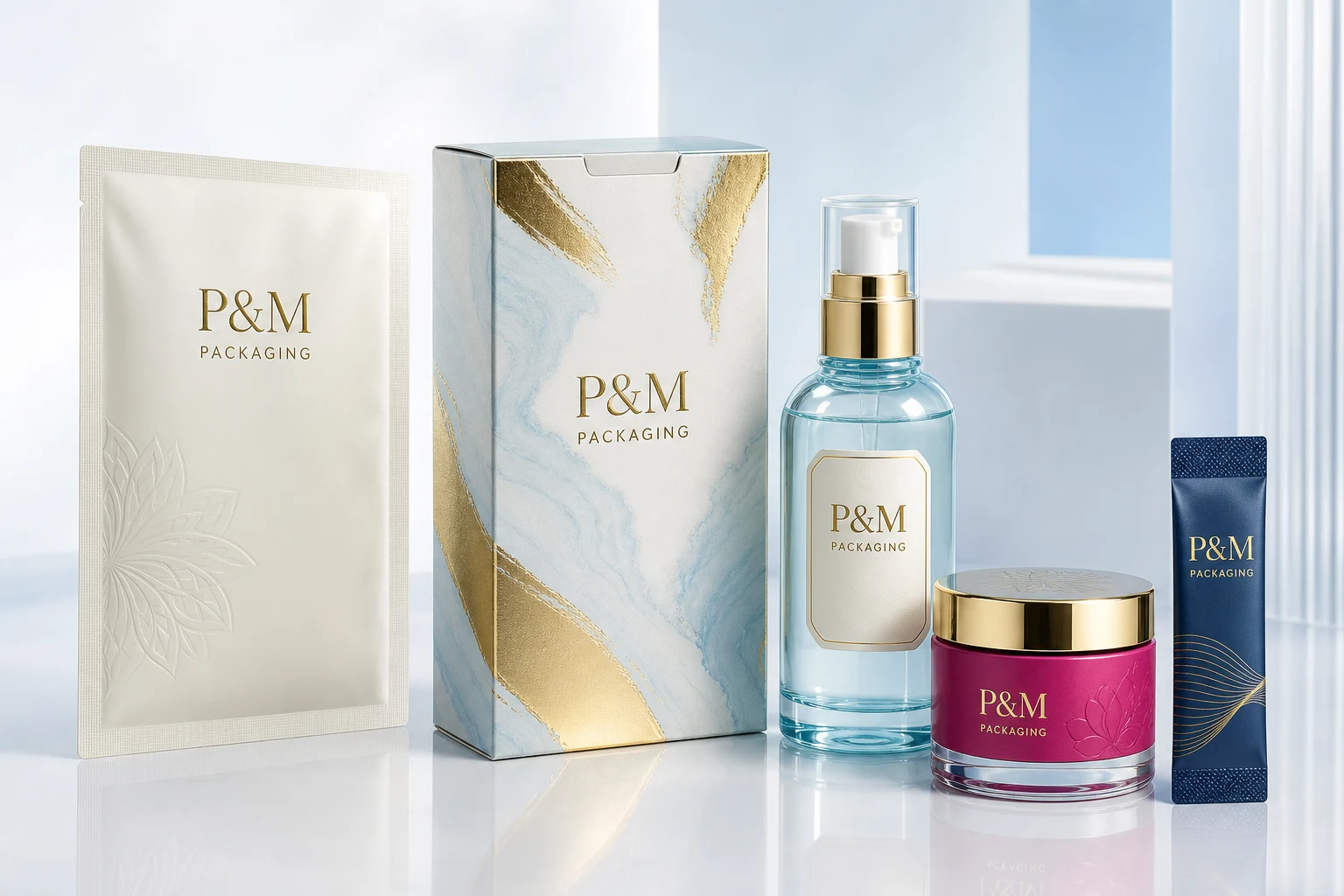
Start with your need
What needs to happen next?
No finished specification required. Send a product or reference photo on WhatsApp.
Printed Face Mask Sachets
Flat flexible pouches reviewed around mask size, liquid dose, formula contact, barrier, seals, tear opening, and print.
Explore flexible packaging →Sample & Multi-Mask Formats
Trial sachets and multi-use concepts coordinated around dose, access, reclosure where applicable, shelf life, and consumer handling.
Explore pouch formats →Retail Cartons & Displays
Single-pack cartons, multipacks, countertop displays, and gift sets planned around count, fit, required panels, and merchandising.
Explore beauty boxes →Cases & Ecommerce Packaging
Case count, sachet orientation, abrasion, compression, moisture exposure, and fulfillment guide the shipping pack-out.
Explore shipping packaging →One-stop face mask packaging solution
Coordinate the wet-product sachet, retail carton, display, and shipping case.
A face mask launch can require printed sachets, multipack cartons, retail displays, subscription kits, and corrugated cases. P&M organizes the components around formula compatibility, barrier, seals, consumer opening, required information, and channel needs.
Discuss this applicationSend the product, format, quantity, and current challenge.
View the complete packaging system and approval inputs
Primary package
Printed face mask sachets
Mask dimensions, formula dose, compatibility, barrier, seal area, tear opening, print, and filling guide the flexible package.
Explore format Retail multipackFolding cartons and kits
Sachet count, fit, opening sequence, required panels, finishes, assembly, and shelf presentation guide the carton.
Explore format MerchandisingCounter displays and gift formats
Pack orientation, access, replenishment, structural stability, artwork, and retail footprint guide the display solution.
Explore format DistributionEcommerce and shipping cases
Case count, abrasion, compression, moisture exposure, vibration, fulfillment, and palletization guide the pack-out.
Explore formatWhat to bring
Inputs for the first packaging review
- Mask substrate, size and fold
- Formula and relevant compatibility information
- Liquid dose and target sachet dimensions
- Filling, sealing and coding process
- Required information and intended market
- SKUs, channels, quantities and timing
What to confirm
Verification before production
- Formula-to-package compatibility plan
- Seal integrity, leak and weight-loss testing
- Opening and consumer-use checks
- Approved artwork, coding and responsible label review
- Carton fit and filled-pack distribution testing
View more technical specifications 4 sections
Face mask packaging starts with formula compatibility
Share the mask substrate, formula or relevant compatibility information, liquid dose, sachet dimensions, filling and sealing method, storage, shelf-life target, quantities, artwork, and intended market.
- Sheet masks and hydrogel masks
- Eye, lip, hand, and foot masks
- Single-use skincare sachets
- Retail multipacks and subscription kits
- Cartons, displays, and shipping cases
Barrier and seal integrity protect the wet product
Moisture loss, oxygen, aroma, oils, alcohol, active ingredients, formula migration, seal contamination, flexing, and storage temperature can affect the complete package. Material choice requires testing with the intended formula and process.
Design the opening and information panels
Tear location, opening force, pouch dimensions, print orientation, lot or date coding, identity, net contents, ingredients, directions, warnings, and responsible-party information should be resolved before artwork approval.
Coordinate sachets, cartons, displays, and cases
Primary sachets, multipack cartons, retail displays, subscription boxes, and shipping cases can share an approved brand system while retaining component-specific materials, dielines, testing, and production controls.
Packaging Knowledge Center
Professional guides for this application
Use these practical articles to prepare specifications, identify project risks, and ask better questions before sampling or production.
Frequently asked questions
What material is used for face mask packaging?
There is no universal structure. The formula, dose, mask substrate, moisture and oxygen sensitivity, oils or alcohol, target shelf life, filling, seals, storage, distribution, print, and applicable documentation guide the material review.
Can P&M coordinate face mask sachets and retail cartons?
Yes. Sachets, multipack cartons, displays, and shipping cases can be planned as one program while each component retains its own specification and validation requirements.
How should face mask packaging be tested?
The test plan may include formula compatibility, migration or appearance checks, seal integrity, leak resistance, weight loss, opening, storage, transport, print durability, and shelf-life work for the approved package.