Direct answer
Choose face mask packaging material by testing the intended formula and mask substrate with the complete sachet structure, inks, adhesives, seals, filling conditions, storage, and shelf-life target. Required moisture and oxygen barrier, liquid dose, seal integrity, opening, print, coding, and retail pack-out should be specified together.
Define the mask, formula, and liquid dose
Sheet, hydrogel, eye, lip, hand, and foot masks can differ in substrate, dimensions, fold, liquid dose, viscosity, oils, alcohol, fragrance, active ingredients, and expected use. These inputs affect sachet size, product contact, headspace, sealing, opening, and handling.
Share formula compatibility information, intended fill and seal process, storage temperature, target shelf life, market, quantities, and any reference package before selecting material or freezing artwork.
Which materials handle serum and essence exposure?
The complete face mask sachet may need to manage moisture loss, oxygen, aroma, light, oil or alcohol exposure, migration, swelling, delamination, seal changes, flexing, and print durability. No single laminate description is universally suitable for all cosmetic formulas.
Compatibility work should include the intended film structure, sealant, inks, adhesives, and any coatings under realistic fill, storage, and time conditions. Accelerated screening can inform development but may not replace real-time shelf-life evidence.
Engineer seals and consumer opening
Liquid or mask material in the seal area can affect seal integrity. Define filling accuracy, product placement, seal width, temperature and dwell window, cooling, package handling, tear notch or laser score, and opening force with the production process.
Testing may include seal strength, leak checks, weight loss, appearance, odor, migration or formula changes, opening, drops, transport, print rub, and storage. The exact plan depends on the formula and intended claim.
Coordinate artwork, cartons, displays, and cases
Reserve space for identity, net contents, ingredients, directions, warnings, lot or date coding, and responsible-party information as applicable. The responsible company must approve cosmetic labeling and claims.
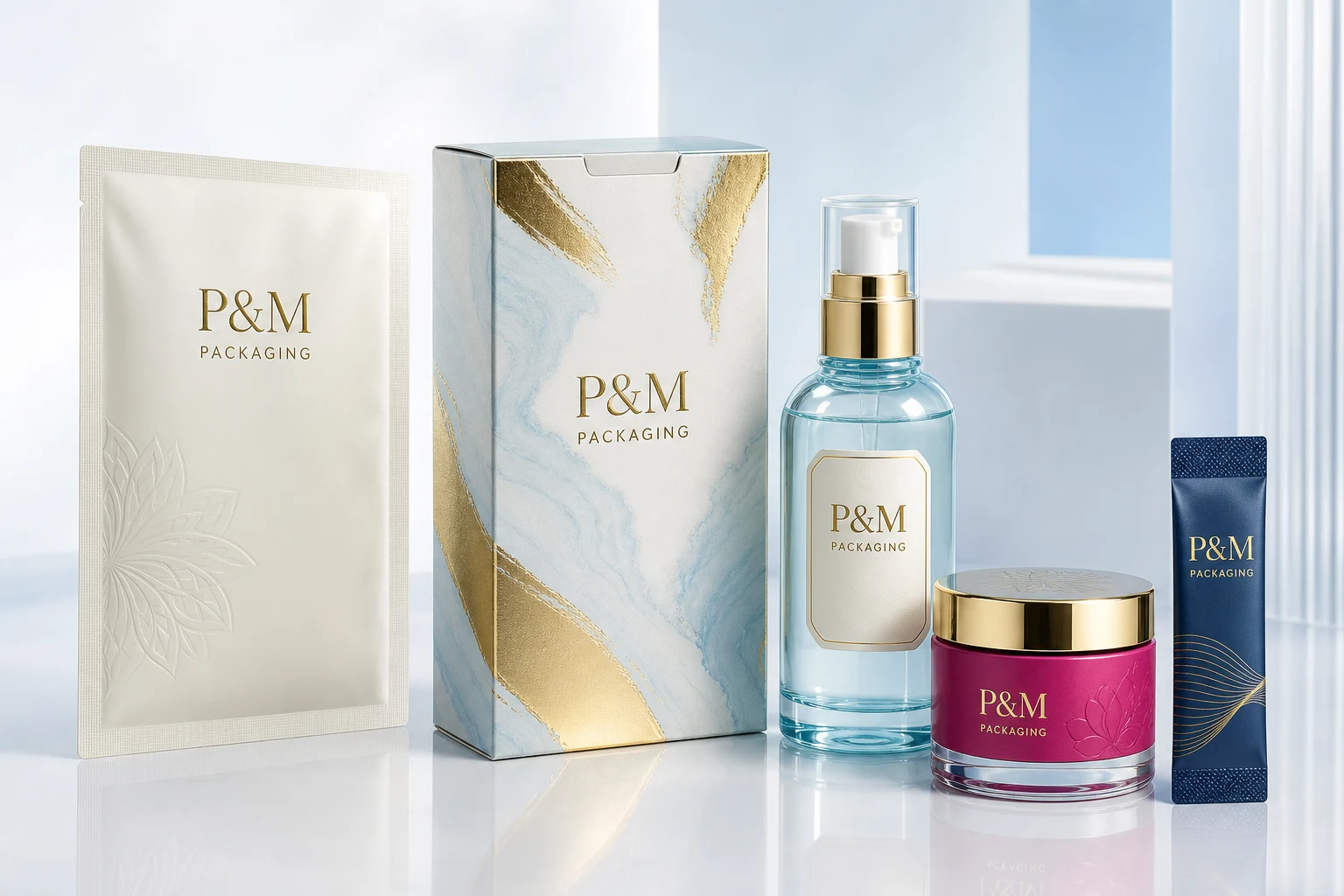
Individual sachets, multipack cartons, countertop displays, subscription kits, and shipping cases can share a brand system while retaining separate materials, dielines, testing, quantities, and production controls.
General educational information only. Materials, performance, compliance, claims, quantities, and timing require confirmation for the exact packaging project.