 WhatsApp
Application scenario · Not a customer case study
Nutraceutical & supplement packaging
Custom Supplement Pouch Packaging
Source custom printed supplement pouches around the product form, filling method, barrier, reclosure, required information, storage, distribution, and quantity by SKU.
Direct answer
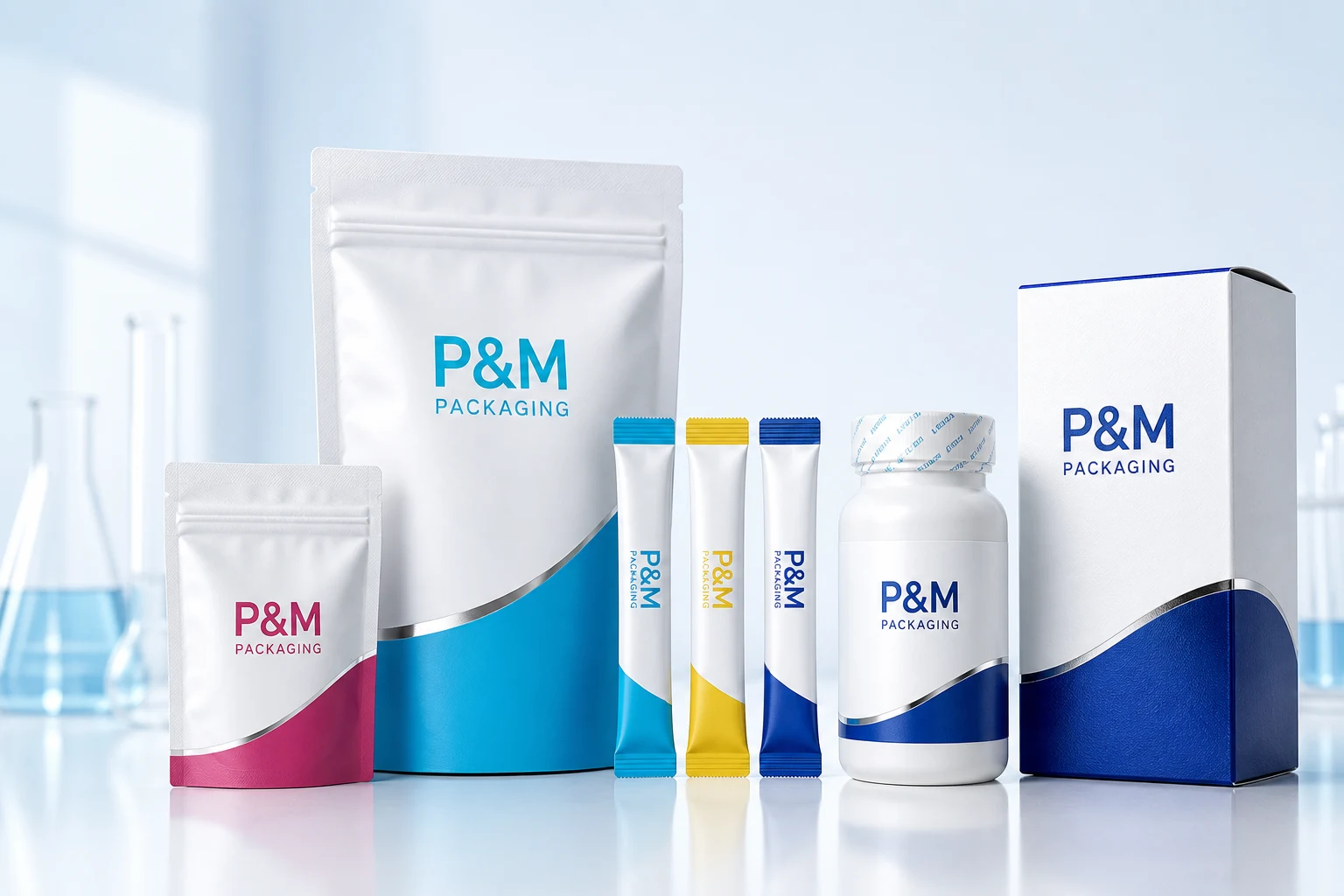
P&M supplies custom supplement pouch packaging for powders, gummies, capsules, tablets, and similar dry products. Pouch projects can use qualified stand-up, flat-bottom, three-side-seal, side-gusset, quad-seal, or shaped formats. The exact structure, closure, food-contact evidence, filling fit, testing, and approved artwork are confirmed for each project. Protein-powder-specific decisions belong on the dedicated powder packaging page; this page does not advertise supplement manufacturing, filling, or contract packing.
Start with your need
What needs to happen next?
No finished specification required. Send a product or reference photo on WhatsApp.
Custom Supplement Pouches
Stand-up, flat-bottom, three-side-seal, side-gusset, quad-seal, and shaped formats reviewed against the exact supplement and filling plan.
Explore custom pouches →Protein & Nutrition Powder Pouches
A dedicated commercial path for powder flow, bulk density, fill weight, seal contamination, scoop access, reclosure, and shelf-life inputs.
Explore protein powder packaging →Supplement pouch packaging solution
Connect product form, pouch format, filling, and approval inputs.
P&M organizes custom supplement pouches around the exact supplement form, filling method, barrier, serving access, required information, quantity by SKU, and approval plan.
Discuss this applicationSend the product, format, quantity, and current challenge.
View the complete packaging system and approval inputs
Resealable retail pouch
Stand-up and flat-bottom supplement pouches
Product form, fill weight, barrier, zipper, usable opening, repeated use, fill level, and shelf presentation guide the pouch.
Explore format Alternative pouch formatsFlat, side-gusset, quad-seal, or shaped pouches
Geometry, panel area, filling, top seal, pack-out, consumer opening, and handling must fit the exact project.
Explore format Powder-specific pathProtein and nutrition powder pouches
Bulk density, dusting, scoop access, powder in the seal area, filling equipment, and shelf-life inputs belong on the dedicated powder packaging path.
Explore formatWhat to bring
Inputs for the first packaging review
- Powder, gummy, capsule, tablet, or similar dry product
- Serving method, fill weight, and product dimensions
- Moisture, oxygen, oil, aroma, and light sensitivity
- Filling, sealing, application, and coding equipment
- Required information and intended market
- SKUs, quantities, forecast, destination, and timing
What to confirm
Verification before production
- Food-contact documentation as applicable
- Barrier, compatibility, and shelf-life plan
- Seal, zipper, and filling-line performance
- Printable area and responsible-company content approval
- Filled-package handling and distribution checks
View more technical specifications 6 sections
Keep protein powder decisions with the powder packaging owner
This page is the commercial entry for supplement pouch packaging. Protein-powder-specific questions about bulk density, dusting, scoop access, powder in the seal area, and equipment inputs are handled on the dedicated powder packaging page so buyers receive one clear decision path instead of duplicate pages.
Protein powder packaging
Use the powder page for product-flow, pouch, filling, reclosure, and validation inputs specific to protein and nutrition powders.
Review protein powder pouches →Supplement powder material guide
Use the material guide for the information-gathering process behind a powder pouch structure; do not copy a generic laminate recipe.
Read the powder pouch guide →Match supplement pouch packaging to the product form
Powders, gummies, capsules, and tablets can behave differently during filling, storage, transport, opening, and repeated use. Start with the exact product and process before choosing the pouch format or material structure.
- Product form, fill weight, and serving method
- Filling method and seal-area contamination risk
- Moisture, oxygen, aroma, oil, and light sensitivity
- Opening, reclosure, scoop or pour access
- Storage, distribution, quantity per SKU, and target shelf life
Choose the pouch format before final artwork
Stand-up, flat-bottom, three-side-seal, side-gusset, quad-seal, and shaped pouches create different usable openings, panel areas, fills, closures, and shelf presentation. Confirm the format, dimensions, zipper or other qualified features, fill level, top seal, case pack, and filling process before artwork is released.
- Stand-up pouches for common resealable retail formats
- Flat-bottom pouches when a stable base and multiple print panels fit the project
- Three-side-seal pouches for flatter packs
- Side-gusset or quad-seal formats where the product and pack-out support them
- Shaped formats only after geometry, filling, seals, and handling are reviewed
Define performance and evidence before selecting a structure
A material name alone does not establish suitability. The product, barrier target, filling and sealing conditions, closure, expected shelf life, storage, distribution, and applicable food-contact evidence should be reviewed as one package system. Testing and approval requirements remain project specific.
Reserve space for required supplement information
Map product identity, net quantity, Supplement Facts where applicable, ingredients, business information, directions, warnings, claims, barcode, lot or date coding, and other variable information onto the approved pouch artwork. The responsible manufacturer, distributor, or brand approves the final content and claims; this is not FDA pre-approval of the label.
Prepare a useful supplement packaging RFQ
Send the exact supplement form, fill weight, serving method, approximate dimensions, desired pouch format or bottle dimensions, filling method, quantity per SKU, annual forecast, artwork status, destination, launch timing, shelf-life goal, and any current packaging problem. Unknown values can be marked for review rather than guessed.
Packaging Knowledge Center
Professional guides for this application
Use these practical articles to prepare specifications, identify project risks, and ask better questions before sampling or production.
Frequently asked questions
What pouch format is suitable for supplements?
The choice depends on the supplement form, fill weight, serving method, barrier needs, desired shelf life, opening, reclosure, filling equipment, distribution, quantity, and retail presentation. Stand-up, flat-bottom, three-side-seal, side-gusset, quad-seal, or shaped formats may be reviewed for a qualified project.
Does this page cover contract supplement packaging or filling?
No. This page covers custom printed supplement pouches supplied as empty packaging components. It does not advertise supplement formulation, manufacturing, filling, private-label production, or contract packing.
Can P&M create Supplement Facts or approve supplement claims?
This page can help buyers reserve printable space during packaging planning, but the responsible manufacturer or distributor must create and approve required labeling content and product claims. FDA does not pre-approve dietary supplement labels before products are marketed.