 WhatsApp
Application scenario · Not a customer case study
Powder packaging
Custom Powder Packaging Pouches, Sachets & Rollstock
Custom protein powder and dry-product packaging for brands launching, scaling, extending a flavor range, or replacing a supplier—planned around moisture, powder flow, filling, seals, scoop access, SKU count, and distribution.
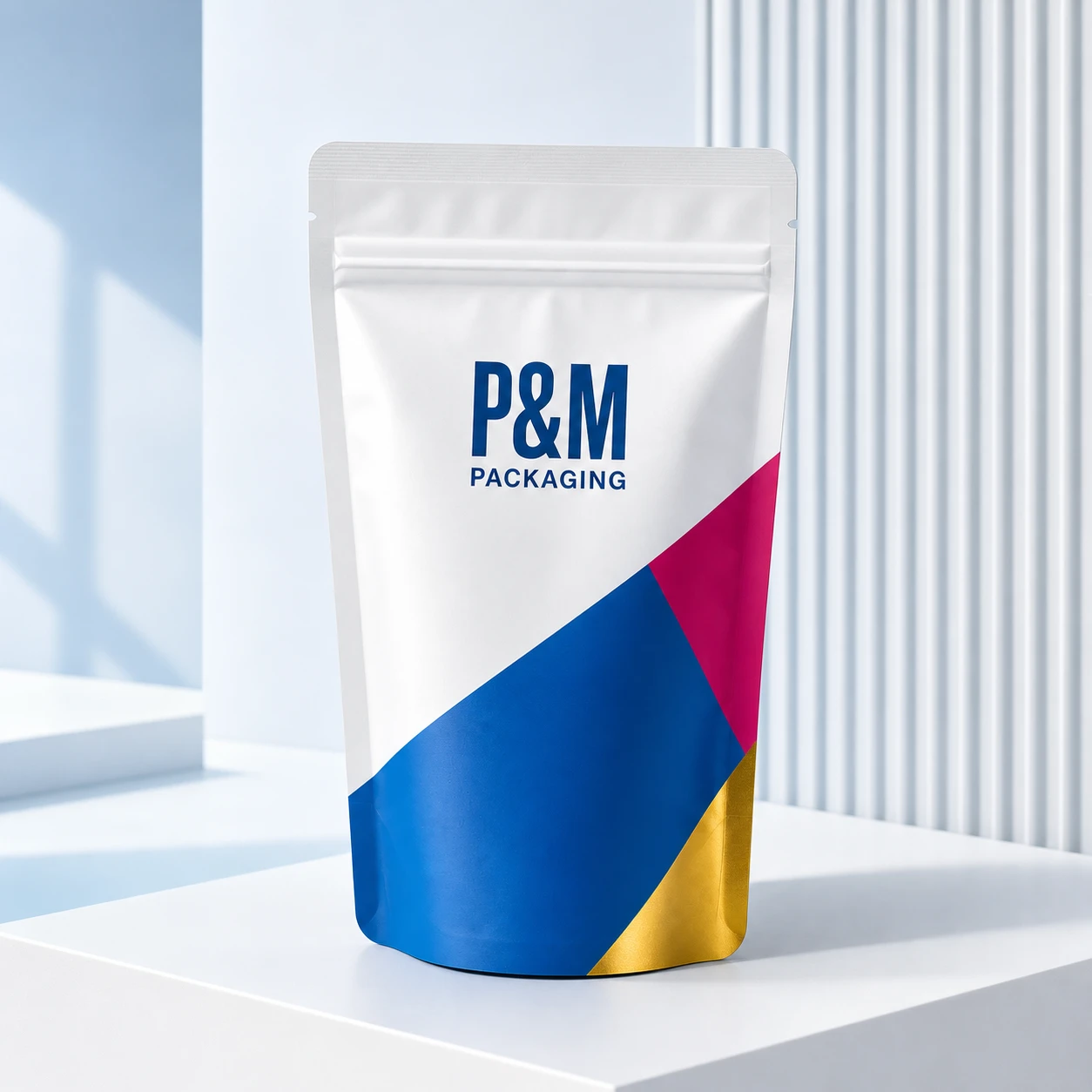
AI-generated representative rendering—not a customer product, production sample, or proof of a specific material, food-contact status, closure, barrier, or performance. Final suitability requires project review.
Direct answer
P&M develops custom protein powder pouches, nutrition powder bags, sachets, and printed rollstock for brand owners, product teams, procurement teams, and co-packers. The package is selected from powder flow and dusting, bulk density, dose or fill weight, moisture and oxygen sensitivity, filling equipment, seal contamination risk, scoop or pour access, reclosure, shelf-life target, SKU count, quantity, and distribution. The general production baseline starts at 100 units per SKU, subject to the confirmed format and production route.
Verified service baselines
A controlled route for powder packaging
The package is reviewed with the actual powder and filling process. Barrier, seal, zipper, food-contact, shelf-life, and performance claims remain specific to the final construction and validation plan.
- General production baseline
- 100+ / SKUFormal production generally starts from 100 pieces per SKU; rollstock and process-specific minimums can differ.
- Paid sampling
- From 1 pieceThe quotation identifies the sample route and what it can verify. A one-piece sample is separate from production MOQ and may not reproduce every final material, print, closure, or performance condition.
- Production and U.S. support
- China + U.S.Owned-factory production in China with U.S.-based service personnel and a self-operated Los Angeles warehouse.
- Response targets
- 12 h / 24 hReply target within 12 hours and quotation target within 24 hours for a sufficiently defined project.
Buyer comparison
Compare powder packaging formats
Select the format from dose, powder flow, dusting, filling equipment, opening, reclosure, shelf presentation, and order scale.
| Format | Best fit | Filling route | Critical checks |
|---|---|---|---|
| Resealable stand-up pouch | Qualified multi-serve protein, drink-mix, spice, and ingredient powders | Premade-pouch filling and final top sealing | Bulk density, scoop access, zipper contamination, fill level, moisture barrier, headspace, and shelf stance |
| Flat-bottom pouch | Larger premium powder packs needing a structured shelf profile | Premade-pouch filling and final top sealing | Base geometry, package weight, gusset opening, zipper position, case packing, and repeated use |
| Sachet / stick format | Single doses, samples, trial packs, and portion control | Usually formed, filled, and sealed from printed rollstock | Dose, lanes, web, repeat, powder flow, dust in seals, tear opening, coding, and line speed |
| Printed rollstock | Equipment-formed powder bags and high-volume multi-lane packs | VFFS, HFFS, sachet, or supported stick-pack equipment | Machine model, web, unwind, coefficient of friction, static, sealant, registration, cutoff, and line trials |
The same net weight can require different pouch dimensions because powder bulk density, settling, headspace, scoop access, and gusset deployment change usable capacity.
Start with your need
What needs to happen next?
No finished specification required. Send a product or reference photo on WhatsApp.
For Protein Powder Brands
A project path for branded launches, multiple flavors or sizes, sample-to-full-size programs, ecommerce packs, scale-up, and supplier-change projects.
Review a protein powder pouch →Moisture, Dust & Seal Control
Translate the actual powder, bulk density, filling process, dusting, scoop access, headspace, zipper, and shelf-life target into a testable specification.
Review powder pouch materials →Resealable Powder Pouches
Stand-up and flat-bottom zipper pouches reviewed around fill weight, scoop access, powder flow, barrier, fill level, seal contamination, and repeated use.
Explore stand-up powder pouches →Single-Serve Sachets & Stick Packs
Dose, lanes, web width, repeat, seal area, tear opening, powder flow, coding, and dedicated packing-line conditions guide the specification.
Explore powder sachets and stick packs →View 3 more options
Printed Powder Rollstock
Printed film for sachets, supported stick formats, pillow packs, and other equipment-formed powder packs specified around machine, web, repeat, unwind, sealing, dust, and coding.
Explore printed powder rollstock →Folding Cartons & Multipacks
Pack count, retail presentation, coding areas, and secondary protection can be reviewed with the primary pack when included in the quotation.
Explore secondary packaging →Cases & Fulfillment Packs
Case count, package orientation, powder weight, compression, vibration, palletization, and ecommerce handling guide the pack-out.
Explore shipping packaging →One-stop powder packaging solution
Connect dosing, barrier, filling, retail presentation, and shipping protection.
When included in the quotation, a powder project can coordinate single-serve rollstock, resealable pouches, folding cartons, variety packs, and corrugated cases around powder behavior, the filling line, consumer use, and route to market. Each component keeps its own specification and approval path.
Discuss this applicationSend the product, format, quantity, and current challenge.
View the complete packaging system and approval inputs
Single serve
Sachets and printed rollstock
Dose, powder flow, web, repeat, tear opening, seal contamination, coding, and packing equipment guide the specification.
Explore format Multi serveResealable powder pouches
Fill weight, barrier, zipper, opening, scoop or pour access, repeated use, and shelf presentation guide the bag.
Explore format Retail layerCartons, kits and variety packs
Pouch or sachet count, information panels, opening sequence, shelf display, and assembly are coordinated with the primary packs.
Explore format Distribution layerCorrugated shipping cases
Powder weight, pack orientation, case count, compression, vibration, palletization, and fulfillment guide the pack-out.
Explore formatWhat to bring
Inputs for the first packaging review
- Powder type, ingredients and particle behavior
- Bulk density, dose and fill weight
- Moisture, oxygen, aroma, oil and light sensitivity
- Filling equipment and seal conditions
- Serving, opening and reclosure method
- SKUs, channels, quantities and timing
What to confirm
Verification before production
- Barrier and product compatibility plan
- Filling-line and seal-contamination trials
- Seal, zipper and package-integrity performance
- Artwork panels, coding and responsible label approval
- Filled-pack distribution testing where required
View more technical specifications 8 sections
Spice packaging, drink mixes, and other powder applications
Powder applications diverge quickly once the product is named. A spice may require oxygen, light, aroma, or oil protection depending on the exact spice, grind, oils, shelf-life target, storage, and format. Drink mixes and powdered beverages can require moisture control, qualified dosing formats, and flavor protection. Flour, baking mixes, and ingredient powders require project-specific review of dust in seals, handling, filling, and distribution. The same fill weight can need a different bag for each product.
Spices & Seasonings
Review the exact spice, grind, oils, aroma and color targets, light exposure, filling, storage, and shelf-life objective before choosing the package.
Drink Mixes & Powdered Beverages
Moisture-sensitive dosing formats from single-serve sachets and supported stick-format concepts to scoop-access pouches.
Protein & Nutrition Powders
Larger reclosable pouches with scoop access, gusset stability, and odor or flavor protection.
Flour, Baking & Ingredients
Dust management in seal areas, stacking and handling strength, and efficient value formats.
Is P&M a fit for your protein powder brand?
This service is designed for companies developing or purchasing custom packaging for their own branded powders. It supports a first product launch, multiple flavors or pack sizes, trial sachets plus full-size pouches, retail or ecommerce expansion, planned volume growth, or a supplier change caused by moisture pickup, clumping, powder in seals, zipper problems, weak shelf stance, print variation, or delivery issues.
- Protein, nutrition, drink-mix, ingredient, and dry-product brands
- Product-development and procurement teams
- Co-packers with known powder-filling and sealing requirements
- Projects with a defined powder, fill weight, SKU plan, quantity, channel, and launch date
- Programs needing samples, production controls, DDP delivery, or Los Angeles warehousing support
Powder and protein powder packaging starts with product behavior
Share the powder type, particle size, bulk density, dusting or flow behavior, fill weight, serving method, relevant ingredients, storage, shelf-life target, quantities, and intended market.
- Protein powder packaging
- Qualified food and ingredient powders
- Spices, drink mixes, and dry blends
- Single-serve, retail, club, and ecommerce formats
Barrier, filling, and seal contamination
Moisture, oxygen, aroma, oils, light, powder in the seal area, static, fill speed, headspace, and storage conditions can affect package performance. The structure and sealing window should be reviewed with the intended product and equipment.
Choose the serving and closure system
A scoop-access pouch, pourable zipper bag, single-dose sachet, or machine-packed rollstock each creates different opening, reclosure, dosing, seal, artwork, and production requirements.
Plan the protein powder launch and scale-up route
Package size and production route should follow actual bulk density, fill level, quantity per flavor or artwork, filling method, launch risk, reorder plan, and annual demand—not net weight or unit price alone.
Multiple Flavors or Sizes
Digital printing can reduce versioned inventory exposure and has no plate fee. The general production baseline starts at 100 units per SKU, with exact minimums confirmed for the selected pouch.
Full-Size Scoop Pouch
Review usable opening, scoop dimensions, bulk density, fill level, headspace, zipper position, powder contamination, gusset deployment, and case pack.
Trial Sachets or Stick Formats
Confirm dose, lanes, web, repeat, unwind, seal area, tear opening, coding, powder flow, static, and the co-packer's equipment before artwork release.
Supplier-Change Project
Send the current bag or specification, retained product or failure evidence where available, filling settings, shelf-life concern, acceptance criteria, SKU quantities, and launch deadline.
Factory and quality evidence for powder brands
P&M's owned Guangdong factory includes three HP Indigo digital presses, including an HP Indigo 200K, plus offset and rotogravure printing routes, dry lamination, rewinding inspection, and bag-making equipment. Available project checks can include laminate bond strength, leakage, raw-material testing, solvent residue, dimensions, thickness, print color, seal-edge dimensions, zipper strength, and drop or load testing. The applicable checks and acceptance criteria remain specific to the approved powder package.
Plan primary and secondary packaging together
When included in the quotation, pouches or sachets and secondary cartons or cases can be reviewed around SKU hierarchy, coding, pack count, protection, quantities, and launch timing. Each component keeps its own specification and approval path.
Packaging Knowledge Center
Professional guides for this application
Use these practical articles to prepare specifications, identify project risks, and ask better questions before sampling or production.
View 9 more related guides
Problem-Solving GuideHow to Prevent Powder Pouch Seal Failures→Freshness Problem-SolvingWhy Powders Clump or Lose Flavor in the Package→Film Structure GuideFlexible Packaging Materials for Powders→Powder Packaging GuideHow to Choose a Bag Structure for Supplement Powders→Rollstock Specification GuideHow to Specify Printed Powder Packaging Film→Zipper & Reclosure GuidePouch Zippers for Powders and Granules→Packaging SourcingCustom Packaging RFQ Checklist→Factory EvidenceSee P&M's Powder-Pouch Production Equipment→Supplier QualificationQualify P&M for a Powder Packaging Program→
Frequently asked questions
What packaging is suitable for spices?
Spice packaging depends on the exact spice, grind, oils, aroma and color targets, light exposure, filling, storage, channel, and shelf-life objective. A qualified pouch, refill bag, sachet, or foodservice format should be confirmed against those project inputs rather than assumed from the product name.
What packaging is suitable for powders?
The right format depends on powder flow and dusting, fill weight, serving method, moisture and oxygen sensitivity, filling equipment, seal contamination, shelf-life target, distribution, quantity, and retail presentation.
Can powder pouches include a zipper and scoop access?
Yes, subject to the pouch size, opening, fill level, zipper position, top seal, product behavior, intended scoop, filling method, and performance review.
View 5 more questions
Should powder use a premade pouch, sachet, stick pack, or rollstock?
Use the format supported by the dose, serving method, powder flow, moisture sensitivity, filling equipment, seal-contamination controls, opening, reclosure, coding, quantity, and channel. Full-size premade zipper pouches support scoop access and repeat use; sachet or supported stick-format rollstock supports machine-formed single doses.
Can sachets, full-size powder pouches, cartons, and cases be coordinated?
Potentially. When the applicable components are included in the quotation, they can be reviewed as one program while retaining format-specific materials, dimensions, artwork, equipment, testing, and approvals.
Can a protein powder brand launch several flavors at lower quantities?
Potentially. P&M's general production baseline starts at 100 units per SKU, and digital printing has no plate fee. The exact minimum, setup, pouch size, material, zipper, finish, total quantity, quantity per flavor or artwork, and production route must be confirmed for the project.
How do you prevent protein powder from interfering with the zipper or top seal?
Start with the powder's particle size, flow, dusting and static behavior; filling method and speed; fill level and headspace; zipper position; top-seal area; sealant; and cleaning or dust-control process. The filled package and production conditions should be sampled and validated rather than assuming the pouch alone controls contamination.
What should a protein powder brand send for a packaging recommendation?
Send the powder type, particle size or flow behavior, bulk density if known, fill weight, scoop dimensions, current or desired pouch, filling equipment or co-packer requirements, moisture and shelf-life goals, quantity per SKU, annual forecast, artwork status, sales channel, delivery destination, launch date, and any current-package problem.