Direct answer
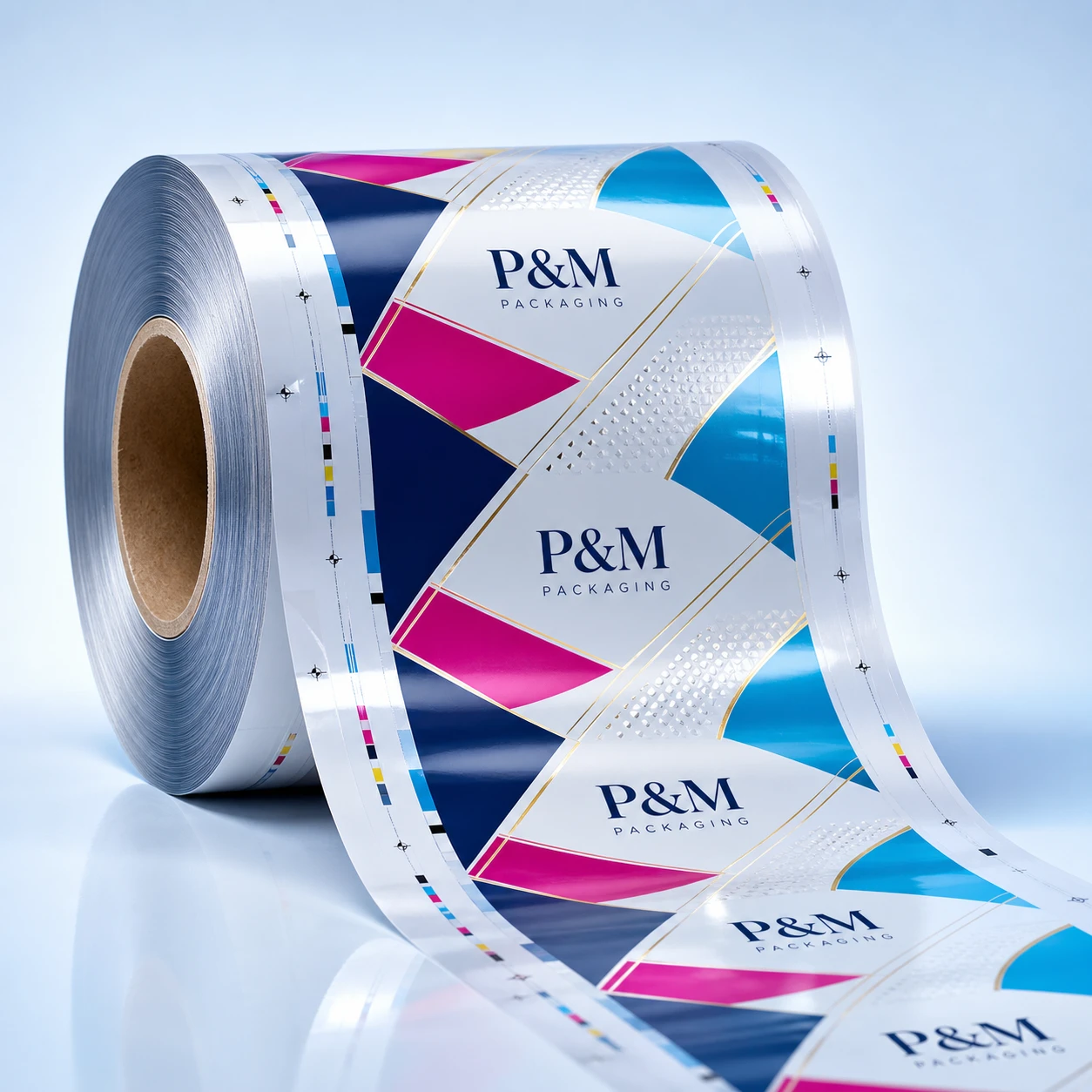
Specify custom printed rollstock film by defining the product and package style, packing-machine make and model, web width, print repeat, lane count, eye marks, unwind direction, core, maximum roll diameter and weight, material performance, sealant and coefficient-of-friction needs, artwork orientation, coding, quantity, and line-trial requirements.
Begin with the forming, filling, and sealing equipment
Rollstock becomes the package on the packing line. Machine make and model, forming method, package style, product feed, seal jaws, web path, registration controls, coding equipment, line speed, and the co-packer's operating window all affect the specification.
A finished package width and length are not enough to reproduce a roll. Ask the equipment owner for an approved roll specification, machine drawing, or current roll label and provide a physical sample when available.
- Machine make, model, and forming method
- Package style and finished dimensions
- Web path, seal jaws, and coding system
- Target speed and product feed
- Co-packer trial and approval requirements
How do you specify web, repeat, lanes, and unwind?
Web width, print repeat, lane count, lane spacing, seal and cutoff areas, eye-mark size and position, copy direction, unwind, and artwork orientation must be aligned. A change to one value may change the dieline, plate or cylinder plan, material usage, and line setup.
The roll specification should also state core inside diameter, maximum outside diameter, maximum roll weight, splice type and count, roll edge and telescoping limits, winding tension where applicable, and roll identification requirements.
Translate product and process into material requirements
Define oxygen, moisture, aroma, grease, light, puncture, stiffness, product contact, filling temperature, storage, desired shelf life, distribution, seal contamination, and opening needs. The complete printed and laminated construction must perform on the line and in the filled package.
Seal-initiation temperature, sealing window, hot tack, coefficient of friction, curl, static, stiffness, gauge, and layer bond can affect forming and line speed. These targets should be confirmed with the equipment and trial plan instead of inferred from a generic film name.
Approve prepress, finished rolls, and line performance
Prepress should verify dieline, repeats, lanes, distortion where required, eye marks, white ink, copy orientation, seam and seal zones, coding space, color standards, and finish. Finished-roll inspection may cover dimensions, winding, splices, registration, print, lamination, and identification.
Production validation may include machine trials, forming, tracking, registration, cutoff, seals, coding, package dimensions, opening, filled-package integrity, barrier or shelf-life work, and distribution testing based on the application.
General educational information only. Materials, performance, compliance, claims, quantities, and timing require confirmation for the exact packaging project.