 WhatsApp
Panel Map
Assign primary graphics, required copy, barcodes and variable areas to the front, back, side gussets and base.
Custom printed flat-bottom packaging
Build custom flat-bottom pouches for coffee, dry foods and pet treats around the right size, barrier target, zipper, artwork and optional coffee valve. Coordinate the front, back, side gussets and base as one five-panel package.
U.S.-based support · Production in our owned Guangdong, China factory
Direct answer
In flexible premade-bag sourcing, flat-bottom pouch and box pouch commonly refer to a bag with a rectangular base and two side gussets. It offers five connected artwork panels and can include a standard zipper or a one-way coffee valve when technically appropriate. P&M's general production baseline starts from 100 units per SKU, with the exact construction and features confirmed for the product and filling process.
Coordinate artwork with bag construction
Map the front, back, two side gussets and base as one connected artwork system. Review the assembled bag, folds, seals, zipper, optional valve and filled shape before production approval.
Assign primary graphics, required copy, barcodes and variable areas to the front, back, side gussets and base.
Keep critical copy and scannable marks clear of folds, corner seals, the top-seal area and other controlled zones.
Map key graphics around the usable opening, zipper flange, optional valve, expected fill line and filling-equipment clearance.
Approve the dieline, artwork version, structure, dimensions, features, quantity and representative filled-bag checks for the exact project.
Review panel transitions, folds and seals, zipper or valve clearance, the approved structure, dimensions, artwork version and representative filled-bag checks. Material, features, testing, cost and timing are confirmed for the exact project.
Discuss your artwork and bag specificationSee our flat-bottom bag-making equipment →Ordering at a glance
Start with your product, fill weight and quantity per design. A reference bag or photo is enough to begin sizing; a finished specification is not required.
Your flat-bottom pouch project
Tell us what goes in the pouch and your estimated quantity per design. We can help with dimensions and material selection if you are still deciding.
Our U.S. team targets a reply within 12 hours and a quotation within 24 hours once the project is sufficiently defined.
See our printing and bag-making equipment →Our owned Guangdong factory has HP Indigo digital, Vision 520 web offset, rotogravure and flat-bottom bag-making equipment. Compare printing routes by quantity per SKU, artwork changes and material. The first-party photographs below document equipment presence; the exact production and converting route is confirmed for each project.
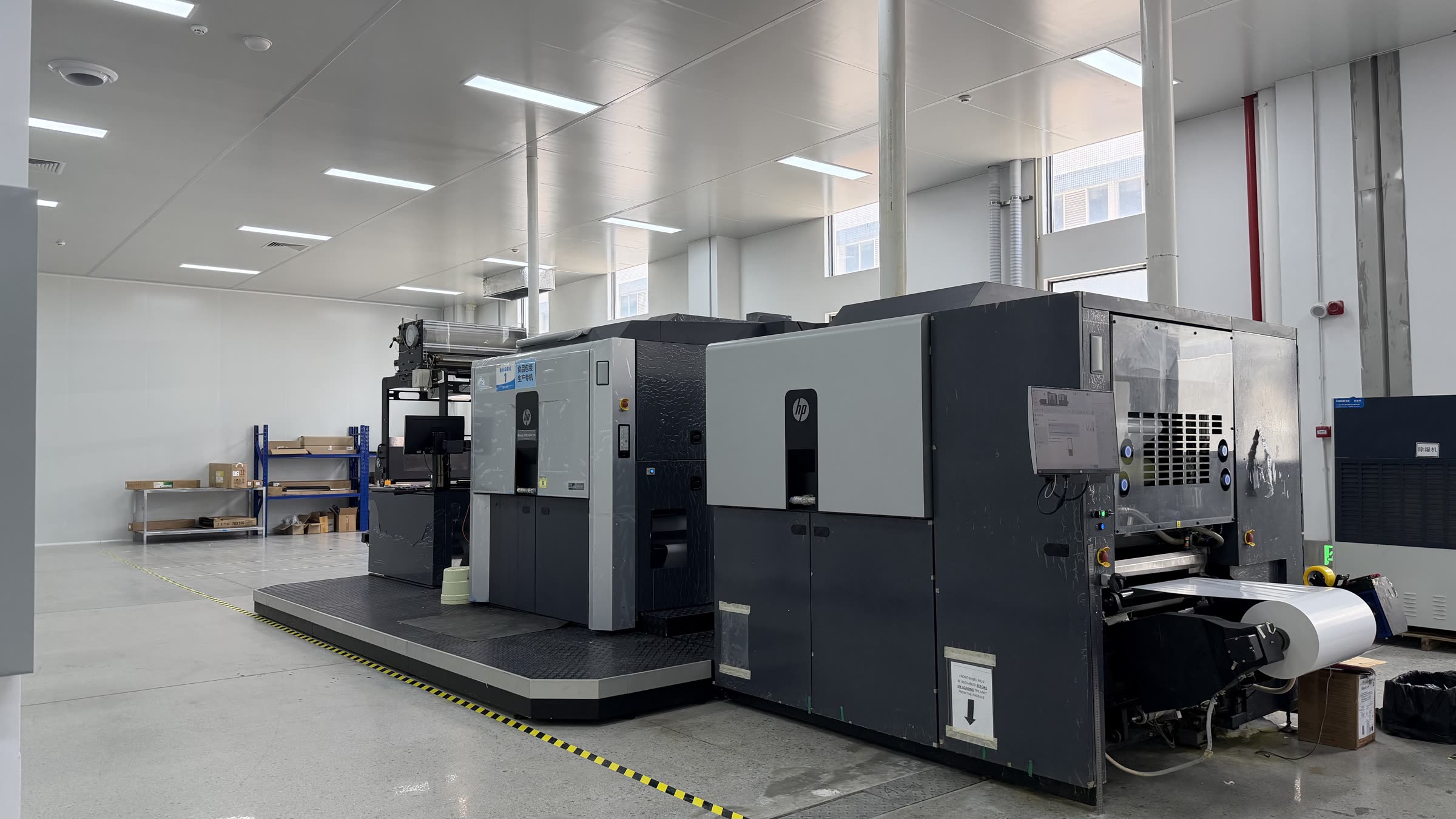
Test new flavors, seasonal designs or smaller runs with HP Indigo digital printing. Our factory has three HP Indigo presses, including a 200K. No digital plate fee is charged.
See our digital workshop →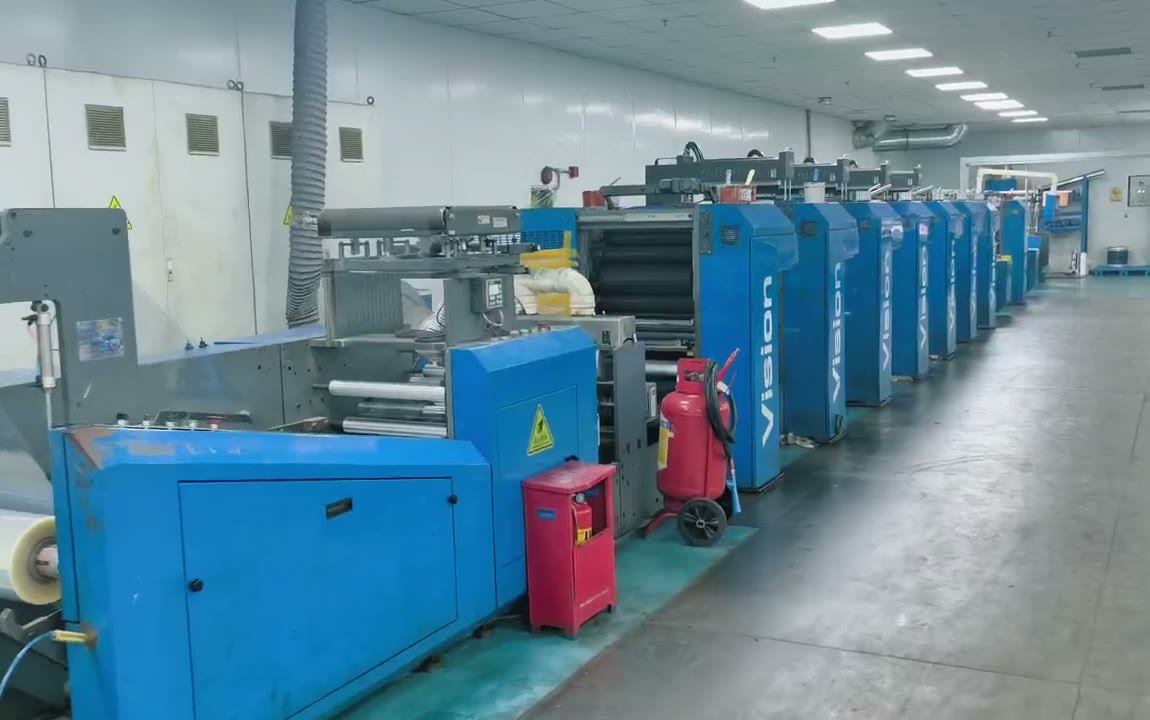
Compare Vision 520 web offset as quantities grow, especially for multiple designs or artwork changes. No offset plate fee is charged; the economical route depends on the pouch size and quantity per SKU.
See our offset press →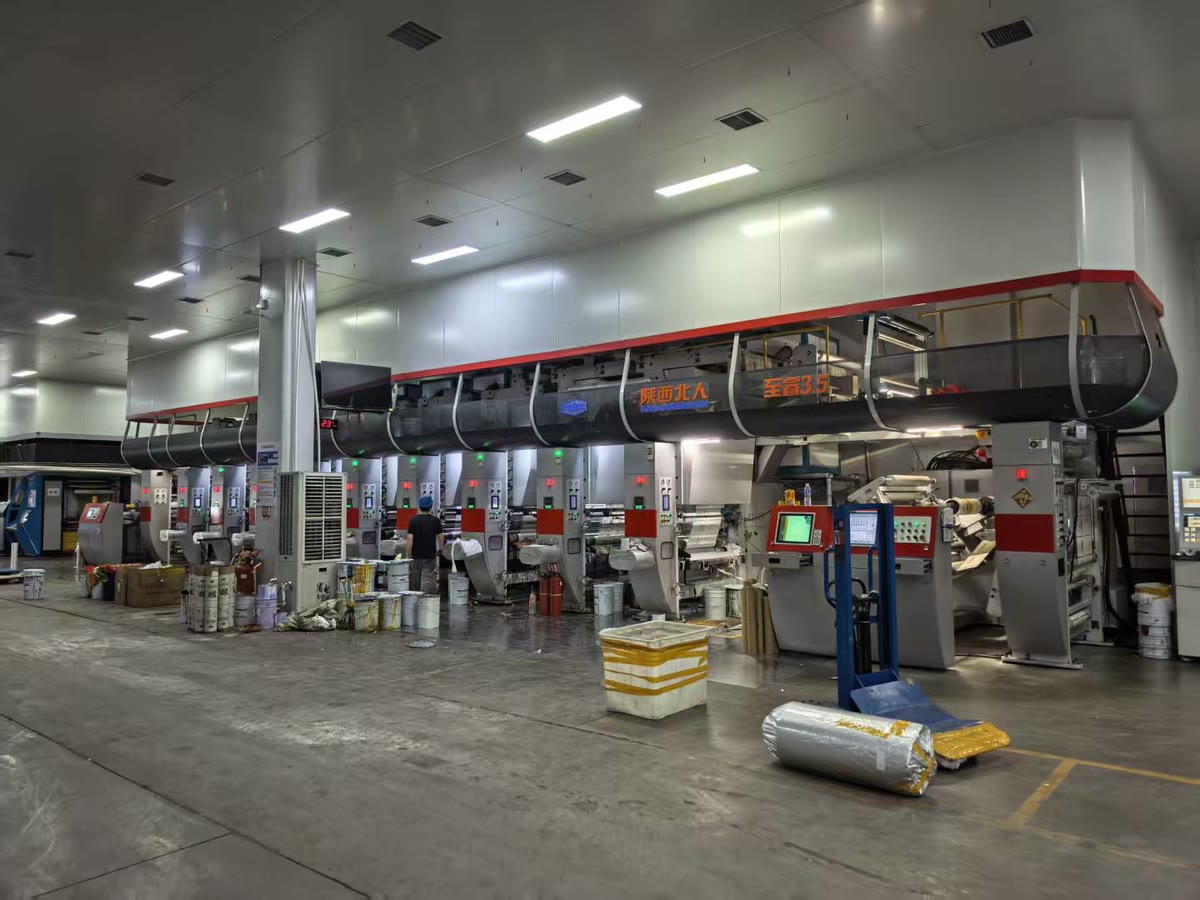
Evaluate rotogravure for higher-volume individual designs and repeat orders. Compare the complete quote, including cylinder or plate charges, against digital and offset for the same specification.
See our gravure workshop →Review flat-bottom pouches for coffee, dry foods, snacks, granola, nuts and pet treats when shelf stance and reclosure matter. Product fit, bag dimensions, filled weight and the filling process still require project-specific confirmation.
Coordinate the fill, headspace, barrier target, zipper, optional one-way valve, top seal and roast-to-pack timing.
Review coffee bag decisions →Confirm bulk density, oils, crumbs or particles, fill line, reclosure, seals, shelf stance and case packing with the actual product.
Review snack packaging →Match the pouch size, structure, opening, closure, seals and handling to the product and filled weight.
Review pet packaging →Choose around the product, not a stock size chart. Send the fill weight and a reference pouch if available. We review width, height and base depth together; the same weight of coffee, granola or pet treats can need different dimensions.
Review the standard zipper requirement around filling clearance, top sealing and how customers pour or scoop the product. Confirm the usable opening on a sample.
For coffee, review degassing, roast-to-pack timing and valve position. A valve is selected for the application; it is not a default requirement for snacks or pet treats.
Coffee bag and valve options →Define the desired appearance, barrier target, heat-seal needs and evidence requirements, then confirm the complete structure. Surface appearance alone does not establish recyclability or a plastic-free package.
Share the product's oils, aroma, moisture sensitivity and intended shelf life. Film structure, seals and the filled package need project-specific review and testing.
A flat-bottom pouch opens into a rectangular footprint with defined side panels. A stand-up pouch uses a bottom gusset, while a flat three-side-seal pouch has no box-shaped base. Compare the filled package, usable opening, shelf footprint, filling equipment and delivered price before choosing.
A bottom-gusset doypack can be an efficient starting point when material use, familiar filling and lower converted-bag cost matter more than a square shelf footprint.
Explore stand-up pouches →Side-gusset and quad-seal formats provide vertical capacity for coffee, pet food and bulk dry products, with different panel geometry and closure options.
Explore side-gusset bags →Flat bottom bag, flat bottom pouch and box pouch commonly refer to a premade flexible package with a rectangular base and defined side panels. Box-bottom and block-bottom wording can overlap in sourcing, so the final dieline, gussets, seals and construction should control the specification. Final dimensions and structure depend on fill weight, product density, barrier, closure and filling method.
The rectangular base and five-panel artwork create more interfaces to control than a simple flat bag. Confirm the package with the actual product so base deployment, corner seals, panel shape, zipper access, valve clearance, graphics, and case packing are approved as one system.
Review fill volume, product density, bottom geometry, corner seals, material stiffness, filling sequence, settling, and the target shelf footprint.
Review capacity and product fit →Confirm opening width, zipper style, flange position, fill line, top-seal area, consumer access, scoop or pour behavior, and closure cycles.
Compare zipper options →Map the valve above the expected product line and away from the zipper, final seal, key graphics, grippers, filling clearance, and case contact.
Review valve placement →Approve panel transitions, folds, gussets, base orientation, registration, seal zones, product bulge and the assembled shelf view.
Prepare five-panel artwork →Start with the product, fill weight, preferred dimensions or reference bag, closure, one-way valve requirement, barrier or shelf-life target, artwork count and quantity. Custom flat-bottom pouch orders have a general production baseline of 100 pieces per SKU. Confirm dimensions, structure, printing route, zipper or valve, approvals and quantity for each artwork in the quotation.
Packaging Knowledge Center
Use these practical articles to prepare specifications, identify project risks, and ask better questions before sampling or production.
The general production baseline for custom flat-bottom pouches starts from 100 pieces per SKU. Each size and artwork has its own quantity. A paid custom sample can start from 1 piece and is separate from production. Dimensions, material, zipper, valve, window, printing route, price and lead time are confirmed in the quotation.
Digital and offset production typically takes 7–10 days for total quantities up to 50,000. Rotogravure typically takes 10–15 days, with larger quantities potentially requiring longer. Material availability, specialty processes and approval timing can affect the schedule. These are production estimates, not door-to-door delivery promises; freight and the delivery date are confirmed separately in your quotation.
Share the product, fill weight, current pouch dimensions or a reference photo, and how you fill and seal it. Width, height, base depth, product density, headspace, zipper and any valve affect usable capacity. Confirm fit with the actual product before approving production; a coffee weight does not define the right size for a different product.
In flexible premade-bag sourcing, flat bottom pouch and box pouch commonly refer to a bag with a rectangular base and side gussets. Box-bottom and block-bottom wording can overlap across suppliers, so the production specification—dieline, dimensions, gussets, seals, material and features—should define the package rather than the name alone.
Consider a flat bottom pouch when shelf stance, square facing, five-panel artwork, or case-packing efficiency justify the typically higher converted-bag cost. For many products a stand-up pouch remains the economical starting point. Fill weight, bulk density, closure, quantity, and channel requirements should drive the decision.
Yes. A flat-bottom coffee bag can include a one-way degassing valve and a standard zipper when technically appropriate. Valve type and position depend on the coffee, roast level, packing timing, gas release, bag size, headspace, barrier, zipper, filling and shelf-life target. Placement, filling clearance, top sealing, zipper cycles and valve function must be confirmed for the complete bag.
Approve the exact dieline and artwork version across the front, back, two side gussets and base. Keep critical copy, barcodes and key graphics clear of folds, corner seals, zipper and valve clearances, the top-seal area and expected product bulge. Review the assembled and representative filled bag, not only a flat screen proof.
Digital and offset printing have no conventional plate fee charged to the customer. Rotogravure plate fees are quoted separately, with any applicable plate-fee policy confirmed for that design. The printing route depends on quantity per SKU, dimensions, material and artwork requirements.
The finished shape depends on product density and settling, fill level, base and gusset dimensions, corner seals, material stiffness, zipper and top seal, filling sequence, handling, and case pack. A flat-bottom format should be approved with the actual product rather than from an empty-bag photo alone.