Direct answer
Custom packaging MOQ is determined by the complete production route: package type and dimensions, material-making minimums, print setup or tooling, web or sheet utilization, lamination, converting, finish, quantity per SKU, and supplier scheduling. Digital printing can remove some conventional plate or cylinder requirements, but it does not automatically create a one-unit MOQ for a finished pouch, rollstock, carton, shrink sleeve label, or molded package.
Separate total quantity from quantity per SKU
List quantity by package size, artwork, language, flavor, or other version. A 20,000-piece program split across 20 designs is not the same production problem as 20,000 identical packages. Per-SKU quantity affects setup, changeovers, material use, waste, and inventory.
Identify which versions share the same dimensions, structure, substrate, colors, and finishing. Shared elements may improve planning, but every design still needs its own approved file and production control.
What actually creates a packaging MOQ?
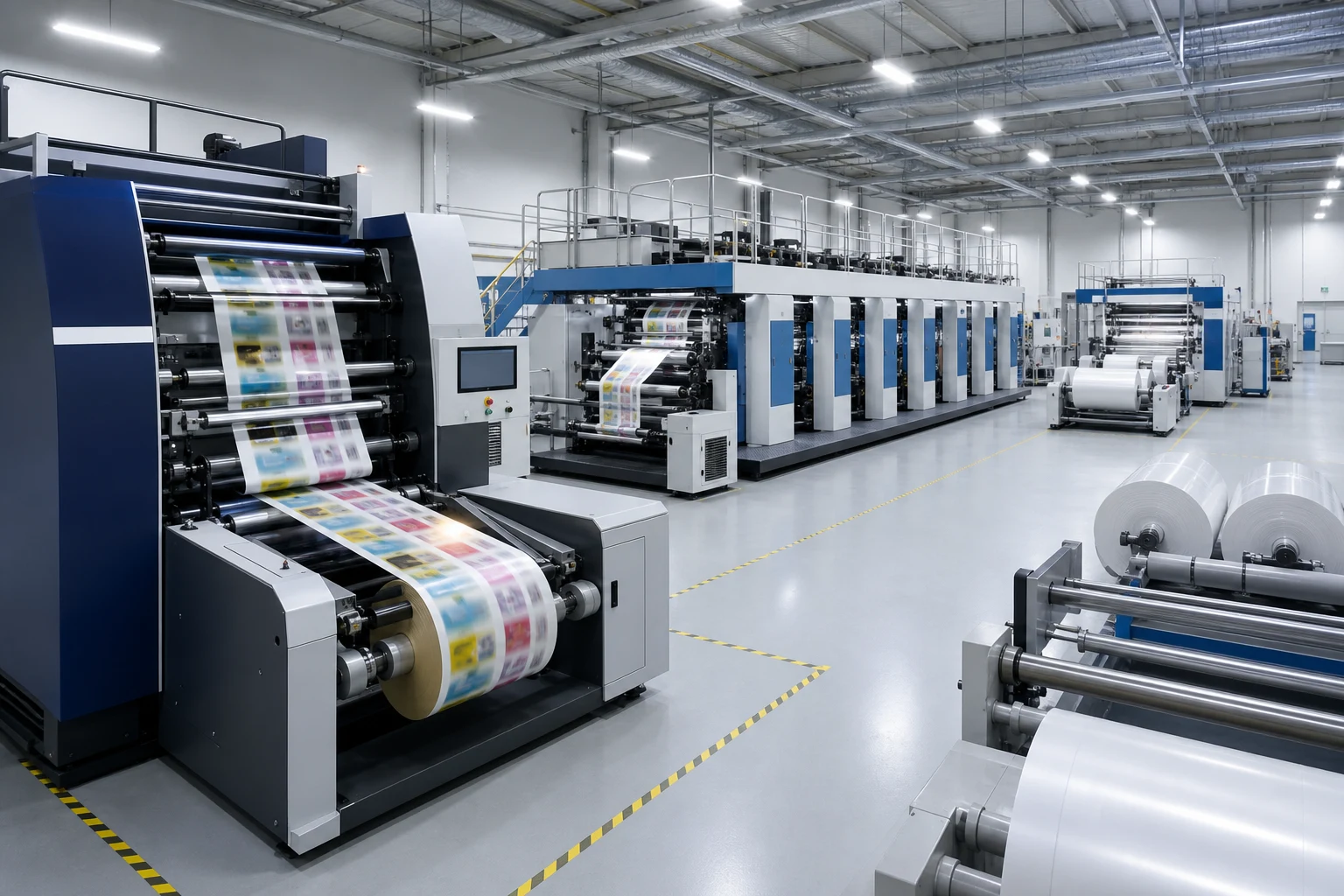
Printing plates or cylinders, paper or film production, roll or sheet dimensions, ink and coating setup, lamination, pouch making, die cutting, seaming, molding tools, finish operations, packing, and quality sampling can each create an efficient minimum.
A supplier may quote a minimum order, a minimum material purchase, or a minimum charge. Ask which one applies and whether unused material, overruns, underruns, tooling, storage, or future reorders are included.
Use digital production where the package fits
Digital printing may support lower-volume, test, seasonal, or multi-SKU projects by avoiding conventional print plates or cylinders. Confirm the available substrate, package dimensions, colors, white ink, finishes, barriers, converting route, unit economics, and supplier minimums for the finished package.
Do not select digital only because the quantity is low. Product compatibility, barrier, sealing, filling, performance, and evidence requirements remain part of the package specification.
Compare MOQ with inventory and reorder strategy
Model unit cost, setup, freight, storage, cash tied in inventory, expected demand, artwork changes, shelf life of the packaged product, and the risk of obsolete packaging. A smaller order with a higher unit cost can be the lower-risk decision for an unproven SKU.
Give suppliers a launch quantity, annual forecast, reorder frequency, SKU plan, growth scenario, and desired delivery schedule so they can evaluate a practical current path and a future scale-up route.
General educational information only. Materials, performance, compliance, claims, quantities, and timing require confirmation for the exact packaging project.