 WhatsApp
Application scenario · Not a customer case study
Pet food & treat packaging
Custom Pet Food Bags, Dog Food & Treat Packaging
Custom pet food and treat packaging for brands launching, scaling, extending a range, or replacing a supplier—planned around product oils, aroma, puncture, fill weight, filling, reclosure, repeated use, and distribution.
Direct answer
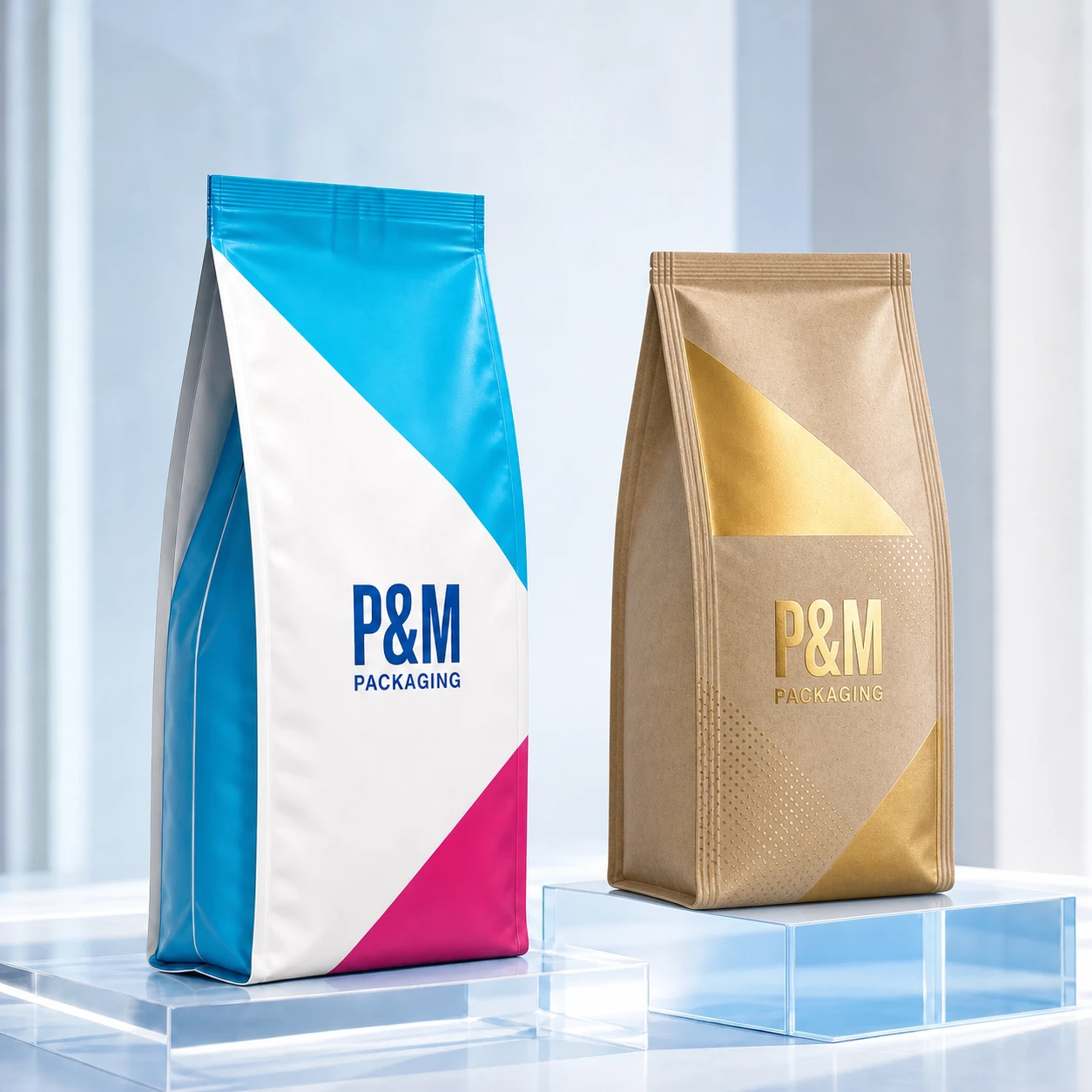
P&M develops custom pet food bags and treat pouches for brand owners, product teams, procurement teams, and co-packers. Resealable treat pouches, flat-bottom bags, side-gusset or quad-seal dog food bags, and sample packs are matched to the exact kibble, treat, chew, topper, powder, or supplement; oils, aroma, product edges, fill weight, barrier, filling, zipper or handle, storage, palletization, quantity, and distribution must be confirmed per project.
Start with your need
What needs to happen next?
No finished specification required. Send a product or reference photo on WhatsApp.
For Pet Food & Treat Brands
A project path for branded launches, multi-SKU treat ranges, larger kibble bags, trial packs, volume scale-up, and supplier-change programs.
Review a pet packaging project →From Trial Pouch to Larger Bag
Coordinate samples, retail pouches, flat-bottom bags, side-gusset or quad-seal formats, cartons, and cases while keeping application-specific specifications and tests.
Plan the packaging range →Dog Treat Pouches
Resealable stand-up bags reviewed around treat shape, oils, aroma, portion, zipper contamination, opening, and shelf presentation.
Explore stand-up treat pouches →Side-Gusset & Quad-Seal Dog Food Bags
Larger pet food bag formats reviewed around load, puncture, panel stability, seals, handles, filling, case or pallet configuration, and distribution.
Explore side-gusset and quad-seal bags →View 3 more options
Flat-Bottom Pet Food Bags
Box-style bags reviewed around shelf stability, zipper access, larger fill weights, product edges, panel graphics, pack-out, and repeated handling.
Explore flat-bottom pet food bags →Samples, Sachets & Supplement Packs
Flat pouches, sachets, and supported stick-format concepts for trials, toppers, powders, supplements, and promotional programs.
Explore sample sachets and stick packs →Displays, Cartons & Cases
Shelf-ready displays, variety packs, ecommerce boxes, and shipping cases coordinated with the filled flexible packages.
Explore boxes and displays →One-stop pet food and treat packaging solution
Plan sample, retail, large-format, and shipping packs as one program.
Custom pet food packaging must balance grease and aroma barrier, puncture resistance, package weight, repeated use, merchandising, and transport. P&M coordinates dog food bags, treat pouches, flat pouches, cartons, displays, and shipping cases around the product and selling channel.
Discuss this applicationSend the product, format, quantity, and current challenge.
View the complete packaging system and approval inputs
Sample pack
Flat pouches and sachets
Dose, product edges, oils, tear opening, seal area, and event or ecommerce use guide the small format.
Explore format Retail packResealable stand-up and flat-bottom bags
Barrier, puncture, zipper durability, opening size, fill weight, and shelf stability guide the structure.
Explore format Large formatReinforced pet food bags
Package weight, carry and pour behavior, drop exposure, seals, gussets, handles, and pallet loads require format-specific review.
Explore format Display and deliveryCartons and corrugated cases
Shelf-ready display, variety packs, ecommerce protection, case count, and palletization are coordinated with the filled bags.
Explore formatWhat to bring
Inputs for the first packaging review
- Treat, kibble, powder or supplement type
- Fat, oil, aroma and moisture sensitivity
- Product shape, sharp edges and bulk density
- Fill weights and filling method
- Opening, zipper, handle and consumer use
- Channel, case pack, quantities and timing
What to confirm
Verification before production
- Barrier and product compatibility review
- Puncture, seal and zipper performance
- Drop and distribution testing for filled packs
- Food-contact documentation as applicable
- Required pet-food label content approved by the responsible company
Use fill-weight bands to plan the first pet-food bag review
Fill-weight bands help frame an RFQ, but they are not guaranteed capacities or a substitute for filled-package qualification. Product density, edges, oils, bag geometry, structure, seals, closure, case pack, pallet load, storage, and distribution still determine the approved package.
- 300–800 g: smaller retail packs, commonly reviewed as stand-up pouches
- 1–2 kg: premium retail main packs, often reviewed as flat-bottom, eight-side-seal, or suitably structured stand-up bags
- 2–5 kg: family, ecommerce, or larger bags reviewed across side-gusset, larger structured, flat-bottom, or eight-side-seal formats
- 5 kg and above: trigger a load-bearing bag review and a defined filled-package drop-test plan
- 10 kg and above: require a separate heavy-pack assessment; no universal maximum filled weight is promised
Plan MOQ, samples, and the production route separately
For custom finished bags and pouches, the general production baseline starts at 100 units per SKU, but the exact minimum depends on bag format, dimensions, structure, fitment, artwork, and print route; rotogravure remains scope-sensitive. One-piece paid sampling is available, but a single sample is not the production MOQ and does not by itself approve product compatibility, filled-package seals, drop performance, distribution, or shelf life.
View more technical specifications 9 sections
Build the proof plan around the filled pet-food package
Packaging strength cannot be inferred from film thickness or an empty sample alone. Define the product, filled weight, product edges, oils, bag geometry, seal and zipper, carry method, case or pallet configuration, storage, drop exposure, and distribution route before approving the test plan.
Treat & Sample Pouches
Review grease and aroma, sharp edges, zipper contamination, opening, repeated use, seals, and the intended shelf-life conditions.
Flat-Bottom Retail Bags
Review shelf stability, gusset deployment, usable opening, zipper strength, fill level, panel distortion, case pack, and repeated handling.
Larger Kibble Bags
Review bag load, puncture, gussets, seals, handles when appropriate, drops, pallet loads, warehouse conditions, and consumer handling.
Supplier-Change Projects
Send retained bags, failure photos, leak or drop conditions, product and fill data, current specification if available, and the acceptance criteria the replacement must meet.
Is P&M a fit for your pet brand?
This service is designed for companies developing or purchasing custom packaging for their own branded pet products. It supports a new treat or food launch, multiple flavors or sizes, a move from trial packs to retail bags, a planned volume increase, or a supplier change caused by oxidation, grease, puncture, weak seals, zipper failure, print variation, or delivery problems.
- Pet food, treat, chew, topper, powder, and supplement brands
- Product-development and procurement teams
- Co-packers with defined filling and coding requirements
- Projects with a known product, fill weight, SKU plan, quantity, channel, and launch date
- Programs needing samples, production controls, DDP delivery, or Los Angeles warehousing support
Dog food packaging starts with the product and fill weight
Share whether the product is kibble, treats, chews, toppers, powder, supplements, or another format; include oils, aroma, moisture sensitivity, product edges, bulk density, fill weight, filling method, storage, distribution, quantities, and timing.
- Custom dog and cat food bags
- Treat, chew, and topper pouches
- Powder and supplement packaging
- Trial, travel, and subscription packs
- Retail displays, ecommerce boxes, and shipping cases
Grease, aroma, puncture, and repeated opening
Fat and oil resistance, oxygen and moisture barrier, aroma retention, sharp or hard product edges, package weight, zipper durability, scoop or pour access, and repeated handling guide the material and format.
Artwork and product information
The package needs appropriate space for product identity, net quantity, ingredients, feeding directions, analysis or other applicable information, warnings, lot or date coding, and responsible business details. Final labeling is approved by the responsible company.
Separate treats, kibble, toppers, and supplements
Treat pouches may prioritize aroma, grease, zipper, and product edges; kibble bags add load, handles, gussets, drops, and pallet demands; toppers and powders add dust, dosing, and seal contamination; supplements add serving access and information panels. Each application should retain its own specification and test plan.
Plan sample, retail, club, and subscription formats
A product family can move from trial sachets to resealable retail bags, larger club packs, displays, subscription boxes, and shipping cases. Coordinate SKU hierarchy and color while controlling fill weight, package dimensions, structure, closure, artwork, quantities, and approval status separately.
Choose the pet-food bag format around filling and use
Premade stand-up and flat-bottom zipper bags suit many treats, toppers, and repeat-use products; side-gusset and quad-seal bags support selected larger formats. Product oils and edges, fill weight, filling and sealing method, seals, closure or handle, coding, quantity, pallet loads, and trials guide the choice.
Factory and quality evidence for procurement
P&M's owned Guangdong factory supports digital, offset, and rotogravure printing routes, dry lamination, rewinding inspection, and multiple bag-making formats, including eight-side-seal / flat-bottom equipment. Available project checks can include laminate bond strength, leakage, raw materials, solvent residue, dimensions, thickness, print color, seal-edge dimensions, zipper strength, and drop or load testing. The applicable checks, methods, acceptance criteria, and documentation must be defined for the exact pet-food project.
Packaging Knowledge Center
Professional guides for this application
Use these practical articles to prepare specifications, identify project risks, and ask better questions before sampling or production.
View 11 more related guides
Freshness Problem-SolvingWhy Pet Food Develops Oxidized Odors→Pet Food Packaging BagsHow to Choose Pet Food Packaging Bags→Pet Food Packaging GuideHow to Evaluate Sustainable Pet Food Packaging→Pouch Accessories GuideHandles, Tear Features and Pet-Food Bag Add-Ons→Zipper & Reclosure GuideHow to Select a Zipper for Pet Food Bags→Barrier Materials GuideHow to Specify High-Barrier Pouch Materials→Flexible Packaging GuideHow to Choose a Custom Pouch Format→Packaging SourcingCustom Packaging RFQ Checklist→Project ToolPackaging Project Brief Template→Factory EvidenceSee P&M's Pet-Food Bag Production Equipment→Supplier QualificationQualify P&M for a Pet Packaging Program→
Frequently asked questions
What barrier properties matter for pet food and treat bags?
The required oxygen, moisture, aroma, grease, and light protection depends on the exact product, formulation, shelf-life target, storage, package size, closure, filling, and distribution conditions.
Can the same bag structure be used for treats and large pet-food bags?
Not automatically. Package weight, product edges, gussets, seals, zipper, handling, drop exposure, filling, and pallet loads can require different structures and testing.
Can P&M coordinate trial pouches, retail bags, displays, and shipping cases?
Yes. The complete program can be coordinated while each package retains its own dimensions, structure, artwork, filling, quality, production, and approval requirements.
View 5 more questions
Can P&M help a pet-food brand replace a bag that leaks, punctures, or fails in distribution?
P&M can review a replacement project when the brand provides the product and filled weight, current bag or specification if available, failure photos or retained samples, filling and sealing conditions, case or pallet configuration, storage and distribution route, observed failure mode, and required acceptance criteria. A replacement structure is confirmed through project-specific sampling, testing, and approval.
What quality checks are available for pet food bags?
Depending on the approved project, checks can include laminate bond strength, leakage, raw materials, solvent residue, dimensions, thickness, print color, seal-edge dimensions, zipper strength, and drop or load testing. The applicable method and acceptance criteria must be agreed for the exact product, bag, fill weight, and distribution conditions.
What is the MOQ for custom pet food bags?
For custom finished bags and pouches, the general production baseline starts at 100 units per SKU. The exact minimum depends on the bag format, dimensions, structure, fitment, artwork, and print route, with rotogravure remaining scope-sensitive. One-piece paid sampling is available, but it is separate from the production MOQ and does not by itself complete filled-package validation.
What fill weights can a custom pet food bag hold?
For RFQ discussion, 300–800 g, 1–2 kg, and 2–5 kg are useful starting bands, not guaranteed capacities. At 5 kg or above, the project needs a load-bearing review and defined filled-package drop testing. A 10 kg or heavier flexible package requires a separate assessment of structure, thickness, seals, handle, stacking, puncture, and transport conditions; P&M does not publish one universal maximum filled weight.
What should a pet brand send for a packaging recommendation?
Send the exact pet product, oils and aroma characteristics, product dimensions or sharp edges, bulk density if known, fill weight, current or desired bag, closure and handle needs, filling method, shelf-life goal, case or pallet configuration, quantity per SKU, annual forecast, artwork status, delivery destination, launch date, and any existing failure.