 WhatsApp
Format Chosen by the Fill
Product density, fill weight, bag geometry, top closure, and filling method are reviewed together before dimensions are approved.
Custom printed side gusset bags
Source custom printed side gusset bags and quad-seal bags by starting with the product, fill weight and density, bag dimensions, closure or valve, filling process, quantity per SKU, destination, and timing. P&M then reviews the construction, material, print route, sampling plan, and validation needs for the exact project.
Direct answer
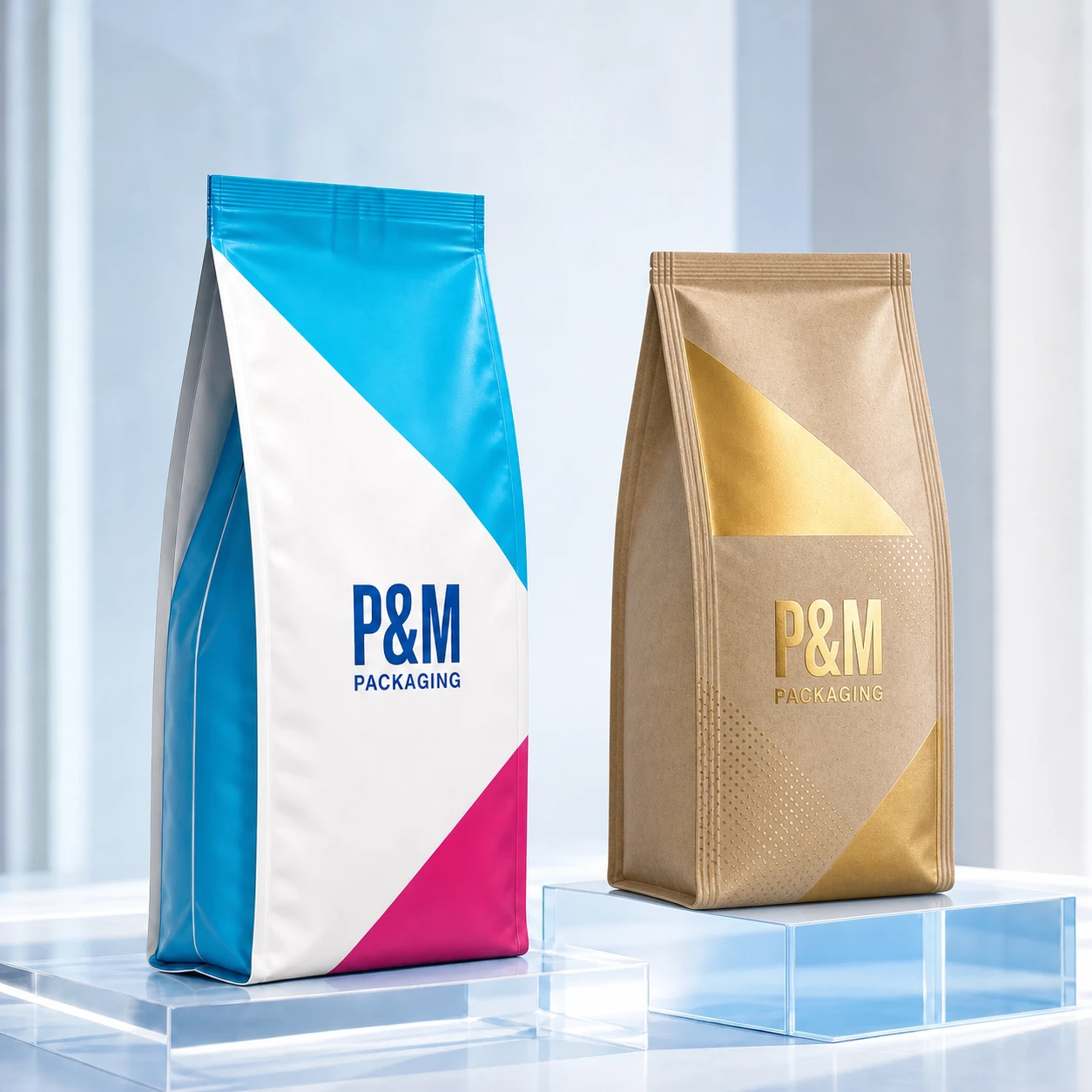
A traditional side gusset bag expands through folded side panels and relies on the filled product for its base and stance. A quad-seal bag adds four vertical corner seams for more defined panels and a squarer filled shape. P&M supplies both formats, with a general production baseline from 100 units per SKU and paid custom sampling from 1 piece; the final format, dimensions, structure, features, and minimum remain project specific.
Verified service baselines
These are general service baselines, not universal promises for every construction. The quotation confirms the exact format, material, dimensions, features, print route, minimum, testing, schedule, and delivery plan.
Fast project review
Share the project essentials. The U.S. team targets a reply within 12 hours and a quotation within 24 hours once the project is sufficiently defined.
Buyer comparison
These formats can serve related products, but they create different specification, filling, closure, artwork, and validation tasks.
| Format | Construction | Buyer decision | Specification focus |
|---|---|---|---|
| Traditional side-gusset | Premade bag with folded side panels | Use when the product-supported stance and top-close route fit | Fill density, gusset, opening, closure, final seal |
| Quad-seal | Premade bag with four vertical corner seams | Use when defined panels and a squarer filled body are priorities | Corner seams, panel layout, closure, filling clearance |
| Flat-bottom pouch | Premade bag with a defined rectangular base | Compare when empty and filled footprint or five-panel presentation matter | Base geometry, zipper, panel artwork, case pack |
| Printed rollstock | Film converted on approved form-fill-seal equipment | Use only with the machine owner or co-packer specification | Machine, web, repeat, unwind, seals, coding, trials |
Final selection requires the actual product, approved dimensions, filling and closing process, quantity plan, sample scope, and validation requirements.
Start with your need
No finished specification required. Send a product or reference photo on WhatsApp.
Product density, fill weight, bag geometry, top closure, and filling method are reviewed together before dimensions are approved.
Four sealed vertical edges create a squarer stance and defined panels for artwork on suitable applications.
Compatible zippers, tear features, final seals, and one-way valves for qualified coffee projects are reviewed as part of the complete bag.
Explore bag features →Aroma and oxygen targets, valve needs, closure, roast timing, filling, and pack size are coordinated on the dedicated coffee route.
Explore coffee bags →A side gusset bag is a premade flexible bag with folded panels on both vertical sides. It can be considered when a brand owner, procurement team, or co-packer needs printable front, back, and gusset panels and has a compatible fill-and-close process. Filled stance and usable capacity depend on the product, fill level, density, dimensions, and construction, so approval should use the actual product or a representative fill.
A quad-seal bag is a related construction with four sealed corner seams running the height of the bag. Those seams create more defined panels and a squarer filled body. Product density, closure needs, filling equipment, panel presentation, and the approved sample determine whether traditional side-gusset or quad-seal construction fits the project.
A finished specification is not required. Send the known inputs and identify what still needs recommendation so the quotation can separate confirmed facts from open decisions.
Width, height, gusset depth, seal areas, and fill level determine usable volume and stance. Dense products such as coffee beans, kibble, rice, and grains fill differently than light or irregular products, so capacity should be confirmed with product-fit samples rather than nominal dimensions alone.
The candidate material, closure, valve, seal, and handling plan are selected from the product and use conditions rather than from the bag name alone. Coffee projects may require a one-way valve; pet-food and other heavier-fill projects may require specific puncture, grease, seal, handling, and distribution checks. Suitability and performance are confirmed for the complete filled package.
P&M supports digital, offset, and rotogravure printing. The appropriate route depends on the bag format, dimensions, substrate, artwork, quantity per SKU, finish, timing, and reorder plan. Premade side-gusset and quad-seal bags also require compatible filling and final-closing equipment; printed rollstock belongs on the separate machine, web, and repeat specification route.
These formats can carry similar products but do not behave the same in filling, reclosure, shelf stance, artwork, or cost. Select the construction from the product, fill weight, equipment, closure, presentation, distribution, and order plan rather than using the names interchangeably.
Folded side panels, printable front and back panels, and a product-supported filled stance; closure and final sealing are confirmed for the project.
Four vertical corner seams create defined panels and can support zipper reclosure on suitable applications.
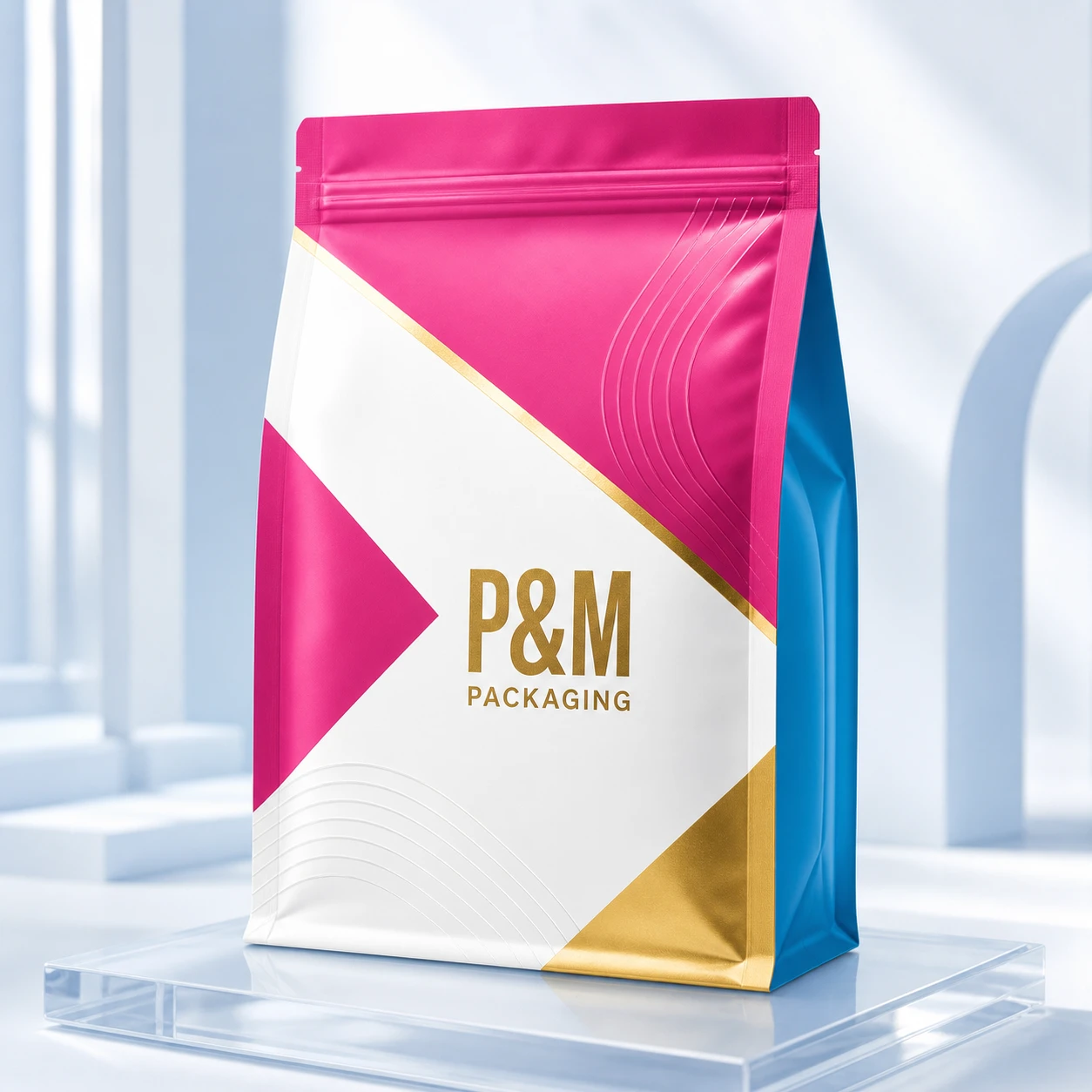
A defined rectangular base and five connected print panels create a different filling, stance, presentation, and sourcing decision.
Compare flat-bottom bags →Form-fill-seal routes require the approved machine, web, repeat, gusset geometry, seal system, product feed, coding, and line trials.
Explore printed rollstock →Packaging Knowledge Center
Use these practical articles to prepare specifications, identify project risks, and ask better questions before sampling or production.
P&M's general production baseline starts from 100 units per SKU, but the applicable minimum depends on the approved format, dimensions, material, print route, features, artwork count, and production plan. A paid custom sample can start from 1 piece; that sample is not a production MOQ or automatic performance approval.
Send the product, fill weight and bulk density, target dimensions or a reference bag, preferred side-gusset or quad-seal construction, closure or valve, filling and final-seal method, barrier and shelf-life target, quantity per SKU, artwork status, sample goal, destination, and timing. Unknown items can be marked for recommendation.
A traditional side gusset bag folds the gussets into the body with seals at the top and bottom, and is commonly closed with a tin tie or heat seal. A quad seal bag adds four sealed vertical corner seams, which square the body, define the panels, and support zipper reclosure on suitable applications. The right construction depends on the product, closure, filling equipment, and shelf presentation.
One-way degassing valves are commonly reviewed for coffee applications. Zipper reclosure is generally easier to execute on quad-seal constructions; traditional side gusset bags more often use tin ties. Placement, compatibility, sealing, and performance must be confirmed for the complete bag.
The format spans small retail coffee sizes through larger bulk formats. Practical limits depend on fill weight, material stiffness, seal strength, handling, filling equipment, and distribution testing, so dimensions and capacity should be confirmed with product-fit samples for the exact application.
No. Coffee is the most familiar application, but pet food, rice, grains, flour, dried goods, and other dense products are also common. Final suitability depends on the product, barrier and shelf-life targets, closure, filling process, and validation.
A traditional side-gusset bag expands through folded side panels and normally relies on the filled product for its base and stance. A flat-bottom bag has a defined rectangular base and five connected print panels. Product density, fill weight, zipper or tin tie, equipment, shelf footprint, case pack, appearance, and cost guide the choice.
Premade side-gusset and quad-seal bags run on compatible bag-filling and closing equipment. Printed rollstock is formed, filled, and sealed on approved form-fill-seal machinery. Product, package geometry, speed, closure, web, repeat, seals, coding, quantity, and trials determine the route.