 WhatsApp
Custom Web & Repeat
Web width, print repeat, lane count, eye marks, artwork orientation, and tolerances are developed from the approved machine and package specification.
Food packaging rollstock
Develop custom printed food packaging rollstock as an equipment-ready web for VFFS, HFFS, flow-wrap, sachet, stick-pack, pillow, fin-seal, and related formats—not simply as printed film.
Direct answer
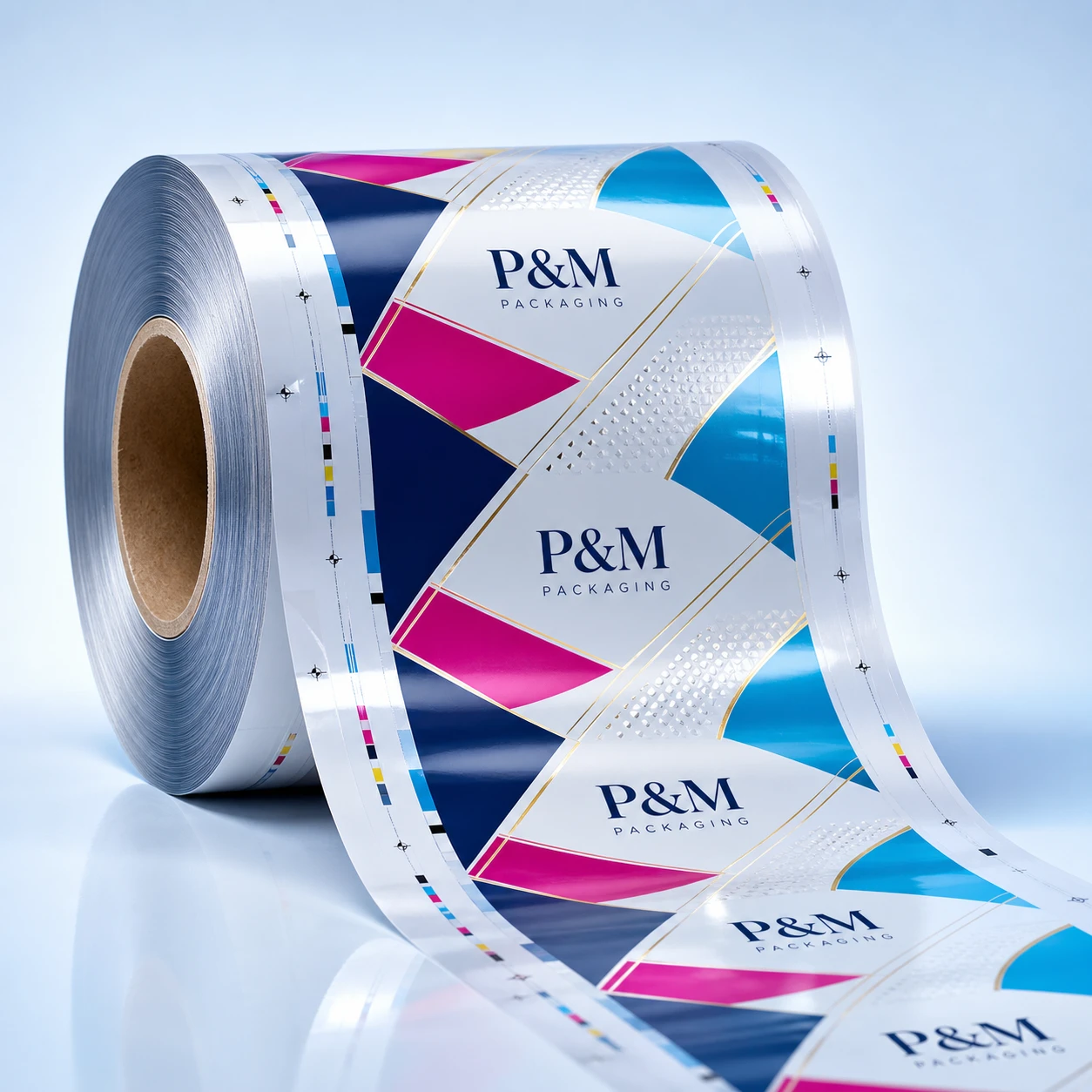
Food packaging rollstock is a continuous printed flexible packaging film supplied in rolls and formed, filled, and sealed on the buyer's or co-packer's equipment. A custom printed rollstock specification connects the food, machine and package style with web width, repeat, lanes, eye marks, unwind, film structure, sealant, coefficient of friction, core, roll limits, artwork, coding, and line validation.
Start with your need
No finished specification required. Send a product or reference photo on WhatsApp.
Vertical form-fill-seal rollstock coordinated around the forming collar, web path, product drop, fin or lap seal, end seals, registration, coding, and target speed.
Review VFFS film requirements →Horizontal form-fill-seal and flow-wrap webs developed around product dimensions, crimp and longitudinal seals, tracking, cutoff, coefficient of friction, and line conditions.
Review HFFS and flow-wrap film →Single-serve rollstock specified by dose, lanes, web, repeat, seal area, tear opening, coding, product flow, and dedicated packing equipment.
Explore single-serve packaging →Web width, print repeat, lane count, eye marks, artwork orientation, and tolerances are developed from the approved machine and package specification.
Oxygen, moisture, aroma, grease, light, puncture, food contact, filling, crumbs or dust in seals, and the seal window guide the complete structure.
Core size, outside diameter, maximum roll weight, splice requirements, unwind direction, and roll identification are specified for handling and equipment fit.
The same roll format can require a different barrier, sealant, stiffness, slip, repeat, lane plan, coding zone, and validation method for different foods. Start with the exact product and packing line, then develop the printed rollstock specification.
Printed film for chips, nuts, granola, popcorn, dried fruit, and related products, reviewed around oils, aroma, moisture, product drop, crumbs, speed, and seal contamination.
Explore snack packaging →Rollstock reviewed around low-temperature flexing, puncture, moisture, sealing, filled-package handling, cold storage, and distribution.
Explore frozen food packaging →Flow-wrap, pillow, sachet, and other printed rollstock routes coordinated around the candy, heat sensitivity, product protection, seal, speed, and display format.
Explore candy packaging →Printed webs planned around dose, powder flow, moisture sensitivity, dust in seals, lanes, tear opening, coding, and equipment.
Explore powder packaging →Sachet and packet rollstock reviewed around viscosity, particles, dose, seal contamination, tear, leak control, product contact, and secondary pack-out.
Explore sauce packaging →Printed film for treats, samples, toppers, and supported food formats, reviewed around grease, aroma, puncture, product edges, seals, coding, and distribution.
Explore pet food packaging →Provide the food, fill quantity, machine make and model, package style, forming method, web path, seal type, jaw dimensions, line speed, coding system, target package dimensions, and the co-packer's approved roll specification.
VFFS packaging film runs vertically through forming, dosing, longitudinal sealing, end sealing, and cutting. The forming collar, web width, package length, repeat, film stiffness, slip, product drop, fin or lap seal, jaw temperature and dwell, coding, line speed, and filled-package performance must be reviewed together.
HFFS and flow-wrap film travels horizontally around or beneath the product before the longitudinal and end seals are made. Product dimensions and spacing, crimp-jaw pattern, fin or lap seal, heat exposure, stiffness, coefficient of friction, registration, cutoff, speed, and product protection guide the web and structure.
Small-format food and powder webs require dose and lane planning before artwork. Web width, repeat, lane count, seal width, product flow, contamination, tear opening, coding, cutoff, and line speed determine whether the finished packet can run and protect the contents.
Pillow bags and pillow pouches are formed on packaging equipment from roll stock. The web wraps around the product path, closes with a longitudinal fin seal or lap seal—often called a center seal—and receives end seals and cuts. Package dimensions, forming collar, seal geometry, film stiffness, coefficient of friction, registration, product drop, line speed, and coding must be confirmed with the equipment specification.
Finished package dimensions do not by themselves define the roll. Web width, print repeat, lane layout, gusset or forming geometry, seal areas, eye marks, cutoff, unwind, artwork orientation, and equipment tolerances must be resolved together.
Product oils, aroma, moisture and oxygen sensitivity, light, puncture, dust or crumbs in seals, filling temperature, seal window, coefficient of friction, stiffness, storage, shelf-life targets, and distribution guide structure development and validation.
Prepress should verify repeat, lanes, eye marks, copy orientation, white ink, coding space, seam or seal zones, color, and finish. Production approval may require press standards, finished-roll inspection, splices, line trials, seal checks, registration, cutoff, package integrity, and filled-pack testing.
A roll can be visually acceptable and still run poorly when its web, repeat, unwind, friction, stiffness, seals, coding, roll build, or splice controls do not match the equipment. Diagnose the line symptom against the approved machine and package specification before changing material by guesswork.
Review web width, unwind, tension, roll build, curl, stiffness, coefficient of friction, forming geometry, treatment, and storage conditions.
Review the roll specification →Check repeat, eye marks, sensor contrast, artwork orientation, tension, web stretch, lane layout, cutoff settings, speed, and roll-to-roll tolerances.
Review print and registration →Separate sealant selection, contamination, jaw geometry, pressure, temperature, dwell, cooling, line speed, wrinkles, and test method.
Review seal and leak testing →Confirm core, maximum outside diameter, roll weight, splice type and location, winding quality, roll identification, pallet orientation, storage, and operator handling.
Coordinate packaging and equipment →Send the food and fill quantity, approved package drawing or sample, machine and co-packer data, web and repeat, lanes, eye marks, unwind, core and roll limits, film or performance requirements, seals, artwork, coding, quantity by SKU, trial plan, destination, and timing. Unknown values should be assigned to the equipment owner or trial stage rather than guessed.
Packaging Knowledge Center
Use these practical articles to prepare specifications, identify project risks, and ask better questions before sampling or production.
Provide the product, package style and dimensions, machine make and model, web width, repeat, lane count, unwind, core, maximum outside diameter and roll weight, material or performance targets, seal requirements, quantity, artwork, coding, and trial needs.
No. Rollstock is supplied as a web that is formed, filled, and sealed on packaging equipment. Premade pouches arrive already converted and use a different filling and sealing process.
VFFS film is formed and sealed through a vertical process, while HFFS and flow-wrap systems move the web and product horizontally. The machine, package geometry, product feed, fin or lap seal, end or crimp seals, repeat, coefficient of friction, cutoff, speed, and coding determine the required web and film—not the acronym alone.
Potentially. Each food creates different requirements for product contact, oxygen and moisture barrier, aroma or grease resistance, puncture, low-temperature behavior, powder or crumbs in seals, dose, filling, coding, shelf life, and line validation. The exact food and equipment must be reviewed before specifying the film.
P&M supplies custom packaging and printed rollstock, not packaging machinery. The equipment owner, filler, or co-packer should provide the approved machine and roll specification so the film can be developed and validated for that line.
An existing specification, roll label, artwork, machine sheet, and physical sample can support review, but the product, equipment, dimensions, performance, and approval requirements should still be confirmed before production.
Line performance depends on more than print appearance. Web width, repeat, eye marks, unwind, roll build, tension, stiffness, coefficient of friction, curl, static, sealant, jaw settings, coding, core and roll limits, splices, storage, and line speed can all affect forming, tracking, sealing, and cutoff. Compare the failing roll with the approved machine and roll specification.