Direct answer
Choose food pouch packaging by matching the food and process to the pouch format, complete material structure, filling and sealing method, opening or reclosure, storage and distribution conditions, target shelf life, required label space, and a validation plan. A pouch shape or generic ‘food-grade’ film alone does not establish suitability.
Begin with the food, process, and route to market
The same food packaging pouch can behave differently with dry snacks, oily products, sharp ingredients, powders, frozen foods, or products exposed to heat. Define the product, relevant ingredients, fill weight, headspace, filling equipment, processing temperature, storage, distribution, and shelf-life target before selecting a structure.
Premade pouches and form-fill-seal rollstock have different equipment and artwork requirements. If a co-packer is involved, confirm its preferred pouch dimensions, seal areas, web or roll specifications, zipper limits, coding position, and trial requirements early.
- Food type, oils, aroma, moisture, and product edges
- Fill weight, bulk density, and headspace
- Premade pouch or rollstock filling route
- Processing and storage temperature
- Retail, foodservice, ecommerce, and distribution conditions
Which pouch formats suit which foods?
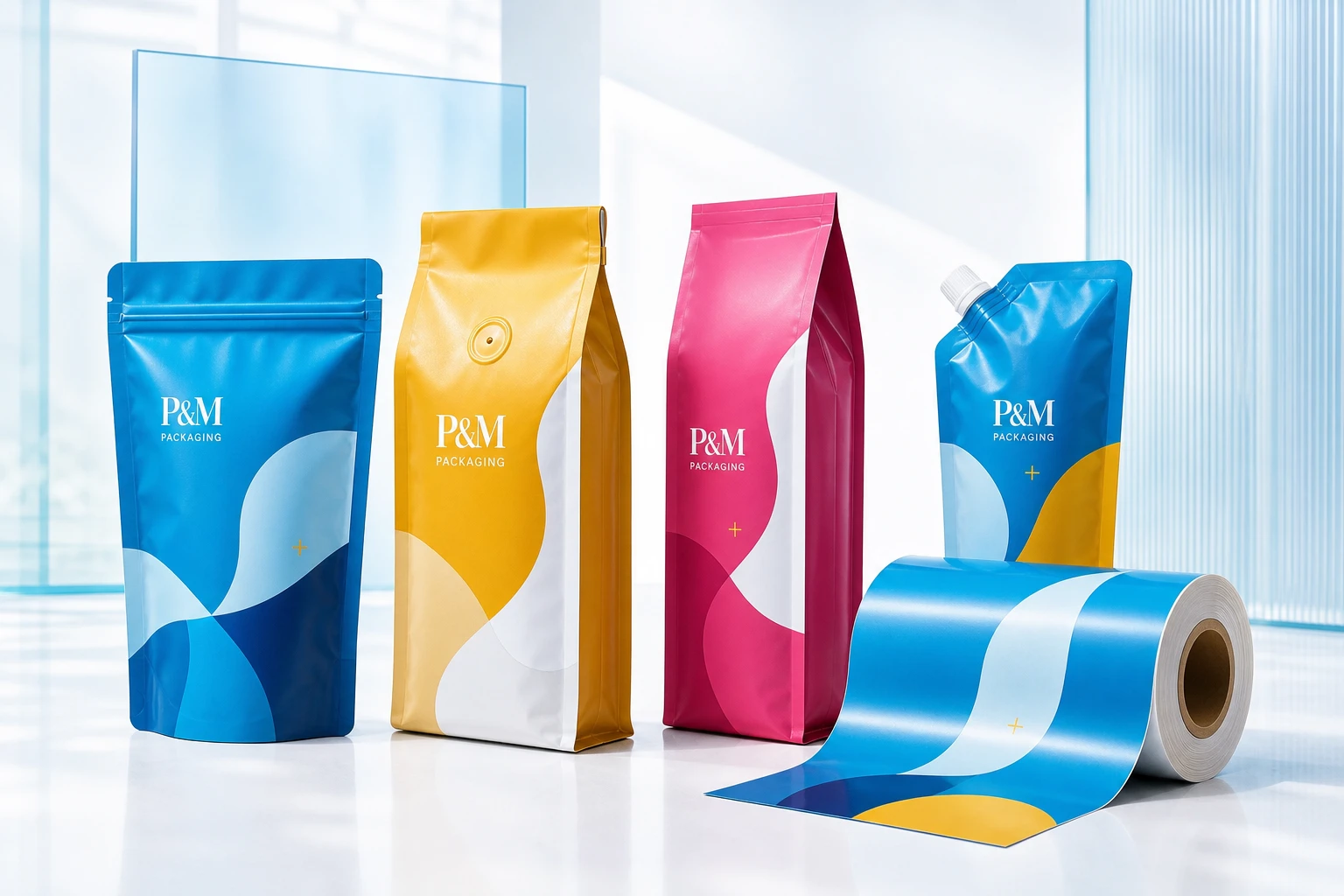
Stand-up pouches offer broad flexibility and optional reclosure. Flat-bottom formats provide defined shelf geometry and multiple print panels. Side-gusset or quad-seal bags can support selected larger fills, while three-side-seal pouches suit many samples and portions. The best format depends on filling, load, shelf presentation, opening, and consumer use.
Format does not replace material engineering. Barrier, grease resistance, puncture, stiffness, sealability, flexing, and print protection come from the complete construction and converting process.
Define barrier, seals, closure, and testing
Oxygen, moisture, light, aroma, grease, product edges, temperature, seal contamination, zipper cycles, drops, vibration, and storage time can affect the filled package. Translate these exposures into requirements rather than selecting the film with the longest material description.
Validation may include food-contact documentation for the final conditions of use, filled-package seal or leak checks, filling-line trials, barrier or shelf-life work, zipper performance, drop and distribution testing, and print durability. The responsible food company must approve the final label and claims.
Prepare a useful food pouch packaging RFQ
A quotation becomes more accurate when size, quantity, artwork, process, and performance inputs are separated into confirmed requirements and items that still need engineering review.
- Product and fill weight
- Format, dimensions, or reference sample
- Filling and processing method
- Barrier, closure, and shelf-life goals
- Quantity by size and artwork
- Required tests and documentation
- Artwork status, delivery destination, and timing
General educational information only. Materials, performance, compliance, claims, quantities, and timing require confirmation for the exact packaging project.