Direct answer
Choose custom tea packaging by defining the tea format, leaf or particle size, bulk density, fill weight or dose, aroma and moisture sensitivity, light exposure, filling equipment, opening or reclosure, shelf-life target, retail presentation, and distribution. Then size and validate the pouch, sachet, carton, or fulfillment pack with the actual tea and process.
Separate loose-leaf, tea-bag, and powdered-tea needs
Loose-leaf tea, herbal blends, tea bags, matcha, powdered tea, samples, and variety sets differ in particle size, bulk density, dose, aroma, moisture behavior, light sensitivity, dusting, filling, and consumer use. These inputs should be recorded before selecting a pouch, rollstock, or carton.
Nominal net weight does not determine package dimensions. Product-fit samples help confirm usable volume, gusset deployment, fill level, headspace, opening width, scoop access, zipper position, and shelf stance.
How do you protect tea aroma and freshness?
The required barrier depends on the exact tea, processing, residual moisture, volatile aroma, shelf-life target, package size, repeated opening, storage, and distribution. A foil appearance or premium finish does not by itself establish performance.
Define measurable targets where possible and validate the finished construction, including films, inks, adhesives, seals, zipper or closure, gussets, and printing—not only a material datasheet.
Match pouches and sachet rollstock to filling
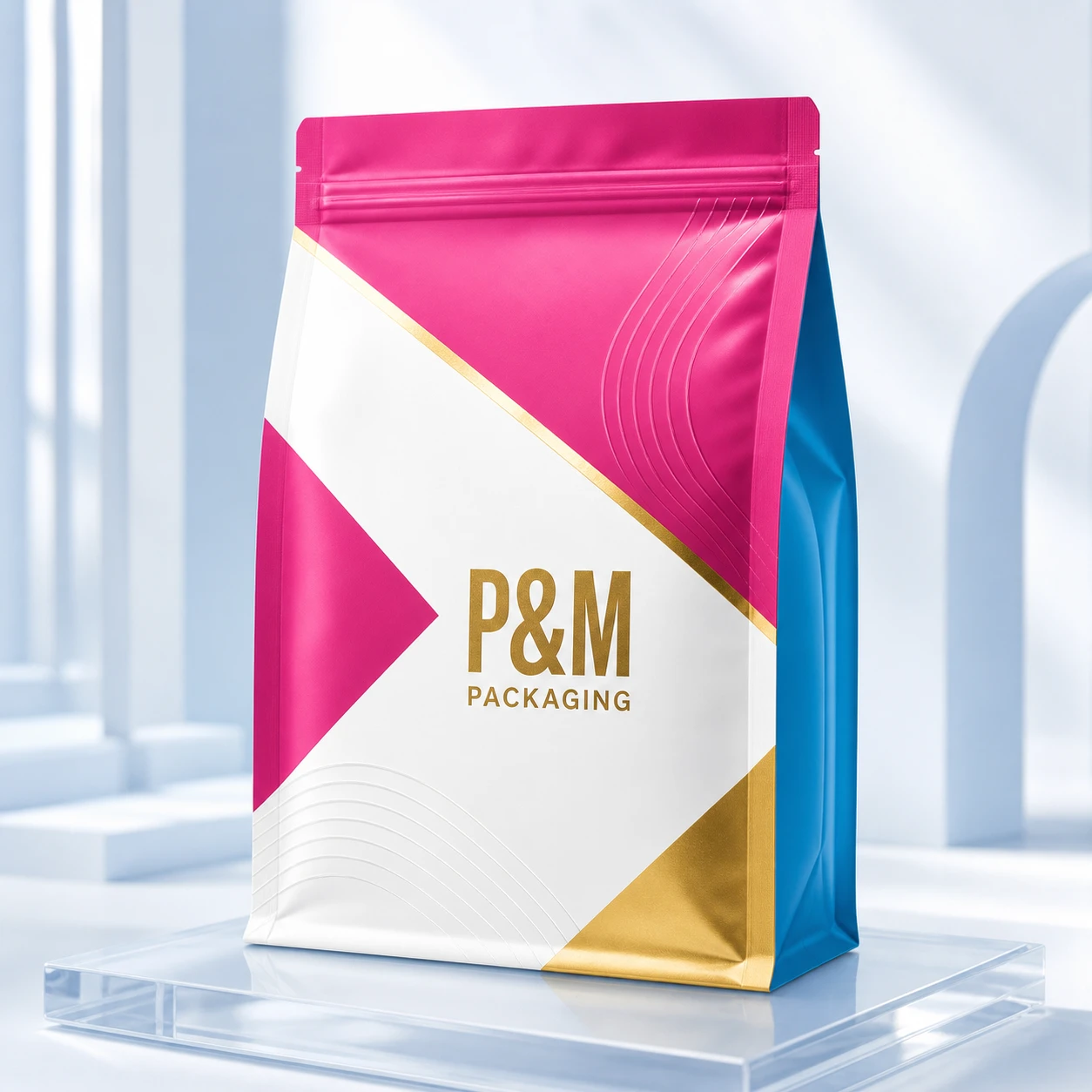
Stand-up, flat-bottom, and side-gusset pouches can support loose-leaf retail packs. Sachet or outer-envelope rollstock must match dose, web width, repeat, unwind, registration, sealant, tear, coding, and the co-packer's equipment.
Relevant validation may include food-contact documentation for the conditions of use, product compatibility, barrier or shelf-life work, filling-line trials, seal integrity, opening and reclosure, print durability, carton fit, and distribution testing.
Coordinate tea boxes, gifts, and subscriptions
Pouches, individual envelopes, tins, folding cartons, inserts, gift boxes, variety packs, subscription mailers, and shipping cases can share an approved design system while retaining separate dielines, materials, pack counts, testing, quantities, and production controls.
General educational information only. Materials, performance, compliance, claims, quantities, and timing require confirmation for the exact packaging project.