Direct answer
Prepare packaging artwork using the current supplier-issued dieline at approved scale, editable vector source files, linked or embedded high-resolution images, supplied or outlined fonts, the required color setup, bleed and safe areas, separate production layers for white ink and finishes, approved barcodes and copy, and controlled file names and revisions for every SKU.
Start from an approved dieline
Confirm the dieline name, revision, date, units, scale, print side, panels, copy direction, and technical legend. Do not redraw or alter cut, crease, seal, zipper, spout, seam, glue, window, perforation, or other production geometry to make artwork fit.
Extend backgrounds through the supplier-specified bleed and keep critical copy within the approved safe area. Review the final three-dimensional package because folds, gussets, seams, curves, shrink, filling, and product bulge change how flat artwork appears.
Which files does a packaging printer need?
Common deliverables include native vector artwork, a matching viewing PDF, linked or embedded high-resolution images, and fonts or correctly outlined type after proofreading. Follow the selected printer's application version, PDF standard, color profile, resolution, and naming requirements.
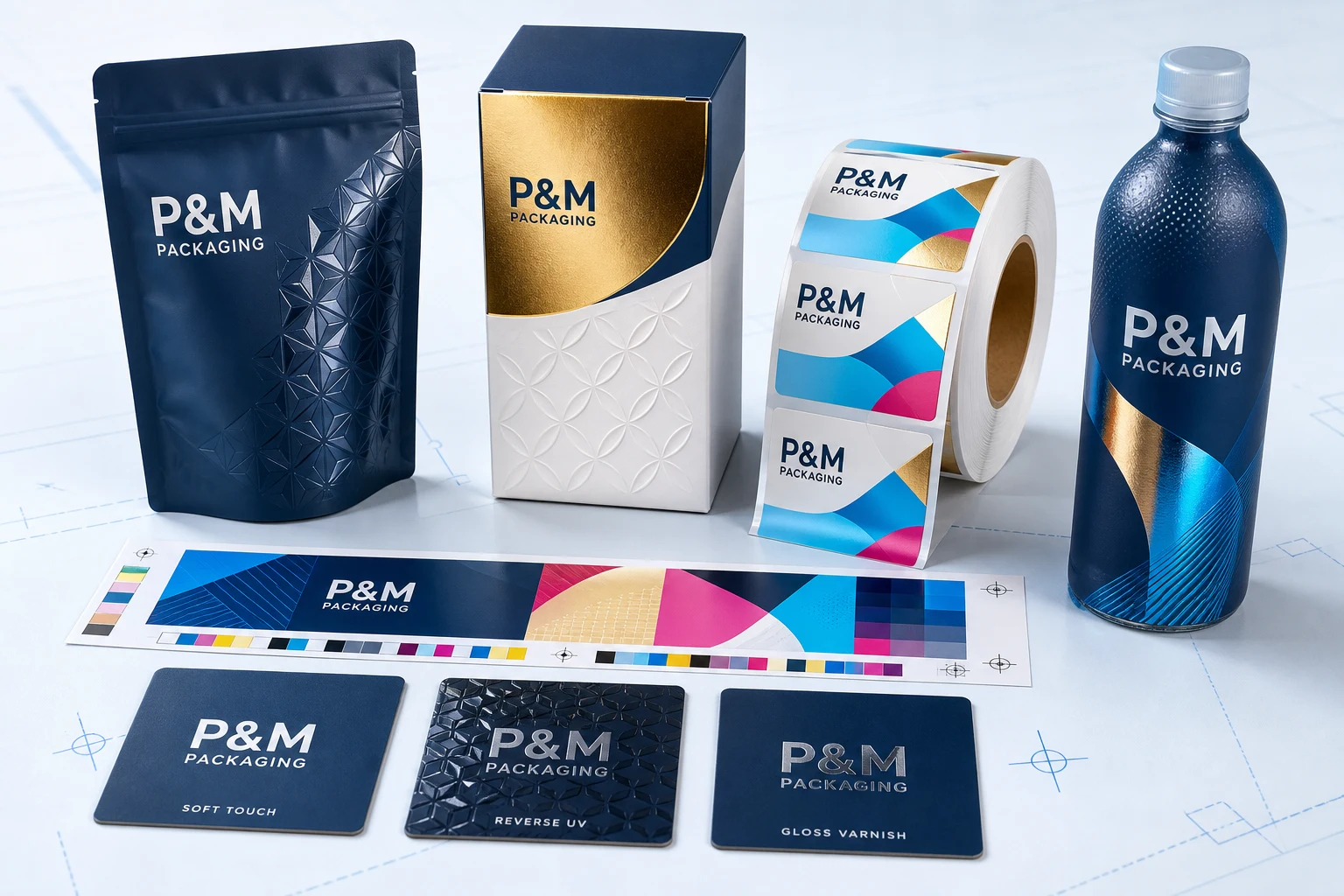
Separate and clearly name white ink, varnish, matte or gloss areas, foil, metallic effects, embossing or debossing, windows, variable data, technical lines, and other production operations. Confirm overprint, knockouts, transparency, rich black, gradients, small reverses, and trapping with prepress.
Turn AI-generated concept art into controlled artwork
AI-generated images are usually concept assets rather than complete production files. Review the right to use the output, trademarks and recognizable content, factual text, image resolution, unwanted artifacts, color conversion, typography, and whether key graphics need vector rebuilding or layered editing.
Place approved concept imagery into a controlled brand layout with editable copy, barcodes, required panels, dieline layers, bleed, safe areas, color references, and production effects. Human reviewers remain responsible for accuracy, rights, claims, and final approval.
Control barcodes, copy, SKUs, and final release
Confirm barcode type, data, size, quiet zones, contrast, orientation, substrate, and placement; reserve coding space for lot, date, batch, or variable information. The responsible company approves product identity, net contents, ingredients, nutrition or supplement panels, directions, warnings, business information, claims, and authorized marks.
Use one controlled file name, SKU, revision, and approval record for every version. Compare each proof with the approved content source and record what the proof does and does not demonstrate before production release.
General educational information only. Materials, performance, compliance, claims, quantities, and timing require confirmation for the exact packaging project.