 WhatsApp
Premade Custom Pouches
Converted bags supplied ready for the intended filling and sealing process, subject to format, dimensions, opening, seal, and equipment review.
Custom pouches and bags
Custom pouch bags and printed packaging pouches are premade flexible packages developed around your product, fill quantity, format, barrier, printing, closures, filling process, distribution, and order plan.
Direct answer
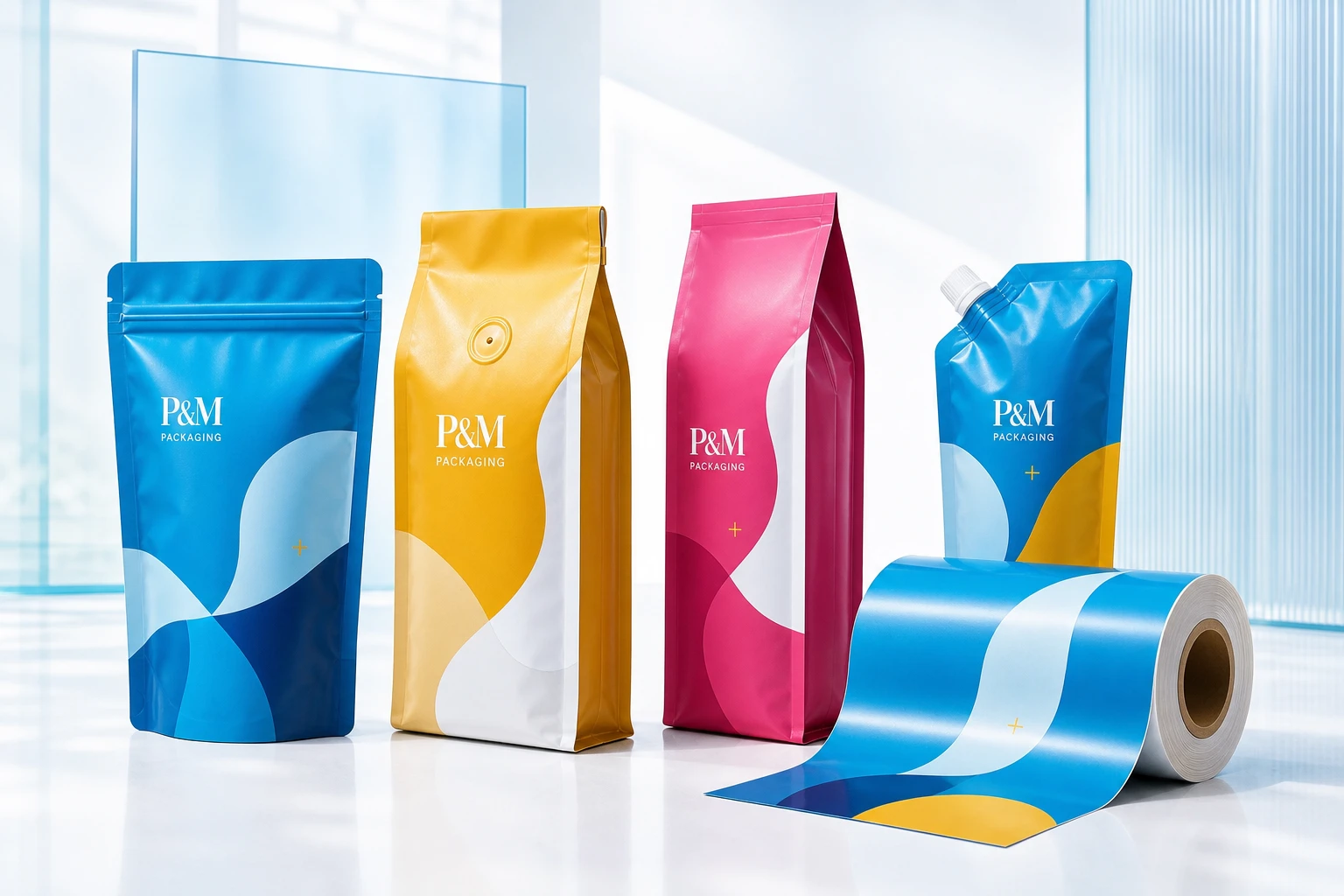
Custom pouch bags and printed packaging pouches are converted to specified dimensions, seals, materials, closures, and artwork before they reach the filling line. A paid custom sample can start from 1 piece; the general production baseline starts from 100 pieces per SKU. P&M coordinates China owned-factory production with U.S.-based project support and Los Angeles warehousing, while the exact format, material, printing route, quantity, testing, lead time, and price remain specification dependent.
Verified service baselines
These are current service baselines, not universal promises for every pouch construction. The quotation confirms the exact size, structure, print route, features, quantity per SKU, testing, and delivery plan.
Fast project review
Share the project essentials. The U.S. team targets a reply within 12 hours and a quotation within 24 hours once the project is sufficiently defined.
Buyer comparison
Choose the format from how the product is filled, displayed, opened, reclosed, packed, and shipped—not from the bag name alone.
| Format | Best fit | Filling route | Critical checks |
|---|---|---|---|
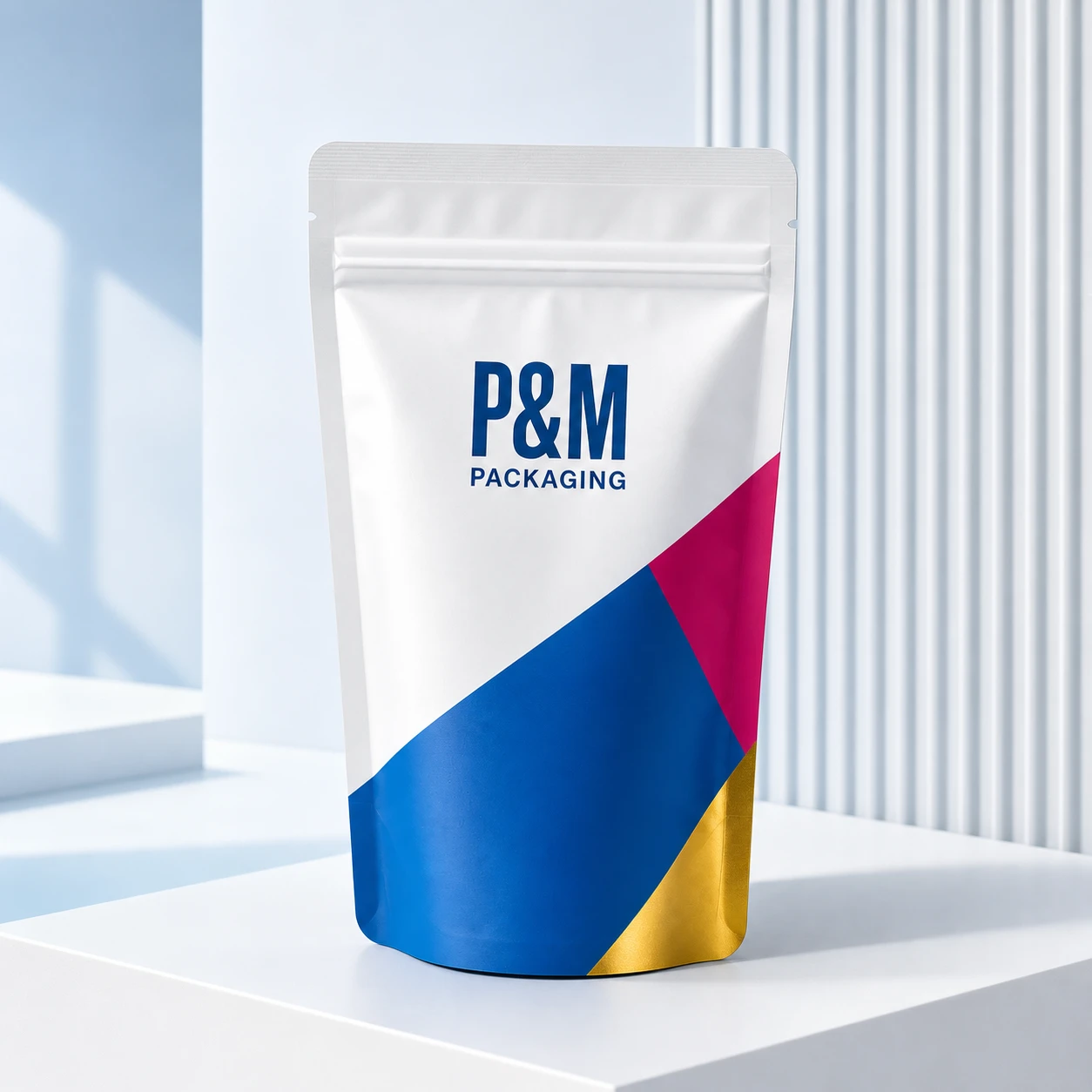
| Stand-up pouch | Retail food, powders, snacks, supplements, and refill products | Premade-pouch filling and final top sealing | Bottom-gusset deployment, zipper access, fill level, shelf stance, and seals |
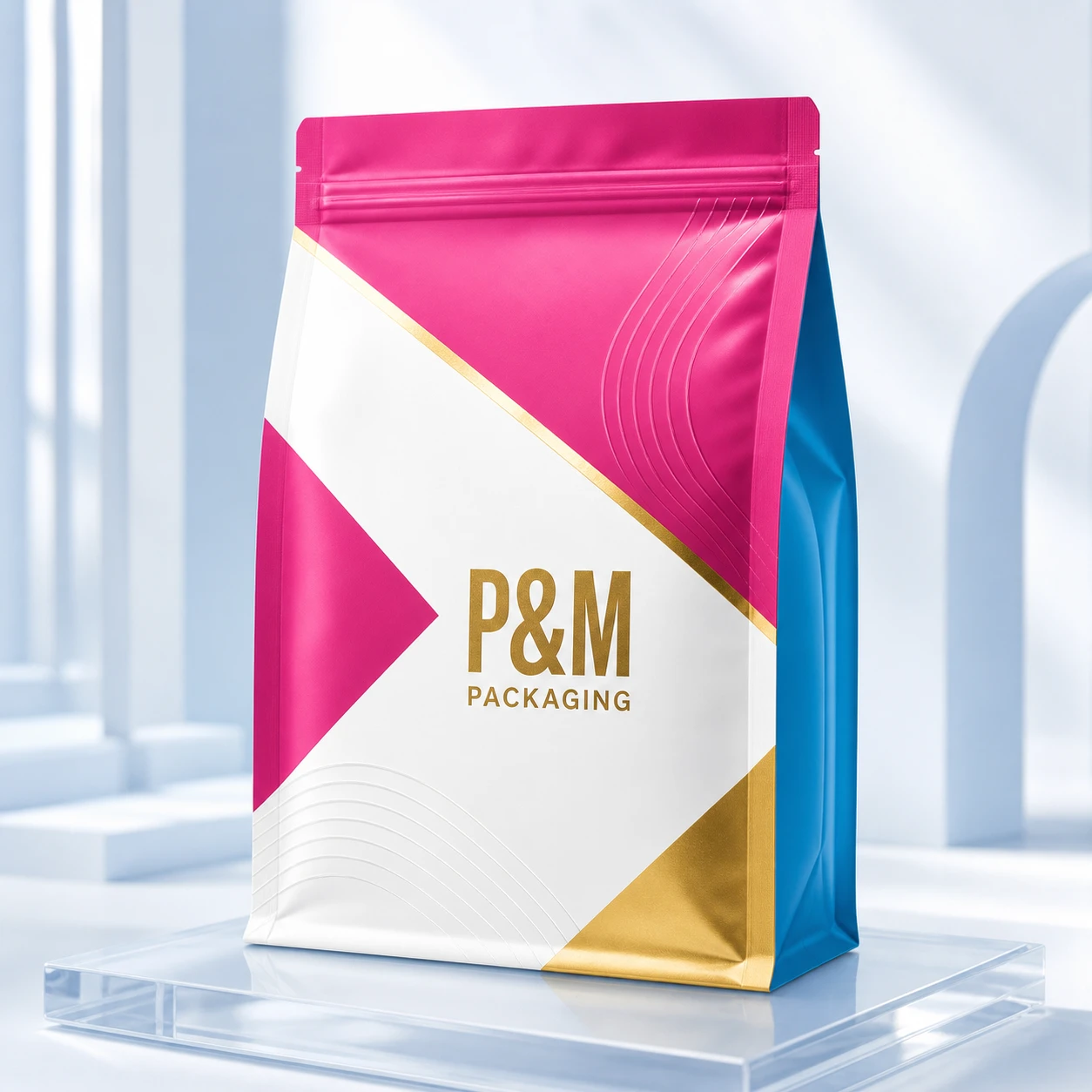
| Flat-bottom / box pouch | Premium coffee, food, pet treats, and products needing a structured shelf profile | Premade-pouch filling and final top sealing | Base geometry, five-panel artwork, zipper or valve position, headspace, and case pack |
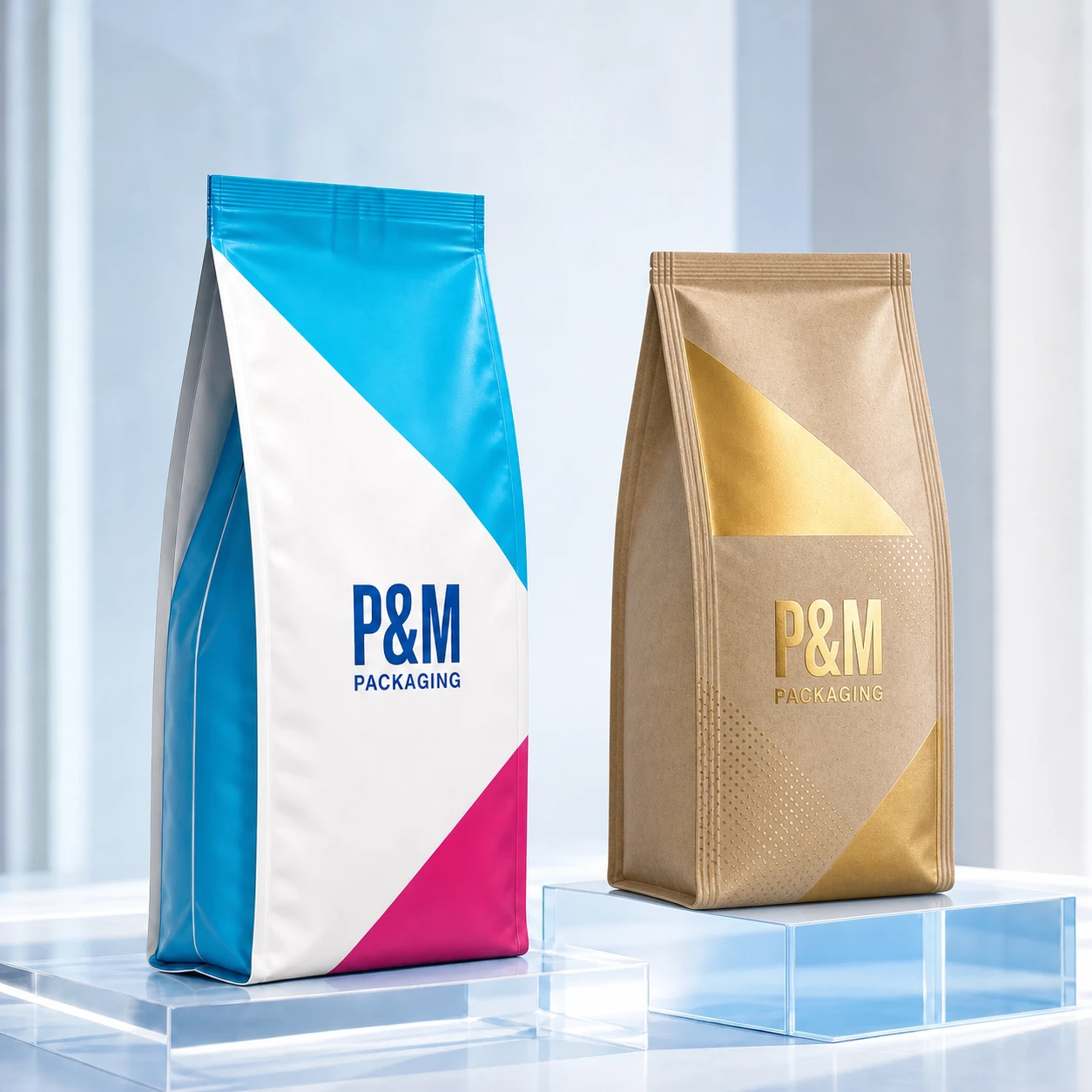
| Side-gusset / quad-seal bag | Coffee, pet food, grains, and larger dry-product volumes | Compatible premade-bag filling and closing equipment | Gusset capacity, corner seals, closure, handling, package weight, and palletization |
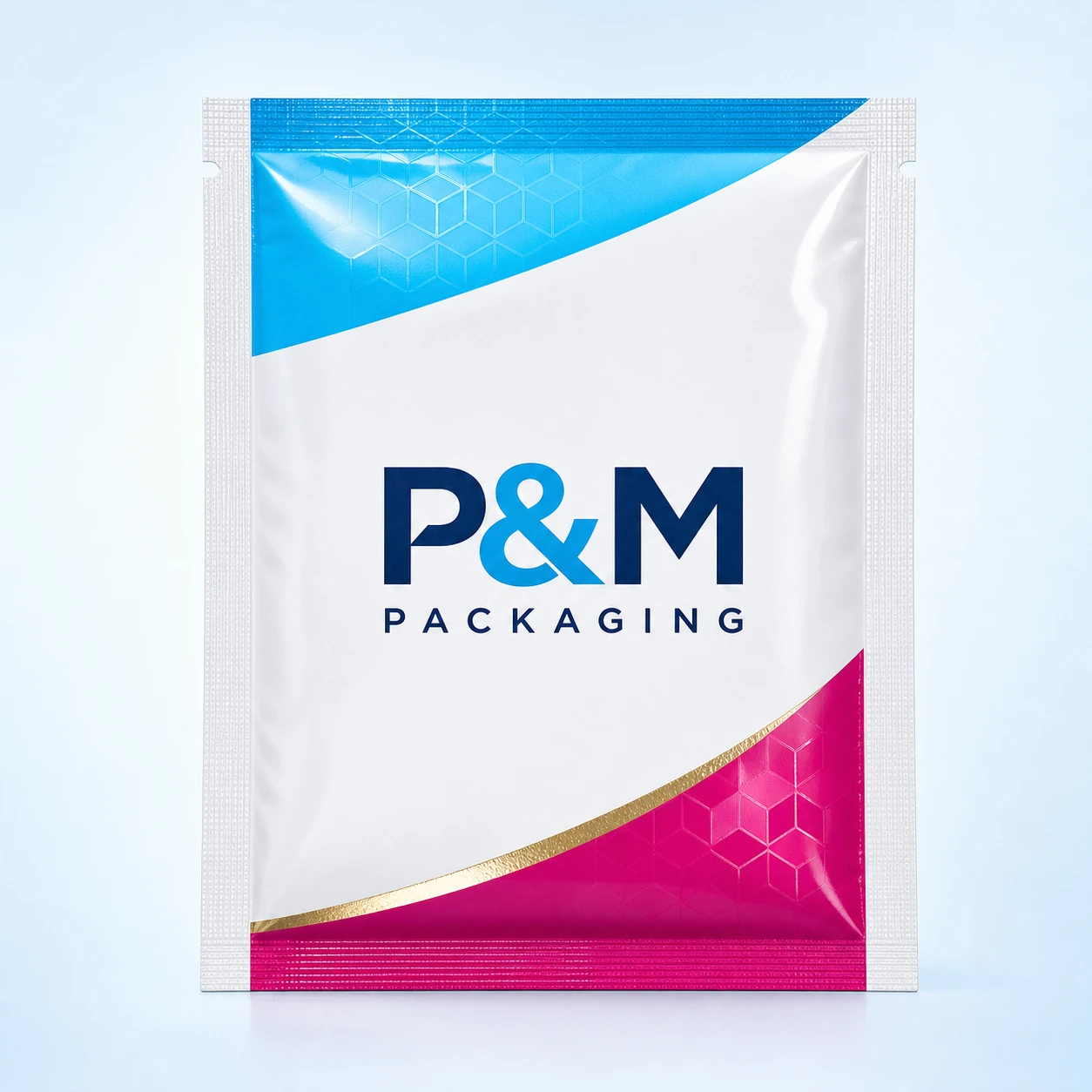
| Three-side-seal pouch | Samples, portions, flat products, and compact barrier packs | Fill through the open side, then apply the final seal | Usable opening, product edges, seal clearance, tear feature, coding, and pack-out |
Printed rollstock is a different supply route: the packing line forms and seals the package from film rather than filling a premade pouch.
Start with your need
No finished specification required. Send a product or reference photo on WhatsApp.
Converted bags supplied ready for the intended filling and sealing process, subject to format, dimensions, opening, seal, and equipment review.
Brand artwork, color, white ink, windows, matte or gloss appearance, coding areas, and other finishes coordinated with the selected material and print route.
Review printing and finishes →Oxygen, moisture, aroma, oil, light, puncture, stiffness, sealability, storage, and shelf-life targets guide the complete structure.
Zippers, valves, spouts, tear features, hang holes, handles, windows, and other accessories reviewed as part of the complete bag.
Explore bag features →Select a sample or proof by the decision it must support: size, fit, structure, material, print appearance, or production approval.
Compare sample types →Custom pouch sampling can start from 1 piece. Formal production orders start from 100 pieces, with dimensions, material, print, features, lead time, and unit price confirmed for the exact specification.
Understand packaging MOQ →Choose the format after reviewing product shape and density, fill weight or volume, filling method, shelf presentation, opening, reclosure, handling, pack-out, and distribution. A familiar bag style is a starting point—not a complete specification.
Custom pouches and packaging bags are flexible packages converted to specified dimensions and features, then printed or otherwise branded for a product. Unlike printed rollstock, a premade pouch arrives formed and normally requires a compatible pouch-filling and final-sealing process. The correct specification joins format, product protection, usability, filling, production, and delivery requirements.
For qualified household and daily-chemical premade-pouch projects, P&M can review aluminum-foil laminate starting structures such as PET / AL / PE or PET / PA / AL / PE. Share the contents, fill quantity, format, filling conditions, light and barrier targets, and distribution requirements. These starting paths require compatibility and filled-package qualification for the exact product; they do not establish suitability for every food, chemical, or thermal process. Metallized PET (VMPET) is a different material and is not aluminum foil.
Use standard bag-format names in specifications, search campaigns, and buyer conversations, then confirm the dimensions, gussets, seals, material, closure, filling method, and converting route for the exact project. Closely related names are grouped on one authoritative page or section to avoid duplicate SEO landing pages.
Also searched as stand up pouches, stand-up bags, doypack-style bags, and resealable pouches. A bottom gusset creates the self-standing base; zippers, windows, valves, and spouts are optional project features.
Explore custom stand-up pouches →Also called box pouches, box-bottom bags, block-bottom bags, and five-panel pouches. A rectangular base and side gussets create a squared shelf profile.
View flat-bottom pouches →Flat pouches sealed on three sides and filled through the remaining open side. Common search variants include three-side-seal bags, 3 side seal pouches, flat barrier pouches, and mylar-style flat bags.
Flat pouches sealed on all four sides after filling, commonly considered for single-use, medical-adjacent, sample, wipe, or portion applications. Searches include four-side-seal pouches, 4 side seal pouches, and flat pouches.
Expandable side folds provide vertical capacity for coffee, grains, pet food, and bulk dry products. Search variants include side gusset bag, gusseted bags, gusset bags, and gusset pouches.
View side-gusset bags →Four sealed vertical corner edges create a more structured body than a traditional side-gusset bag. Search variants include quad seal pouch, quad seal bags, and four-corner-seal bags.
Compare quad-seal bags →Custom die-cut outlines, rounded profiles, contour shapes, or application-specific geometries create a differentiated package. Search variants include shaped pouches, custom shaped pouches, and shaped bags.
Flexible liquid or refill pouches fitted with a corner or top spout and cap. Search variants include spouted pouches, spout pouches, spouted bags, refill pouches, and liquid pouches.
View spouted pouches →Hermetically sealed flexible bags developed for a validated post-fill thermal process. Search variants include retort pouches, retort bags, high-temperature pouches, and retort packaging.
View retort pouches →Equipment-formed bags made from roll stock with a longitudinal fin or lap seal and end seals. Search variants include pillow bags, pillow pouches, center-seal bags, and fin-seal packaging.
View printed roll stock →Small flat single-serve packs, usually three- or four-side sealed from printed roll stock. Search variants include sachet packaging, sachet packs, single-use sachets, and sample sachets.
View sachet packaging →Narrow tube-shaped single-dose packs formed and sealed from printed roll stock. Search variants include stick pack packaging, stick packs, stick packaging, and stick packets.
View stick packs →Start with what the package holds and how it will be filled, sealed, stored, shipped, displayed, opened, and reused. The same pouch format can require very different dimensions, sealants, barriers, stiffness, closures, testing, and evidence for different applications.
Review oils, aroma, moisture sensitivity, product edges, crumbs or seasoning in seals, opening, portioning, and shelf-life targets.
Explore custom food packaging →Coordinate aroma and oxygen protection, degassing where required, grease or puncture resistance, reclosure, fill density, and larger-bag handling.
Account for bulk density, dust in the seal area, scoop access, moisture sensitivity, reclosure, coding, and controlled SKU information.
Explore powder packaging →Confirm chemistry, viscosity, fill temperature, flow, spout or opening, seal and fitment integrity, leaks, drops, storage, and consumer dispensing.
Explore sauce packaging →Material selection begins with product compatibility and the protection required through the target shelf life. Define oxygen, moisture, aroma, oil, light, puncture, flex-crack, stiffness, seal window, seal contamination, storage temperature, distribution, and applicable food-contact or claim evidence before approving the complete bag structure.
Digital, offset, flexographic, or gravure production may be considered depending on substrate, dimensions, colors, finish, quantity per SKU, repeat orders, setup, and total economics. Prepare artwork on the approved dieline with controlled copy, barcodes, bleed, safe areas, white ink, windows, finishes, coding zones, and one approved revision for every SKU.
A multi-SKU pouch program should separate quantity by size and artwork, then identify which SKUs genuinely share the same dimensions, material structure, zipper or fitment, finish, and converting path. Shared specifications can simplify development and repeat-order control, but they do not automatically combine every SKU into one production minimum. P&M's general production baseline starts from 100 pieces per SKU; the exact minimum and route are confirmed for the approved specification.
Provide the product, size, artwork version, barcode, quantity, launch timing, and reorder expectation for each coffee, tea, snack, supplement, or other pouch SKU.
Where technically appropriate, keep dimensions, structure, zipper, finish, and dieline common while controlling the artwork and required information for each SKU.
Digital or offset routes can be evaluated without a plate fee for qualified lower-volume or multi-artwork programs; rotogravure setup and plate or cylinder charges are confirmed separately.
Record the approved specification, color target, artwork revisions, sample limitations, and reorder assumptions so a future production-route change can be validated instead of improvised.
A practical custom bag program separates specification, dieline and artwork, samples or proofs, product and filling trials, final approvals, materials, printing, converting, quality review, and delivery. Each proof or test should state what it demonstrates and what remains for production validation.
Provide the product, application, desired pouch style, dimensions or fill quantity, filling and final-sealing method, material or performance targets, accessories, print and finish, quantity for each size and artwork, sample needs, delivery destination, target in-hand date, and any existing package, dieline, artwork, or test requirements.
Packaging Knowledge Center
Use these practical articles to prepare specifications, identify project risks, and ask better questions before sampling or production.
The terms overlap in everyday sourcing. Pouch often describes smaller flexible formats such as stand-up or three-side-seal packages, while bag may also describe side-gusset, quad-seal, flat-bottom, or larger formats. The production specification—not the name—should define dimensions, gussets, seals, material, features, and filling method.
Projects may include stand-up, flat-bottom or box, three-side-seal, side-gusset, quad-seal, shaped, spouted, flat, and application-specific pouches or bags. Availability and final suitability depend on dimensions, product, material, accessories, filling, quantity, and production review.
Potentially. Press-to-close and other zippers, clear windows, one-way valves, spouts and caps, tear notches, laser scores, hang holes, handles, and tamper-evident concepts can be reviewed. Placement, compatibility, tooling, sealing, filling, performance, and applicable documentation must be confirmed for the complete bag.
A custom pouch sample can start from 1 piece. The minimum order quantity for formal production is 100 pieces or more. Available dimensions, material structures, printing, closures, accessories, finishes, lead time, and unit price are confirmed for the exact specification and order quantity.
Yes, a multi-SKU program can be reviewed together, but each size and artwork should have its own quantity, approved file, barcode or variable information, and production control. Shared dimensions, materials, features, or finishes may simplify planning; they do not automatically let unrelated SKUs share one minimum order quantity.
P&M can organize structure decisions around the product, filling and sealing process, barrier and shelf-life targets, storage, distribution, opening, reclosure, print, and evidence requirements. Final suitability should be confirmed through project-specific documentation and validation.
Total timing depends on specification readiness, dieline and artwork, samples or proofs, testing, materials, print setup, quantity, converting, quality review, approvals, and delivery. A project schedule should identify its starting approval point and separate production from freight and customs time.