Direct answer
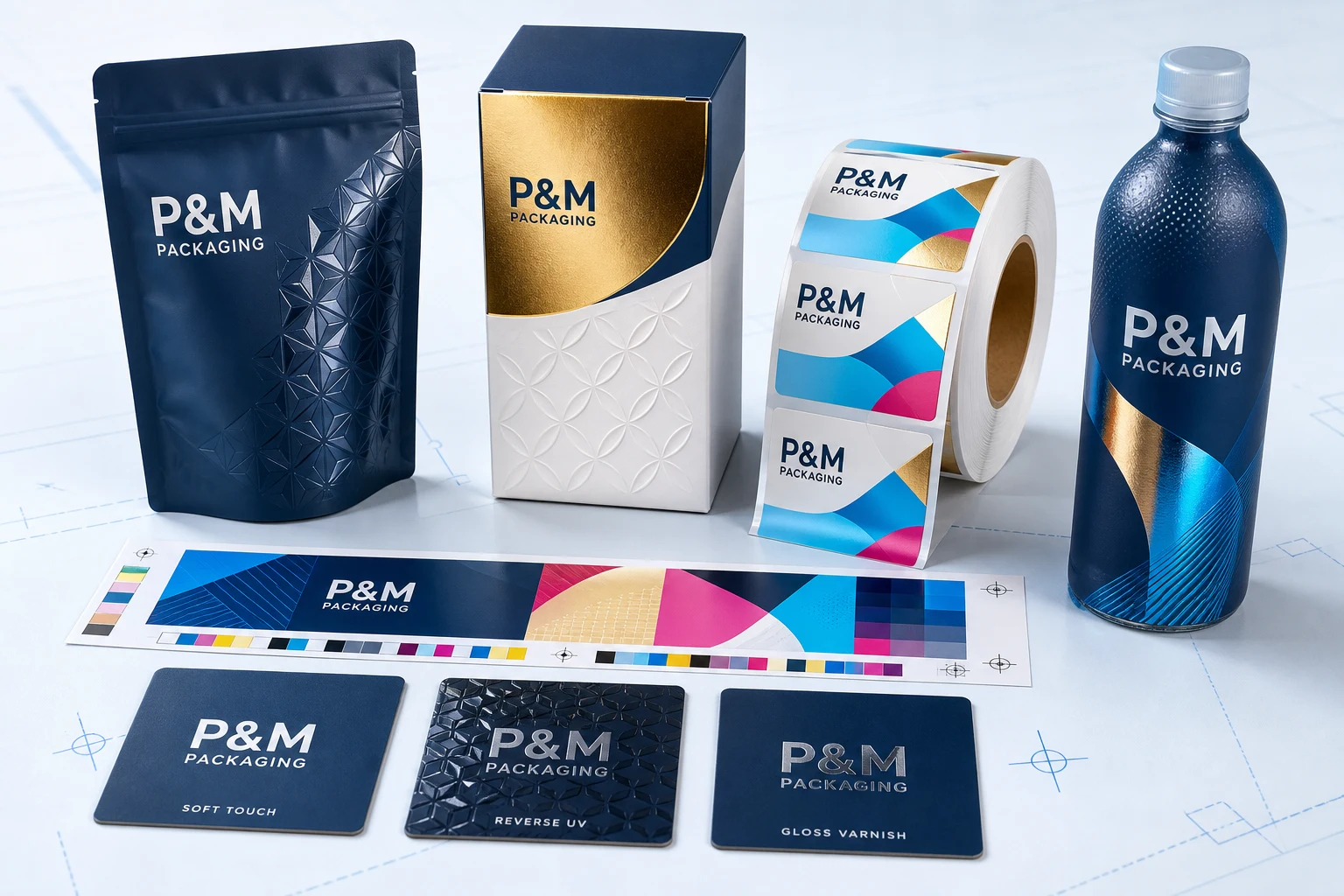
A packaging finish upgrade is a change to the approved surface system, production route, artwork, and validation plan—not an artwork-only effect. A standard matte or MOPP surface may be upgraded with a compatible soft-touch film or coating; contrast may be added with selective gloss, often called spot UV on paper packaging; and metallic emphasis may use hot foil, cold transfer, digital embellishment, metallic ink, or a metallized-film effect. The suitable option depends on whether the package is a flexible pouch or paper box, plus substrate, print method, lamination, curing, seals, folds, abrasion, quantity, and end-use requirements.
What is MOPP in a packaging quotation?
In packaging quotations, MOPP is often used to describe a matte-oriented polypropylene surface film, but abbreviations and film grades are not universal. Confirm the exact film code, supplier, thickness, treatment, print side, lamination construction, sealant, coefficient of friction, and current visual or tactile target before requesting an upgrade.
Matte appearance and soft touch are not the same requirement. A conventional matte film mainly reduces gloss; a soft-touch film or coating is selected to create a more velvety or tactile feel. Some matte film families include a soft-touch surface, while other projects create the effect with a compatible coating. Ask for physical samples because words such as matte, silky, velvet, rubberized, and soft touch are subjective.
- Current film or board specification
- Existing approved production sample
- Target feel and gloss level
- Scuff, scratch, blocking, and slip requirements
- Sealing, folding, gluing, and filling constraints
- Food-contact, migration, or market documentation where applicable
Upgrade path 1: MOPP or standard matte to soft touch
A soft-touch upgrade can use a purpose-designed outer film, lamination film, or tactile coating, depending on the package and production equipment. Paper boxes may use soft-touch lamination or a water-, solvent-, UV-, or dual-cure coating system. Flexible pouches may use a matte or tactile surface film or a coating formulated for flexible packaging and its converting route.
The upgrade must preserve more than feel. Review ink and adhesive adhesion, cure, lamination bond, heat and pressure exposure, coefficient of friction, pouch making, seal areas, zipper or fitment converting, blocking in stacks or rolls, odor or migration requirements, rub and scratch resistance, and filled-package handling. Do not approve a soft-touch specification from a flat swatch alone.
Upgrade path 2: add selective gloss or spot UV contrast
Selective gloss places a higher-gloss effect over chosen logos, patterns, illustrations, or product cues while the surrounding surface remains matte or soft touch. On folding cartons this is commonly described as spot UV. On flexible packaging, the supplier may specify a selective gloss varnish or another compatible spot coating rather than the same UV process used on paperboard.
Create a separate named artwork layer for the effect and confirm minimum line sizes, registration tolerance, trapping, knockout or overprint behavior, gloss contrast, cure, flexibility, and resistance to cracking or scuffing. Keep critical effects away from seals, folds, scores, zipper and spout interfaces, coding zones, and barcode quiet areas unless the production supplier approves the placement.
- Logo or pattern highlights
- Gloss-on-matte contrast
- Tactile or raised spot effects where supported
- Selective white ink under clear or metallic areas
- Registration target and acceptable movement
- Physical approval under intended lighting
Upgrade path 3: add foil or another metallic effect
Gold or silver color printed with ink is not the same as foil. Metallic emphasis may be produced by hot foil stamping, cold transfer, digital embellishment, metallic ink, holographic transfer, or a metallized substrate revealed through selective white ink. Each route creates a different brilliance, edge definition, tooling need, cost, registration behavior, and substrate limitation.
Paper boxes and flexible pouches require different finishing routes. Confirm substrate treatment, heat sensitivity, lamination sequence, flexing, converting, seals or folds, abrasion, and the supplier's available equipment for the exact package. Fine details, large solid areas, folds, gussets, and highly flexible areas should be reviewed separately.
Build the finish upgrade into the artwork and quotation
Issue artwork on the current approved dieline and create separate production layers for soft-touch zones, selective gloss or spot coating, foil or metallic areas, white ink, windows, embossing, and other effects. Use clear spot-color names and do not simulate a finish only with transparency or a visual mockup.
The quotation should identify the substrate or film, coating or lamination system, print and finishing route, tooling or screens, number and size of effect areas, quantity per SKU, proof or sample method, tolerances, overrun or underrun terms, lead-time starting point, and whether future orders reuse any tooling.
Approve the upgrade with staged physical evidence
Begin with supplier swatches or an effect library to narrow the direction, then use a mockup or printed sample to confirm placement and design contrast. When the finish materially affects adhesion, converting, seals, filling, handling, or product safety, add production-representative trials and defined performance checks.
Depending on the package, review gloss and tactile appearance, color under the finish, registration, adhesion, cure, rub and scratch resistance, blocking, flexibility, fold or crease cracking, lamination bond, seals, barcode scanning, coding, filling-line behavior, drops or distribution, and aged appearance. Record which material and process the approved sample represents.
Choose the upgrade that supports the brand and commercial plan
Use finish where it creates a clear hierarchy or touchpoint: a full soft-touch field for tactile identity, selective gloss on the brand mark, foil on a premium cue, or a controlled combination. Applying every effect at once can weaken hierarchy and add setup, registration, MOQ, waste, inventory, and approval risk.
Compare the standard and upgraded versions using total program economics: setup and tooling, material minimums, quantity per SKU, unit cost, samples, production waste, freight, reorder plan, obsolete-packaging exposure, and the value of the intended shelf or unboxing differentiation. Keep a scalable standard version if the premium route does not fit every channel or order stage.
General educational information only. Materials, performance, compliance, claims, quantities, and timing require confirmation for the exact packaging project.