Representative packaging solution
A One-Stop Packaging System for a U.S. Beauty Brand
A sheet-mask launch may combine a sealed flexible sachet, retail carton, product or closure label, and shipping pack. The visual system can be coordinated, but every component still needs its own material, compatibility, filling, artwork, and quality approval.
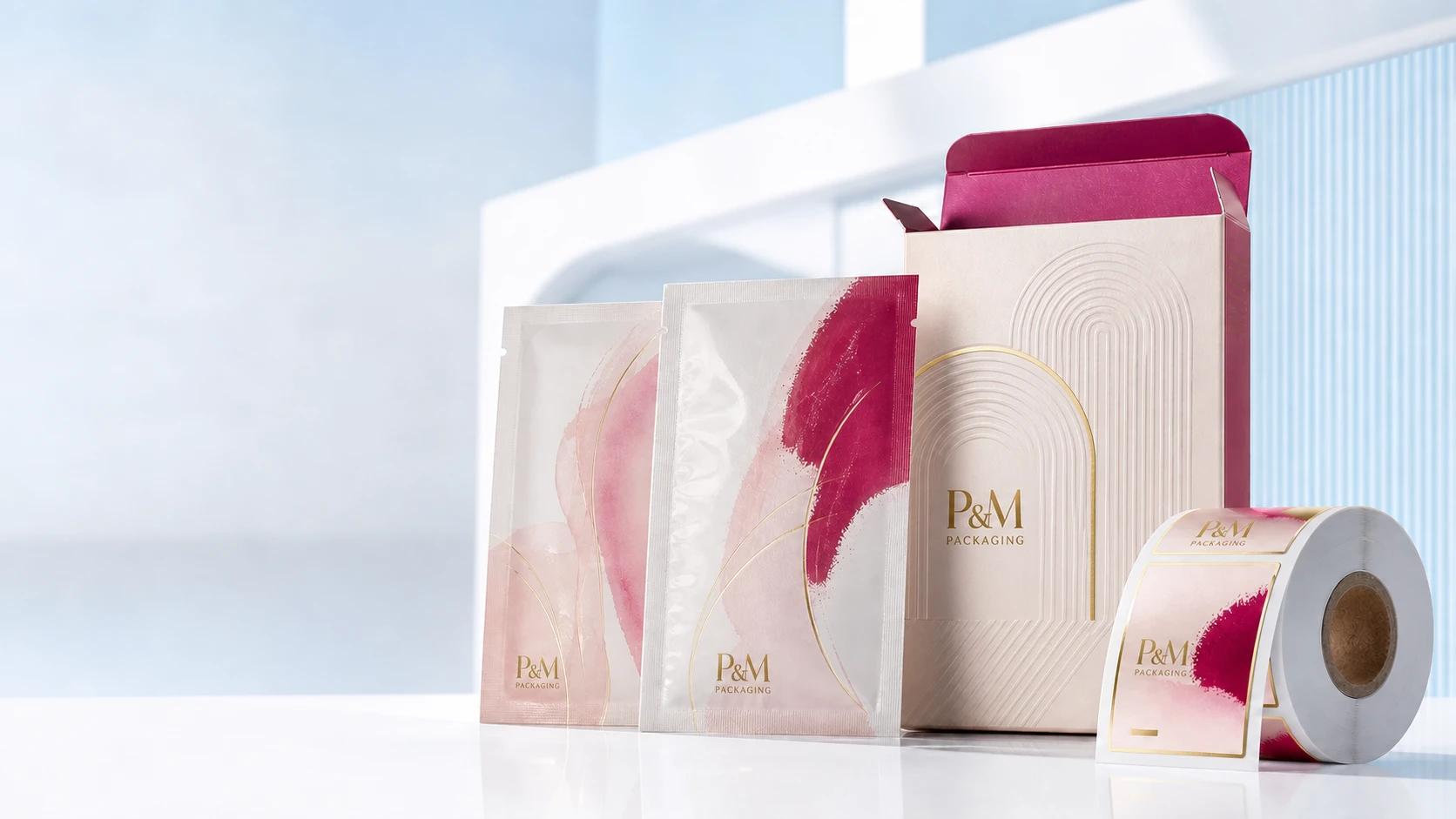
Representative packaging solution—not a customer case study. It illustrates a realistic project path without identifying or inventing a customer, order, testimonial, or performance result.
Direct answer
For sheet-mask packaging, start with formula compatibility, sachet seal integrity, fill process, opening, and shelf-life requirements. Then coordinate the folding carton, pressure-sensitive labels, finishes, copy, barcodes, quantities, and delivery through one controlled packaging brief.
The project problem
Start with the risk, not the decoration.
The formula-contact sachet must protect a wet product and seal consistently. The carton must fit the filled sachet without crushing or excess movement. Labels and decorative finishes must remain consistent across components while regulated or required copy stays legible.
Review the complete solution, specification, and evidence plan Technical detail
Coordinated solution
One project path, with separate technical approvals.
Engineer the primary sachet first
Review the formula, relevant ingredients, fill volume, headspace, film compatibility, barrier, sealant, seal width, notch, filling and sealing conditions, storage, and shelf life.
Fit the carton to the filled pack
Use a filled sachet or validated thickness range to establish carton dimensions, board, insert needs, opening, pack count, finish, and shipping protection.
Coordinate labels without assuming sameness
Choose face stock, adhesive, liner and finish for the exact container or closure surface. The label may share artwork with the sachet while requiring different color expectations.
Control premium finishes
Plan matte, gloss, spot effects, foil, embossing or tactile coatings around the substrate, design coverage, rubbing, folding, sealing, quantity and production route.
Specification direction
What can be proposed—and what still requires confirmation.
ComponentWorking directionConfirm before production
Mask sachetFour-side-seal high-barrier flexible packFormula compatibility, fill, sealant, barrier, notch and shelf life
Folding cartonPaperboard carton sized to filled sachetsBoard, dimensions, pack count, finish, insert and distribution
LabelsPressure-sensitive film or paper labelsApplication surface, adhesive, moisture, oils, rub and application
FinishingMatte / gloss / spot / foil pathwaySubstrate, artwork, process, rub, fold and quantity
Evidence plan
Validation before a performance claim.
Testing depends on the final product, package, process, market, and risk. This list is a project-planning baseline, not a certification statement.
- Formula-to-film compatibility as required
- Filled-sachet seal, leak and opening checks
- Carton fit and compression review
- Label adhesion and rub trial
- Cross-component color and finish approval
- SKU copy, barcode and artwork verification
What this scenario demonstrates
One-stop beauty packaging coordinates the launch, but it does not collapse sachets, cartons and labels into one untested specification.
Frequently asked questions
What material is used for sheet-mask sachets?
The structure depends on the formula, fill volume, oxygen and moisture needs, light sensitivity, fragrance or oils, sealing conditions, opening, shelf life, and applicable contact requirements. Compatibility should be evaluated for the exact product.
Can sachets, cartons, and labels use the same metallic finish?
A coordinated appearance is possible, but film, paperboard, and label stock use different processes and reflect light differently. Approve each component against shared visual references.
What should a beauty brand provide for a quote?
Provide the formula/application context, sachet size or fill volume, carton pack count, container details for labels, artwork status, finish references, quantity per SKU, target timing, and intended market.