Representative packaging solution
Upgrading a U.S. Coffee Bag with a Degassing Valve and Soft Touch
A coffee brand can upgrade from a conventional printed bag to a more tactile soft-touch package without losing sight of the functional system: aroma protection, degassing, reclosure, filling, seals, roast condition, and repeat consistency.
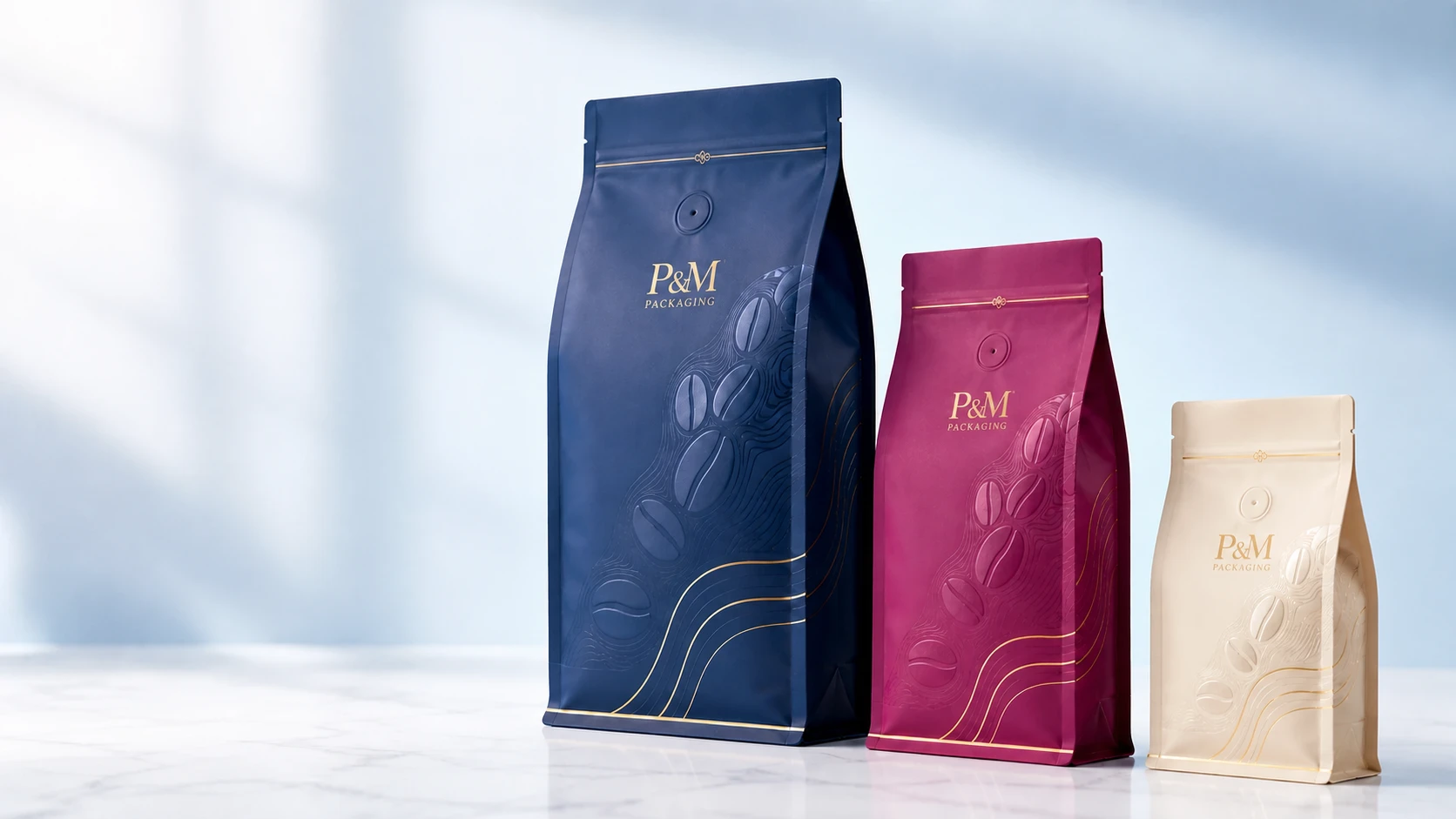
Representative packaging solution—not a customer case study. It illustrates a realistic project path without identifying or inventing a customer, order, testimonial, or performance result.
Direct answer
A soft-touch coffee bag upgrade should begin with the coffee and filling process, not the finish. Confirm barrier, one-way valve, zipper, sealant, bag geometry, fill timing, and shelf-life target first; then select a print process and soft-touch or spot-finish route that is repeatable at the intended quantity.
The project problem
Start with the risk, not the decoration.
The brand wants a premium tactile package but still needs aroma and oxygen protection, reliable valves, efficient filling, shelf stability, and predictable repeat orders. A finish chosen without the material and print route can change color, scuff behavior, lead time, minimum quantity, and unit economics.
Review the complete solution, specification, and evidence plan Technical detail
Coordinated solution
One project path, with separate technical approvals.
Lock the coffee variables
Record roast level, time between roasting and packing, CO₂ release, fill weight, shelf-life target, distribution, consumer reclosure, and whether nitrogen flushing or other process controls are used.
Specify the functional bag
Select format, dimensions, barrier, sealant, zipper, valve type and position, opening, stiffness, case pack, and filling procedure before adding decorative effects.
Choose the finish by production route
A full soft-touch effect, soft-touch plus spot gloss, or matte alternative may require different printing and coating routes. Quantity per SKU and repeat volume influence the practical choice.
Approve tactile and visual standards
Use a material sample, finish drawdown or production-representative proof where available. Define acceptable color, sheen, rub, valve placement, bag shape, and seal appearance.
Specification direction
What can be proposed—and what still requires confirmation.
ComponentWorking directionConfirm before production
Bag formatFlat-bottom, side-gusset or stand-upFill density, shelf face, filling, valve, zipper and case count
BarrierApplication-specific high-barrier laminateOxygen, moisture, aroma, light, flex and shelf-life requirements
ValveOne-way degassing valveCoffee behavior, valve specification, position, attachment and test method
FinishSoft touch with optional selective glossPrint route, coating compatibility, rub/scuff, color and MOQ
Evidence plan
Validation before a performance claim.
Testing depends on the final product, package, process, market, and risk. This list is a project-planning baseline, not a certification statement.
- Valve placement and attachment check
- Filled-bag seal and leak evaluation
- Coffee-specific shelf-life validation as required
- Soft-touch and spot-effect approval sample
- Rub, scuff and distribution review
- Repeat-order color and finish reference
What this scenario demonstrates
The upgrade is successful only when the premium surface supports—not replaces—the coffee bag's barrier, venting, filling, sealing, and distribution functions.
Frequently asked questions
Can soft touch be combined with spot UV on coffee bags?
It may be possible through an appropriate print and coating route, but substrate, ink, coating compatibility, artwork coverage, quantity, rub resistance, and production capability must be confirmed for the exact project.
Does every coffee bag need a degassing valve?
No. The decision depends on coffee type, roast, time before filling, package size, process, shelf-life plan, and distribution. Review the product behavior before specifying a valve.
What should be tested after a finish upgrade?
Review appearance, tactile feel, rub and scuff, valve attachment, seals, filling behavior, case packing, distribution, and product shelf-life requirements.