Representative packaging solution
Taking a U.S. Snack Brand from Digital Trial to Volume Production
Digital printing can help a snack brand test several SKUs at lower quantities. Scaling successfully means deciding when to retain digital production and when another print route offers better repeat economics—without changing the approved package by accident.
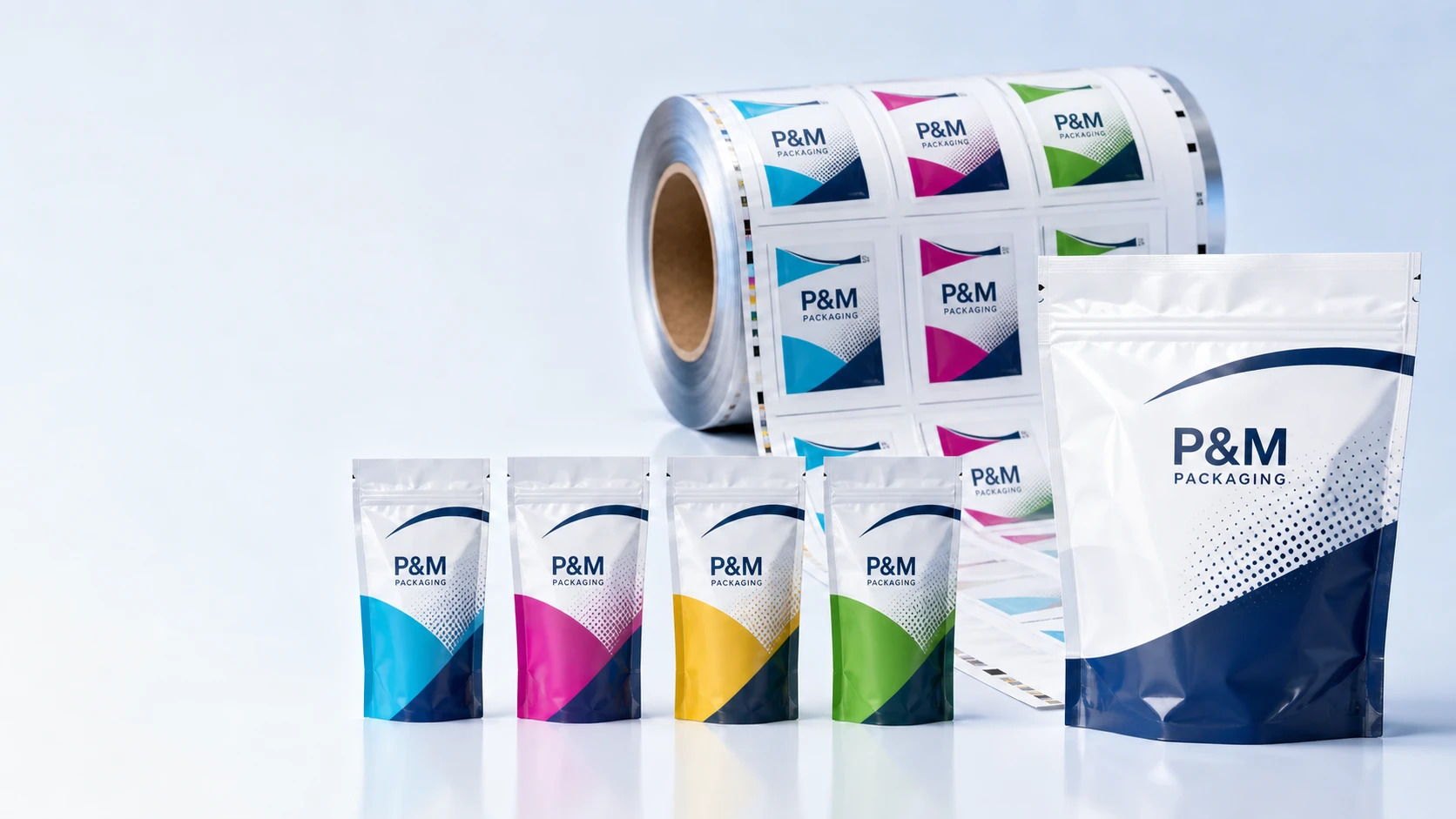
Representative packaging solution—not a customer case study. It illustrates a realistic project path without identifying or inventing a customer, order, testimonial, or performance result.
Direct answer
To move a snack pouch from digital trial to volume production, freeze the bag specification and artwork first, compare production routes using quantity per SKU and repeat demand, then validate color, white ink, finish, dimensions, seals, product protection, and case packing on the scaled process.
The project problem
Start with the risk, not the decoration.
The first launch needs several flavors in modest quantities, but a successful SKU may quickly require a larger run. Switching print routes can change color, gradients, white ink, finish, repeat dimensions, setup cost, minimum quantity, and lead time.
Review the complete solution, specification, and evidence plan Technical detail
Coordinated solution
One project path, with separate technical approvals.
Use digital for learning
Test the size, shelf presence, opening, portion, reclosure, artwork hierarchy, barcode, and commercial demand without treating the first run as a shortcut around product and seal validation.
Freeze the approved specification
Record film structure, thickness, finish, zipper, tear notch, dimensions, seal areas, artwork revision, coding zone, case count, and acceptable tolerances.
Model the scale-up threshold
Compare total landed economics by SKU, including setup, plates or cylinders, material minimums, waste, lead time, freight, expected reorders, and inventory risk.
Run a controlled production transition
Use approved color references, a process-specific proof, first-article review, seal checks, filled-pack evaluation, and retained samples before releasing the full run.
Specification direction
What can be proposed—and what still requires confirmation.
ComponentWorking directionConfirm before production
Trial productionDigitally printed premade pouches or rollstockQuantity per SKU, material availability, color, white ink and finish
Volume routeDigital, flexographic, offset or gravure as applicableRepeat volume, setup, economics, lead time and process capability
Snack protectionBarrier and seal system for the exact snackMoisture, oxygen, aroma, grease, product edges, crumbs and shelf life
Version controlOne controlled master per SKUCopy, barcode, allergen panel, coding area, dieline and approval owner
Evidence plan
Validation before a performance claim.
Testing depends on the final product, package, process, market, and risk. This list is a project-planning baseline, not a certification statement.
- Filled-pouch size and headspace check
- Seal contamination and leak review
- Barrier and shelf-life work as required
- Digital-to-volume color target
- First-article dimensions and registration
- Case-pack and distribution evaluation
What this scenario demonstrates
The safest scale-up keeps the package specification stable while deliberately changing the production route—not the other way around.
Frequently asked questions
When should a snack brand move beyond digital printing?
There is no universal quantity. Compare quantity per SKU, number of designs, expected reorders, setup costs, material minimums, print effects, lead time, inventory risk, and landed cost.
Will a gravure or flexographic pouch match the digital trial exactly?
Different processes and substrates can produce visible differences. Establish shared color references, process-specific proofs, tolerances, white-ink expectations, and retained standards.
Can the same dieline be used after scale-up?
Sometimes, but repeat, seals, zipper position, web or machine requirements, plate or cylinder layout, and manufacturing tolerances must be reconfirmed before production.