 WhatsApp
Custom Printed Product Labels
Brand graphics, approved information, barcodes, variable coding zones, white ink, color, and finish coordinated with the label material and print route.
Pressure-sensitive labels
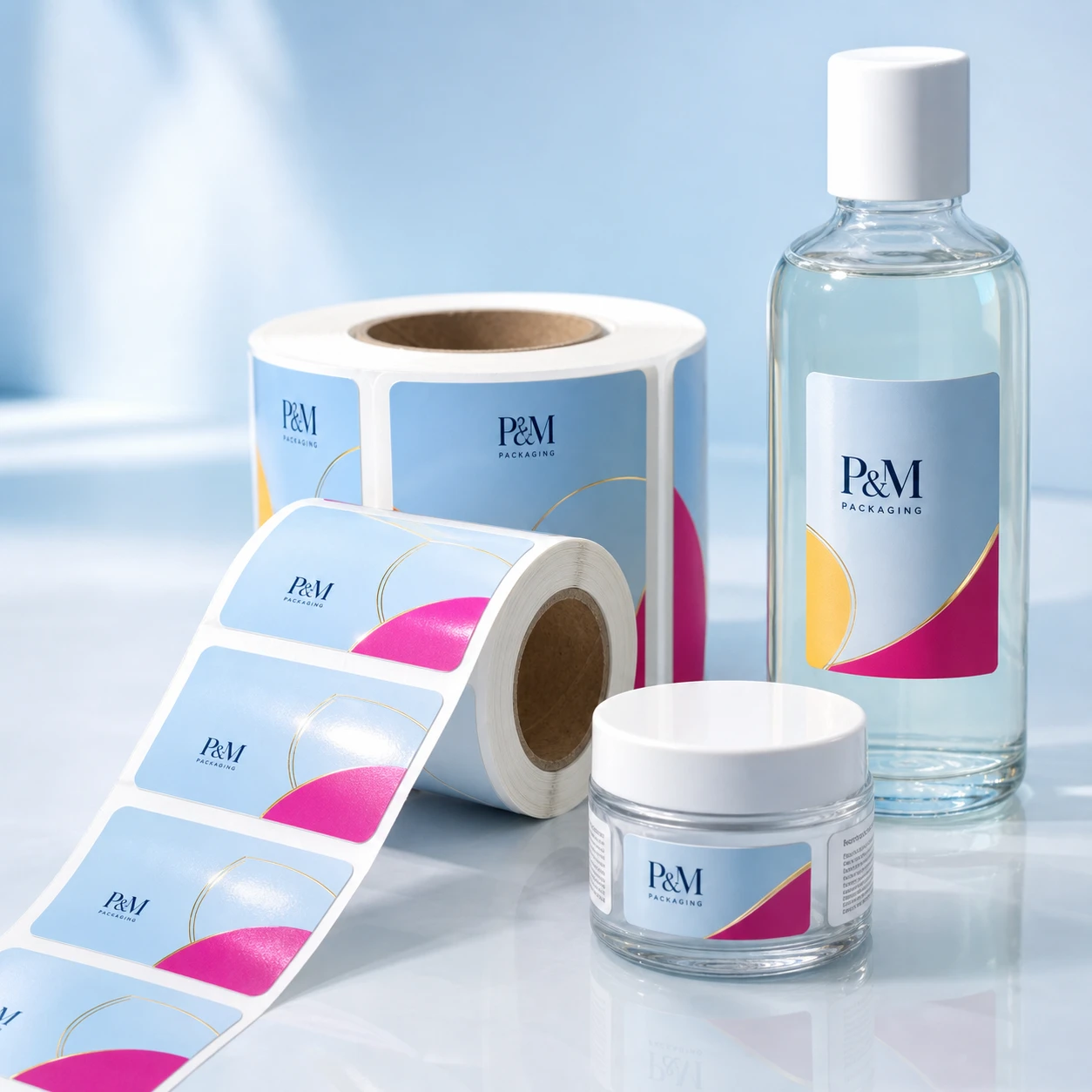
Develop custom printed pressure-sensitive labels around the container surface, product environment, face stock, adhesive, liner, printing, finish, roll configuration, applicator, and quantity by artwork.
Direct answer
A pressure-sensitive label is a printed face stock coated with adhesive and supplied on a release liner for application with pressure rather than heat activation. A custom pressure-sensitive label manufacturer coordinates the container surface, adhesive, paper or film face stock, liner, print, varnish or laminate, die cut, roll direction, core, outside diameter, applicator, storage, and exposure conditions for the finished product.
Start with your need
No finished specification required. Send a product or reference photo on WhatsApp.
Brand graphics, approved information, barcodes, variable coding zones, white ink, color, and finish coordinated with the label material and print route.
Coated paper, polypropylene, polyethylene, polyester, and application-specific materials reviewed around appearance, flexibility, moisture, abrasion, squeezing, and durability.
Permanent, removable, freezer, wet-surface, low-surface-energy, and other adhesive pathways are evaluated against the actual container, product, storage, and application conditions.
Label size, gap, corner radius, core, outside diameter, web width, unwind direction, splice, and dispensing performance are matched to manual or automatic application.
Container resin, glass, metal, paperboard, coating, surface energy, texture, curvature, diameter, squeeze behavior, cleanliness, and temperature affect label selection. The adhesive must also match application temperature, service temperature, moisture, condensation, refrigeration, freezing, oils, chemicals, abrasion, storage time, and intended removal behavior.
Coated and uncoated paper can support many dry retail applications where moisture, squeezing, abrasion, and long-term durability are controlled.
Clear, white, or metallized film labels can provide moisture resistance, conformability, and a no-label-look pathway on suitable containers.
Flexible film labels can be evaluated for squeezable or contoured containers where the label must move with the package.
Polyester and other durable constructions may be considered where heat, chemicals, abrasion, or long service life create higher performance demands.
A pressure-sensitive label combines a printable face stock, adhesive, and release liner. The converted label is peeled from the liner and bonded to a bottle, jar, pouch, carton, tub, tube, or other surface by application pressure. Unlike a shrink sleeve, it does not require a heat tunnel and normally decorates a defined panel rather than conforming over the full container.
Digital, flexographic, and other label-printing routes are selected from the substrate, colors, opacity, quantity per artwork, version count, variable data, finish, setup, and reorder pattern. Matte or gloss varnish, film lamination, tactile coating, metallic effects, foil, selective embellishment, clear windows, and security concepts require compatibility review with the face stock, adhesive, converting, application, and end use.
Automatic label application requires a controlled roll specification. Provide the applicator make and model where available, label width and length, gap, corner radius or shape, copy direction, number across, web width, core size, maximum roll outside diameter, unwind direction, leading edge, splice rules, and roll quantity. A printable dieline should reflect the approved die and label orientation.
Test production-representative labels on clean, representative containers using the intended application method and temperature. Evaluation can include initial tack, dwell, edge lift, flagging, wrinkling, bubbles, squeeze recovery, condensation, refrigeration or freezing, product exposure, abrasion, transport, storage, dispensing, barcode readability, and removal where required.
Provide the final container and surface material, label dimensions or panel area, paper or film preference if known, application and service conditions, adhesive performance, artwork and colors, finish, die shape, roll or sheet format, applicator and unwind direction, core and outside diameter, quantity for every size and artwork, destination, samples, and target timing.
Packaging Knowledge Center
Use these practical articles to prepare specifications, identify project risks, and ask better questions before sampling or production.
A pressure-sensitive label uses adhesive and application pressure to bond to a defined container panel. A shrink sleeve is a seamed heat-shrink film tube that conforms around the container in a steam or hot-air tunnel. Container shape, coverage, equipment, materials, artwork, and validation differ.
Provide the container, surface material, label dimensions, application and service temperatures, moisture or product exposure, face-stock and finish preferences, artwork, die shape, roll or sheet format, applicator, unwind direction, core, outside diameter, and quantity by artwork.
Potentially. The face stock and adhesive must be selected and tested for the container surface, application temperature, condensation, freezer exposure, storage, abrasion, and distribution conditions.
Potentially. Each effect must be reviewed against the face stock, ink and coating system, converting, application, verification method, quantities, and end-use durability requirements.