Direct answer
Build coffee packaging artwork on the supplier-issued dieline for the approved kraft grade, print route, bag format, valve, zipper, and finishes. White kraft gives CMYK the brightest base; natural kraft warms and mutes unbacked colors; black kraft generally needs opaque white, metallic foil, or selected spot effects for contrast. Put white ink, UV, foil, embossing, varnish, and variable SKU content on separate named artwork layers.
Design for the actual kraft paper—not a white screen
Paper shade and texture are visible parts of direct-to-kraft printing. Request the approved paper reference before final color decisions, and judge proofs under controlled light. A monitor preview cannot reproduce paper absorption, fiber variation, metallic reflection, gloss contrast, or raised screen ink.
Keep an unprinted paper swatch and approved color reference with the job. If the kraft grade changes, review the color again instead of assuming the previous ink values will produce the same result.
Prepare CMYK for white and natural-brown kraft
White kraft is the preferred surface for photographs, gradients, multi-color illustrations, and CMYK artwork that needs close reproduction of the approved file. Direct printing retains the paper character while avoiding the look of a printed film laminated over the visible face.
Natural kraft acts like an additional background color. Light CMYK areas become warmer and less saturated, so use deliberate contrast, stronger shapes, and paper-colored negative space. Identify areas that need an opaque white underbase instead of trying to correct every color by increasing ink.
Build high-contrast artwork for black kraft
Standard CMYK colors have limited visibility on black paper. Strong black-kraft systems commonly use screen-printed white text, white graphic elements, gold or silver foil, selective UV, and carefully chosen spot colors.
Opaque white screen ink can have a tactile, slightly raised result. Use minimum line and type sizes suitable for the selected process, allow for paper texture and registration, and review the exact white ink on the actual black kraft rather than representing it only as white in the design file.
Combine Spot UV, screen UV, foil, and embossing
Use effects to create a clear reading order: for example, CMYK for the coffee story, opaque white for required contrast, foil for the logo, selective UV for a gloss detail, and embossing for one tactile focal point. Too many overlapping effects can weaken legibility and increase registration risk.
Create separate vector layers for spot UV or screen UV, cold foil, hot foil, embossing, debossing, white ink, and varnish. Name every layer, use spot colors agreed with prepress, and keep effects away from seals, folds, zipper tracks, tear notches, valve zones, barcodes, and very small regulatory copy.
Create one controlled base design for multiple SKUs
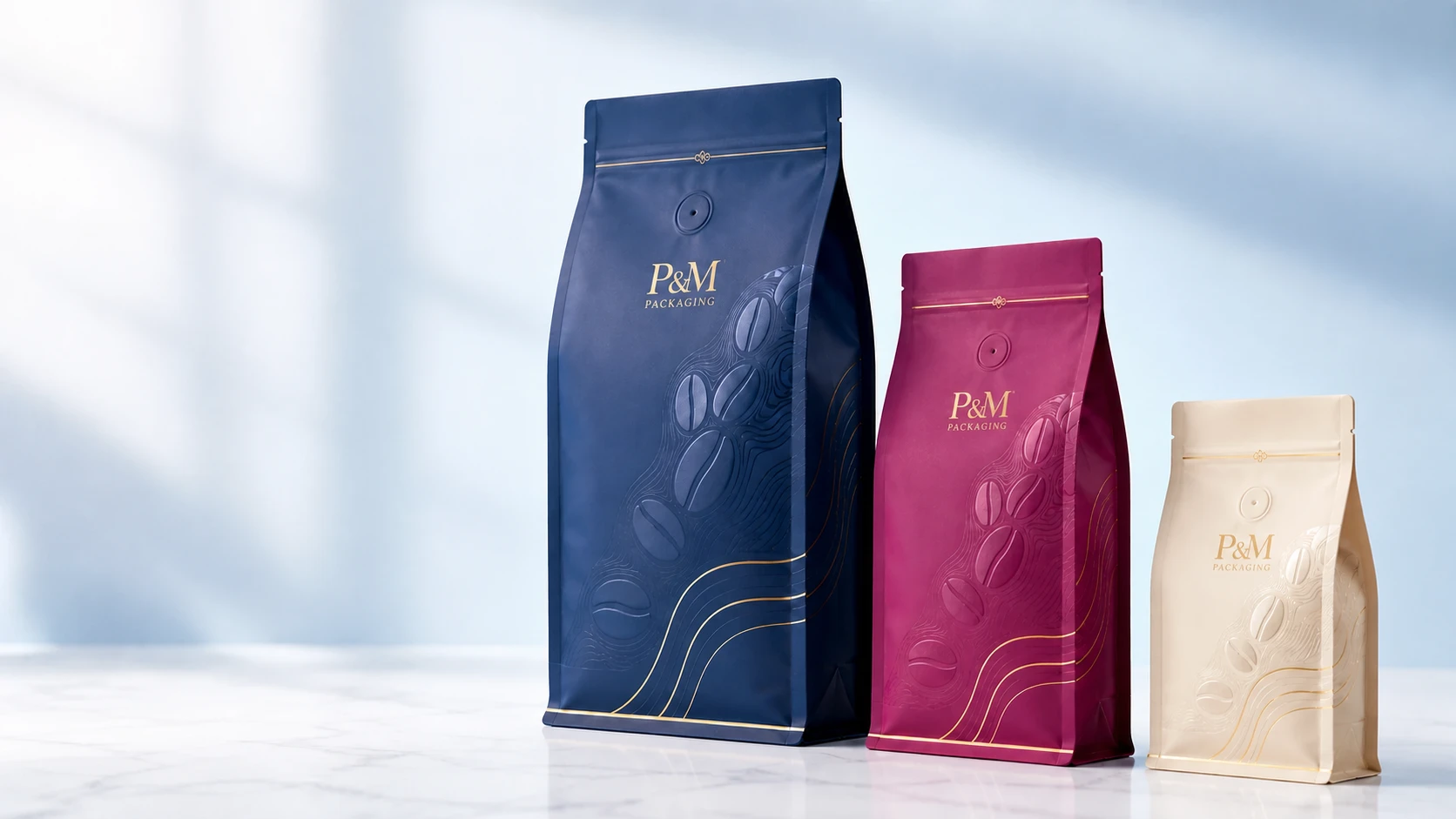
A multi-SKU coffee family should share the same logo position, information hierarchy, dieline, mandatory copy zones, finish plan, and core color logic. Variable origin, roast, tasting notes, grind, weight, barcode, or certification information should occupy controlled fields.
For the qualified 1,000-bag solution, keep the common printed or decorated bag unchanged and reserve a clear area for SKU labels. At higher single-SKU quantities, integrate the variable information into each print file while maintaining the approved shared system.
Coffee packaging artwork submission checklist
Submit one controlled package for preflight and identify any item that is still provisional. Production timing begins after the design, materials, format, finishes, and approvals are confirmed.
- Current supplier-issued dieline at 100% scale
- Adobe Illustrator or other approved vector source file
- Linked high-resolution images included
- Fonts supplied or converted to outlines
- CMYK and named spot colors defined
- White ink and every finish on separate vector layers
- Bleed, safe area, seals, gussets, folds, zipper, valve, notch, and code zones respected
- Barcode size, contrast, quiet zone, and final data verified
- Net weight, product name, origin, claims, and required copy approved by the brand
- SKU names and file revisions matched to the order schedule
General educational information only. Materials, performance, compliance, claims, quantities, and timing require confirmation for the exact packaging project.