Source custom printed Mylar bags by starting with the product, fill weight, bag format, quantity per SKU, filling and final-sealing process, storage, distribution, and shelf-life target. P&M then reviews the candidate structure, closure, print route, evidence, and delivery plan for the exact project.
U.S.-based support · Production in our owned Guangdong, China factory
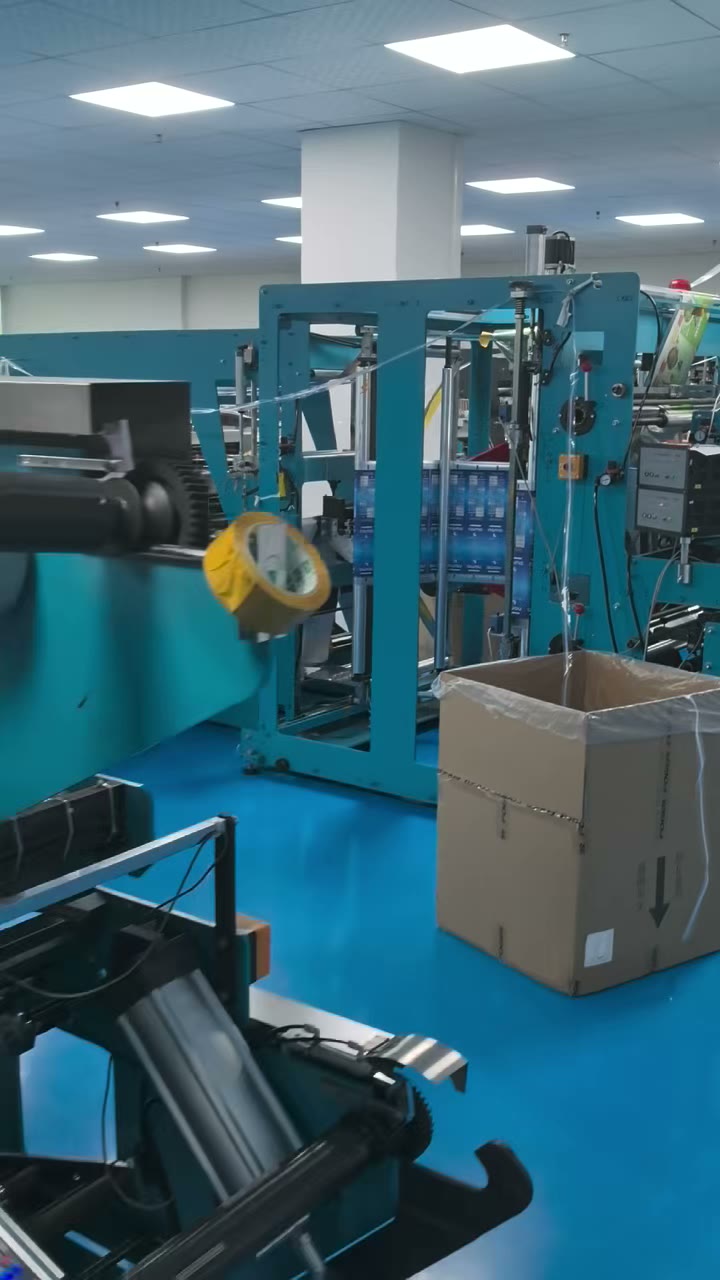
First-party photograph documenting bag-making equipment in P&M's owned Guangdong factory; equipment presence does not prove the material, performance, capacity, timing, or production route for a specific Mylar-bag project.
Direct answer
“Custom Mylar bag” is common buyer wording for a printed barrier-pouch project, not a complete material or performance specification. The product, dimensions, format, fill weight, barrier target, closure, filling and final sealing, quantity per SKU, documentation, testing, and destination still have to be confirmed. P&M's general production baseline starts from 100 units per SKU, and a paid custom sample can start from 1 piece.
Verified service baselines
Mylar-bag sourcing facts buyers can verify
These are current general service baselines, not universal promises for every pouch structure. The quotation confirms the exact dimensions, laminate, format, print route, features, quantity per SKU, evidence, testing, schedule, and delivery plan.
General production baseline
100+ / SKUFormal production generally starts from 100 units per SKU; process-specific minimums remain specification dependent.
Paid custom sampling
From 1 pieceThe sample type determines what can be reviewed. One sample does not by itself approve product compatibility, seals, distribution, or shelf life.
Supported print routes
3 routesDigital, offset, and rotogravure are evaluated by package, material, artwork count, quantity per SKU, finish, and reorder plan.
Plate-fee starting point
Digital / offset: noneP&M does not charge printing plate fees for digital or offset routes; rotogravure cylinders and the applicable per-design charge, credit, or waiver treatment are confirmed in the quote.
Production and U.S. support
China + U.S.Owned-factory production in Guangdong with U.S.-based project coordination and a self-operated Los Angeles warehouse for qualified receiving, inventory, split-release, and fulfillment programs.
Buyer comparison
Translate ‘Mylar bag’ search wording into a quote-ready specification
The wording identifies a starting category, not the finished package. Use the missing inputs below to avoid choosing a laminate or format from appearance alone.
Format
What it tells us
What still must be specified
Custom Mylar bag
A custom printed barrier-pouch project
Product, dimensions, fill weight, bag format, quantity per SKU, filling, sealing, storage, destination, and evidence required
Stand-up Mylar bag
A bottom-gusset pouch with shelf stance
Gusset geometry, usable opening, fill level, zipper and top-seal clearance, product fit, case pack, and finished-bag testing
Resealable Mylar bag
A closure is required
Closure type, opening width, consumer use, filling path, final seal, zipper weld, and repeated-use checks
High-barrier Mylar bag
Oxygen, moisture, light, or aroma protection may matter
Exact product sensitivity, target shelf life, storage and distribution, candidate laminate, seal system, and test or supplier evidence
Stand-up is a bag format and zipper is a closure. Neither term defines the complete material structure or proves a barrier, shelf-life, food-contact, or odor-control result.
Metallized and foil-laminate structures are different candidate paths. P&M confirms the offered construction, project-specific performance targets, cost, documentation, and approval plan in the quotation and specification. Do not select either route from metallic appearance alone or assign a shelf-life result before the product, seals, storage, distribution, and finished package are validated. Detailed material education remains on the Mylar material guide rather than being duplicated on this commercial page.
Packaging buyers often use “Mylar bag” for opaque or metallic-looking barrier pouches. The name does not identify the complete laminate or finished performance. The offered construction, component materials, closure, seal system, documentation, and evidence remain project specific.
Specify the complete laminate rather than approving a bag from metallic appearance alone
Separate bag format, closure, material structure, print route, and required evidence
Confirm product contact, filling, final sealing, storage, distribution, and destination market
Approve claims only when the exact structure and test or supplier evidence supports them
Choose the bag format around filling and use
Three-side-seal, stand-up, flat-bottom, side-gusset, and quad-seal bags are different constructions with different geometry, artwork panels, closure options, filling interfaces, case packs, and handling requirements. The quote must confirm the open side or top, usable opening, gusset or base, closure, fill level, final seal, equipment, and finished-bag review for the selected format.
Confirm product contact, barrier evidence, seals, and claims
Food-contact suitability, oxygen or moisture barrier, aroma or odor control, seal integrity, and shelf life depend on the complete package and conditions of use. Request documentation for the exact laminate, define the filling and final-sealing process, and use product-filled or simulated-filled evaluation where the claim or distribution risk requires it. A material name alone does not establish suitability.
Exact structure and applicable supplier documentation
Food-contact documentation when relevant to the application and market
Seal, leak, drop, handling, or distribution review appropriate to the finished pack
Shelf-life or other performance work when a public or commercial claim requires evidence
Prepare a quote for custom printed Mylar bags
Send the product and product-contact requirements, fill weight, approximate dimensions or current package, preferred format, filling and final-sealing method, closure and features, storage and distribution conditions, shelf-life goal, quantity per SKU, artwork status, destination, sample purpose, and target timing. P&M can then compare digital, offset, and rotogravure routes and identify what the quotation and approval plan still need to confirm.
Compare sample, print, and timing routes
The sample type should match the decision it needs to support. P&M's current general guide is USD 60–100 for a handmade or digital sample, USD 200–500 for a digital or offset production-process sample, and a separately quoted rotogravure production sample with applicable cylinder charges. Digital and offset sample timing is typically 7–10 days; rotogravure sample timing is typically 10–12 days. General digital and offset production is typically 7–10 days for total quantities up to 50,000; rotogravure production is typically 10–15 days, with larger quantities or specialty requirements taking longer. Final scope, cost, timing, freight, and approval limits are confirmed in the quote.
Packaging Knowledge Center
Professional guides for this application
Use these practical articles to prepare specifications, identify project risks, and ask better questions before sampling or production.
No. Food-contact suitability depends on the complete laminate, sealant, inks, adhesives, intended food, conditions of use, filling, storage, and destination market. Request applicable documentation for the exact structure and confirm the finished package for the intended application.
What is the difference between a metallized bag and a foil-laminate bag?
They are different candidate structure paths. The product, barrier target, seals, handling, storage, evidence, and finished-package validation determine the offered construction; appearance alone does not. Use the linked material guide for technical questions and the quotation for the project-specific specification.
Do Mylar bags block odors?
The word Mylar does not prove odor-control performance. Aroma or odor transmission depends on the complete laminate, closures, seals, product, storage, and test conditions. Define the requirement and validate the exact finished package when the claim matters.
View 3 more questions
What is the minimum order for custom printed Mylar bags?
P&M's general production baseline starts from 100 units per SKU. A paid custom sample can start from 1 piece. The exact minimum, setup, and any rotogravure cylinder charge depend on the approved dimensions, structure, features, print route, and quantity for each artwork.
Which printing route is used for custom Mylar bags?
P&M evaluates digital, offset, and rotogravure printing against the package, material, dimensions, artwork count, quantity per SKU, finish, timing, and reorder plan. Digital and offset have no printing plate fee; rotogravure cylinders and the applicable per-design charge, credit, or waiver treatment are confirmed in the quote.
Can Mylar bags include a zipper?
Suitable stand-up, flat-bottom, side-gusset, and quad-seal formats may be reviewed with a compatible zipper or other closure. The opening width, fill path, final top seal, closure position, zipper weld, consumer use, and finished-bag checks must be confirmed for the exact project.
Start with the product and project stage.
Share the format, expected quantity, and what the package needs to do. We’ll organize the next decisions.
 WhatsApp